Why anglers go
- Full-day Gulf Stream trips from Oregon Inlet and Hatteras for tuna, dolphin, wahoo and released billfish
- Surf fishing on Cape Hatteras National Seashore, with a beach driving permit for remote stretches
- Spring and fall runs of red drum, speckled trout and big bluefish
- Piers and sound fishing that suit families and first-timers
When to fish Outer Banks
What is commonly targeted month by month. Notes under the chart explain the regional detail.
| Species | Jan | Feb | Mar | Apr | May | Jun | Jul | Aug | Sep | Oct | Nov | Dec |
|---|---|---|---|---|---|---|---|---|---|---|---|---|
| Marlin | No | No | Yes | Yes | Yes | Peak | Peak | Peak | Peak | Peak | Yes | No |
| Sailfish | No | No | Yes | Yes | Peak | Peak | Peak | Peak | Peak | Peak | Yes | No |
| Tuna | Yes | Yes | Yes | Yes | Yes | Yes | Yes | Yes | Yes | Yes | Yes | Yes |
| Mahi-mahi | No | No | Yes | Yes | Yes | Peak | Peak | Peak | Peak | Yes | Yes | No |
| Wahoo | No | No | Yes | Yes | Yes | Peak | Peak | Peak | Peak | Yes | Yes | No |
| King mackerel | Peak | Peak | Peak | Peak | Yes | Yes | Yes | Yes | Peak | Peak | Peak | Peak |
| Cobia | No | No | No | No | Peak | Peak | No | No | No | No | No | No |
| Redfish | No | No | No | Yes | Yes | Yes | Yes | Yes | Yes | Yes | Yes | No |
| Speckled trout | No | No | No | Yes | Yes | Yes | Yes | Yes | Yes | Yes | Yes | No |
| Bluefish | No | Yes | Peak | Peak | Peak | Yes | No | No | Yes | Peak | Peak | Peak |
| Flounder | No | No | No | Yes | Yes | Yes | Yes | Yes | Yes | Yes | Yes | No |
| Bass | No | No | No | Peak | Peak | Yes | Yes | Yes | Peak | Peak | Yes | No |
| Striped bass | Yes | Yes | Yes | Yes | Yes | No | No | No | Yes | Yes | Yes | Yes |
"Yes" = commonly targeted in a typical year; "Peak" = the months sources single out. Broad patterns only: runs, weather and openings vary every year, and regulations can close a fishery. Check the agency before you book.
- Marlin
- Blue marlin peak from June through September and white marlin from July through October on the Oregon Inlet Fishing Center calendar. Most billfish are released.
- Sailfish
- A Gulf Stream fish, listed from March into November with a May through October peak. The visitors bureau singles out August and September as the most productive months.
- Tuna
- Yellowfin are caught year-round, with the best stretch from March through November. Giant bluefin are a winter fishery, typically caught and released from about January into late March.
- Mahi-mahi
- Dolphin (mahi) are a core offshore catch, peaking June through September.
- Wahoo
- Taken on Gulf Stream trips alongside tuna and dolphin, with a summer peak.
- King mackerel
- Kings show up year-round on the fishing center calendar, with the best months from September into April. Inshore charters target them in spring and fall.
- Cobia
- A short late-spring window. In the sounds, cobia peak in late May or early June.
- Redfish
- Red drum are fished from April through November. On the beaches and piers, the big fish arrive after Labor Day, and spring and fall are the classic seasons.
- Speckled trout
- Found inshore and nearshore, and plentiful in the surf in fall. Spring and fall rate best for fly anglers.
- Bluefish
- Big bluefish run in spring and again from fall into early winter. Smaller "taylor" blues fill in through summer.
- Flounder
- Caught in the sounds and from the surf, from April through summer, and abundant from the beaches again in fall.
- Bass
- Largemouth bass live in the brackish sounds, including Currituck Sound and Colington Bay. The season runs from April into November, with peaks from mid-April to early June and again in September and October.
- Striped bass
- A cool-season fish here. The visitors bureau lists stripers from fall through spring, mostly in the sounds and inlets.
Why go
The Outer Banks give you three kinds of fishing trip from one rental house. You can run to the Gulf Stream for tuna and billfish, walk or drive the beach to surf fish, or work the sounds behind the islands for trout, flounder and drum. Few places on the East Coast stack those options so closely.
The islands lean hard into the offshore side. The visitors bureau calls the Outer Banks the Billfish Capital of the World, and the Gulf Stream runs about 30 miles off the coast, close enough for a full-day charter to reach it and fish the edge. Oregon Inlet and Hatteras are the two main ports for that run.
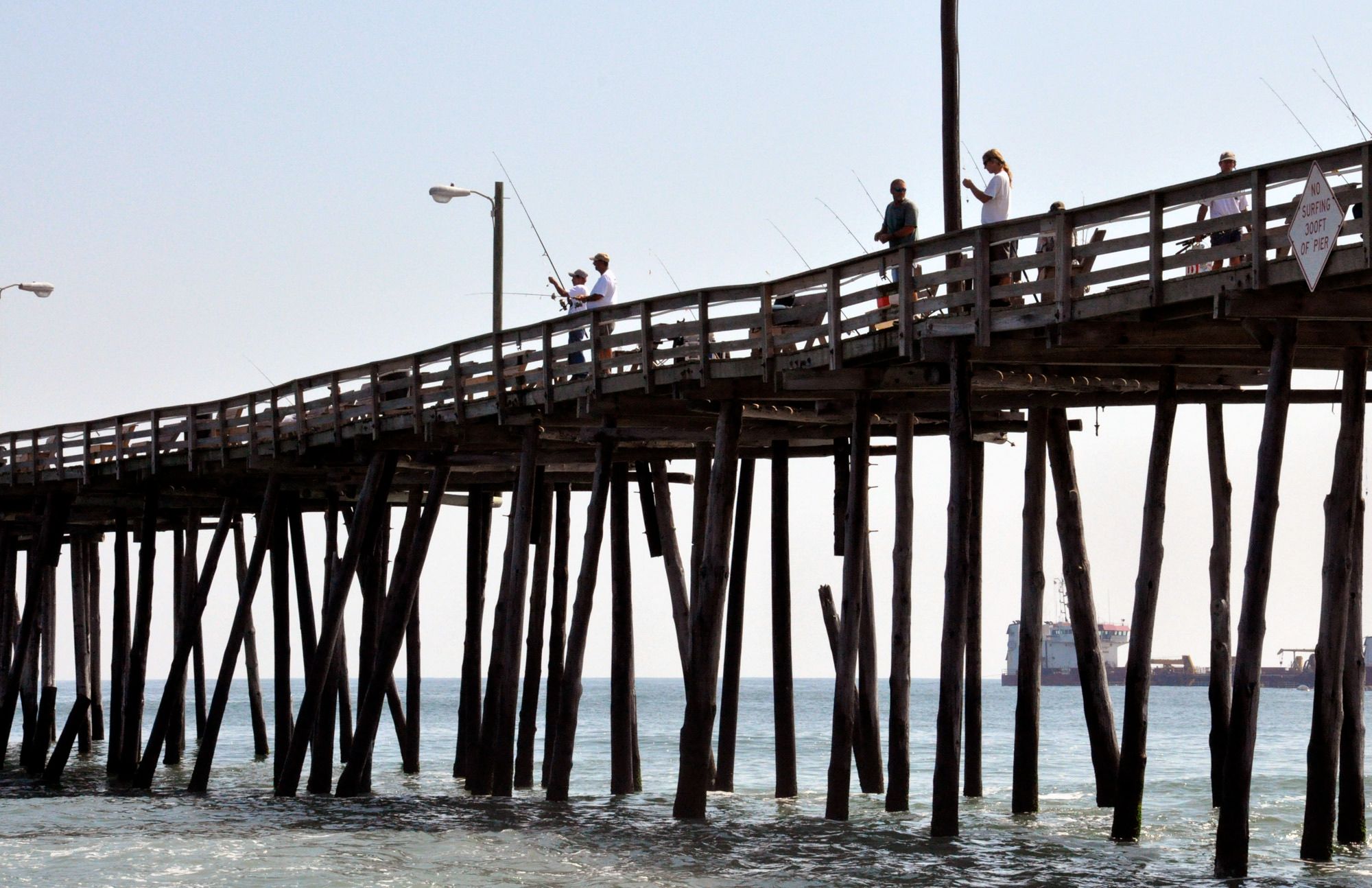
The trip also works for people who never set foot on a charter boat. The beaches of Cape Hatteras National Seashore are open to surf anglers, piers reach past the breakers, and the sounds offer calmer water for kids and beginners. That range makes it a good fit for families and mixed groups where only some people fish.
The fishing
How the seasons work
The short version: spring and fall for inshore, surf and pier fishing; summer for offshore. The national seashore names spring and fall as the best times overall, while noting that midsummer action is strongest offshore and that something bites all year.
Spring (March to May). Surf and pier season begins in March. Big bluefish run in spring, red drum and speckled trout get going in April, and cobia show up for a short window in May and June. Gulf Stream boats start seeing yellowfin, dolphin and the first billfish.
Summer (June to August). This is bluewater time. Blue marlin peak in June, and the Oregon Inlet Fishing Center calendar shows blue marlin, dolphin and wahoo all peaking from June through September. White marlin and sailfish build through the summer and are most plentiful in August and September. In the surf, summer means flounder, croaker and small bluefish, with Spanish mackerel and pompano arriving in August.
Fall (September to November). For many surf anglers this is the season. Big red drum and large bluefish arrive after Labor Day, and flounder, spot, croaker and speckled trout fill the beaches. Surf and pier fishing peaks in May and again in November. Offshore, white marlin hold into October and king mackerel pick up.
Winter (December to February). Quieter, but not closed. Striped bass are a cool-season fish in the sounds, and giant bluefin tuna are typically caught and released from about January to late March. Yellowfin are caught year-round.
All of these are broad patterns. Water temperature, weather and fish movements vary from year to year, so ask your captain or a tackle shop what is happening the week you arrive.
What you fish for
Offshore: tuna (yellowfin year-round, bluefin in winter), marlin (blue and white), sailfish, mahi-mahi, wahoo and king mackerel. The fishing center notes that blue and white marlin are typically released.
Surf and pier: redfish (red drum), bluefish, flounder, speckled trout, Spanish mackerel, pompano, spot and croaker. Red drum are the signature fish: the world record, a 94-pound drum, was caught off Avon on Hatteras Island in 1984.
Sounds: trout, flounder, spot, croaker, sheepshead, red drum at night, cobia in late spring and striped bass from fall through spring.
Brackish and fresh: largemouth bass in Currituck Sound, Kitty Hawk Bay and Colington Bay, from April through November, with peaks from mid-April to early June and in September and October. White and yellow perch turn up in summer.
Where to fish
Oregon Inlet
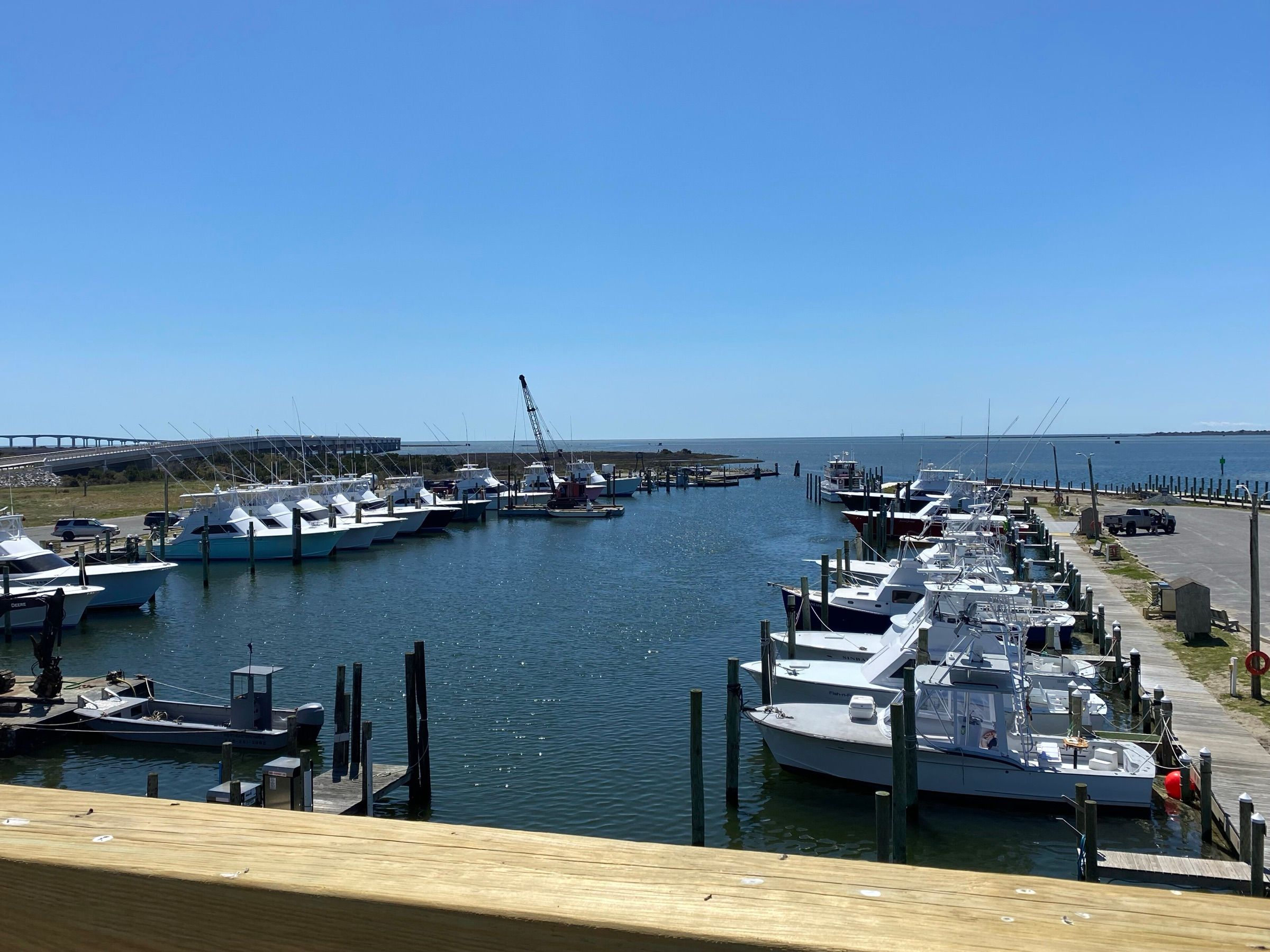
Oregon Inlet is the main offshore port for the northern beaches. The Oregon Inlet Fishing Center sits at the north end of the Marc Basnight Bridge inside Cape Hatteras National Seashore. It runs full-day offshore trips, half-day inshore and nearshore trips, and a headboat, and it sells bait and tackle. On the south side of the inlet, the Bonner Bridge Pier is open for fishing 24 hours a day.
Hatteras Island and Hatteras village
Hatteras village, on Hatteras Island, is the second offshore hub. Hatteras Harbor Marina there runs a charter fleet for offshore trips (marlin, sailfish, tuna, dolphin, wahoo) and inshore trips (speckled trout, flounder, bluefish, red drum). Up the island in Avon, the Avon Fishing Pier is known for big red drum, and admission there includes a fishing license.
The beaches of Cape Hatteras National Seashore
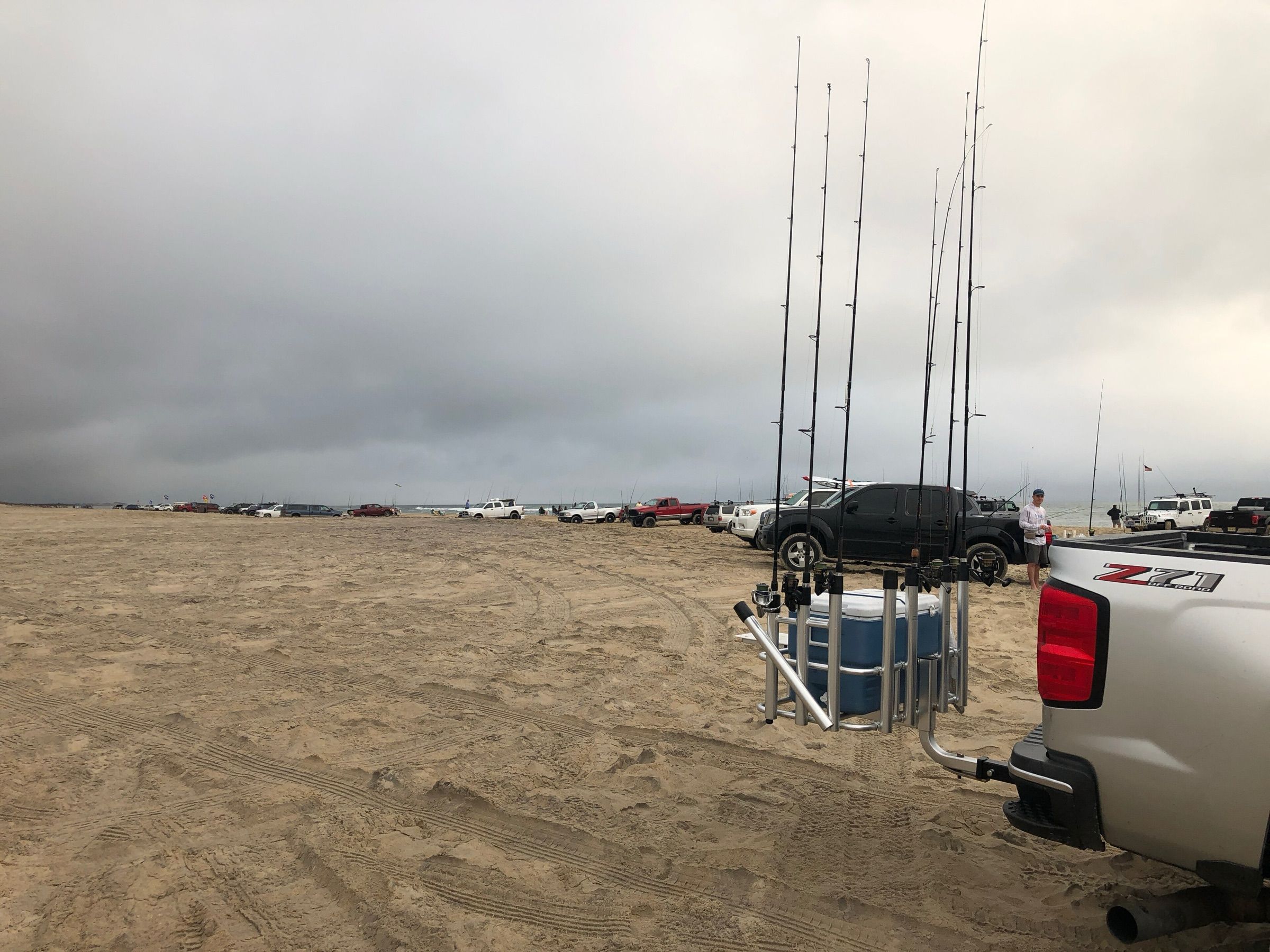
The visitors bureau counts more than 100 miles of accessible beach. Much of the national seashore can be fished on foot from the many access points, but the remote stretches are where a four-wheel-drive vehicle and a beach driving permit come in (see below). The park asks surf anglers to pack out all trash, including line, bait and fish scraps, and to release unwanted fish, including skates and sharks, rather than leaving them on the sand.
Piers
Several piers line the coast from Kill Devil Hills to Hatteras. A pier is the easiest way to get a family fishing without a boat, and the visitors bureau notes that pier fishing is covered by a blanket license, so visiting anglers usually do not need their own.
The sounds
Behind the islands, the Croatan, Roanoke, Pamlico and Albemarle sounds hold trout, flounder, spot, croaker, sheepshead and drum. Public boat ramps at Oregon Inlet, Manteo, Kill Devil Hills (Durham Street) and Pirate’s Cove make it practical to trailer a small boat. Half-day headboat trips also work the sound and inlet waters for spot, sea trout, flounder, croaker and sea bass.
Beach driving permits
To drive on the beach at Cape Hatteras National Seashore you need an off-road vehicle (ORV) permit. The basics:
- Permits are sold online only, through Recreation.gov. The process starts with a short ORV safety video.
- There are two options: a 10-day permit and an annual permit.
- Print all pages of the permit and sign it. The park does not accept digital copies or screenshots, and the proof of permit goes on the driver’s side of the windshield.
- Permits stay with the vehicle they were issued for.
Which beaches are open to vehicles changes through the year. The park publishes current beach access information and offers text alerts, so check before you head out, and plan on a vehicle suited to soft sand.
Charters and guides
The Outer Banks charter scene runs from two main docks for offshore trips, Oregon Inlet and Hatteras, plus inshore guides, headboats and fly-fishing specialists across the islands. The visitors bureau keeps a directory of charter operators you can filter by area and trip type.
A few things to know before you book:
- Offshore days are long. A Gulf Stream trip is a full day with a long run each way. If anyone in your group is prone to seasickness, a half-day inshore trip is a gentler start.
- Ask what you can keep. Billfish are generally released. Ask the crew which fish you can take home and how they handle cleaning, all subject to state and federal rules.
- Ask about the boat and the crew. Hatteras Harbor Marina says the boats in its charter association carry Coast Guard licenses, Marine Fisheries permits and insurance. That is a good checklist for any captain.
- Book early for summer. Peak offshore months fill first.
Our guide to choosing a fishing charter covers more questions to ask.
Where to stay
You can base yourself on the northern beaches (Kill Devil Hills, Nags Head and nearby towns) or on Hatteras Island, in a rental house or a hotel. The northern beaches put you close to Oregon Inlet, restaurants and the Norfolk airport. Hatteras Island puts you closer to the Hatteras offshore fleet, the Avon pier and the remote beaches of the national seashore. If the Hatteras fleet or the Avon pier is the main plan, staying on Hatteras Island cuts down on driving.
Beyond fishing
Cape Hatteras National Seashore offers lighthouse climbs, beach time, hiking (including a trail along Pamlico Sound), wildlife watching and photography, and dark skies for stargazing. The park describes its coast as the best surfing location in the eastern United States.
Trip costs
The Outer Banks can be done on a modest budget if you fish from the beach and piers. The main costs are lodging, a Gulf Stream charter if you want one, and a beach driving permit if you want remote surf access. A nonresident 10-day coastal fishing license is a small line item, and you may not need one if you only fish from charters and piers. Check current fees on the Division of Marine Fisheries license page.
Getting there and around
Norfolk International Airport in Virginia is the closest major airport, about 82 miles north and roughly an hour and a half from the northern beaches. Raleigh-Durham is about 192 miles west, and Coastal Carolina Regional in New Bern is about 138 miles southwest. You can also approach from the south by car ferry, which takes longer.
Plan on a car. A few roads run north and south along the islands, so navigation is simple.
Hurricane season in the Atlantic runs from June 1 to November 30. Storms can close roads, ferries and beach access on short notice, so watch forecasts and consider travel insurance for late-summer and fall trips. Our fishing trip safety and weather guide has more.
Licenses and rules
North Carolina’s coastal fishing rules come from the Division of Marine Fisheries. Anyone 16 or older who fishes recreationally in coastal waters needs a Coastal Recreational Fishing License, sold for 10 days, a year or a lifetime online, through license agents and at Division offices. The visitors bureau notes that charter boats and piers are covered by a blanket license.
Size limits, bag limits and seasons change, sometimes on short notice. Check the Division’s recreational limits page before every trip, and ask your captain or pier staff. For general background, see our fishing licenses guide.
Frequently asked questions
When is the best time to fish the Outer Banks?
It depends on the fishing. The national seashore calls spring and fall the best seasons overall, which is when red drum, speckled trout and big bluefish are around. Summer is the offshore season, with blue marlin, dolphin and wahoo peaking from June through September and white marlin and sailfish strongest in August and September.
How far is the Gulf Stream from the Outer Banks?
The visitors bureau puts the Gulf Stream about 30 miles off the coast. Full-day offshore charters from Oregon Inlet and Hatteras make that run to fish the edge of the current.
Do I need a permit to drive on the beach to surf fish?
Yes. Cape Hatteras National Seashore requires an off-road vehicle permit, sold online only through Recreation.gov after you watch a short safety video. There are 10-day and annual permits, and some areas close seasonally, so check the park's beach access page before you go.
Do I need a fishing license on a charter or pier?
Anglers 16 and older need a North Carolina Coastal Recreational Fishing License for most saltwater fishing. The visitors bureau says charter boats and piers are covered by a blanket license, but confirm with your captain or pier and check the Division of Marine Fisheries before you go.
Sources and fact-checking (11)
Facts checked against these sources on October 23, 2026. Seasons, rules and businesses change; confirm with the official source before you travel. How we research.
- Outer Banks Fishing, Outer Banks Visitors Bureau (outerbanks.org)
- Outer Banks fishing seasons article, Outer Banks Visitors Bureau (outerbanks.org)
- Getting Here, Outer Banks Visitors Bureau (outerbanks.org)
- Fishing, Cape Hatteras National Seashore (nps.gov)
- Off-Road Vehicle Permits, Cape Hatteras National Seashore (nps.gov)
- Things To Do, Cape Hatteras National Seashore (nps.gov)
- Oregon Inlet Fishing Center (oregon-inlet.com)
- Species Fished calendar, Oregon Inlet Fishing Center (oregon-inlet.com)
- Hatteras Harbor Marina (hatterasharbor.com)
- Recreational Fishing Licenses, NC Division of Marine Fisheries (deq.nc.gov)
- Tropical Cyclone Climatology, National Hurricane Center (nhc.noaa.gov)