Check current conditions and rules
Official sources for real-time information. Conditions change daily; these pages are the authority, not this guide.
- NPS Cape Hatteras: Beach access statusWhich ramps and beaches are open to vehiclesLast checked Oct 24, 2026
- NWS Newport/Morehead City: Marine forecastsSound, inlet and coastal waters forecastsLast checked Oct 24, 2026
- NOAA National Hurricane CenterActive storms and the tropical outlookLast checked Oct 24, 2026
- NC Division of Marine Fisheries: Size and bag limitsCurrent red drum size and bag limitsLast checked Oct 24, 2026
- NPS Cape Hatteras: ORV permitsOnline permits through Recreation.govLast checked Oct 24, 2026
Fall is red drum season on the Outer Banks. After Labor Day, the big fish return to the beaches, and for many surf anglers this is the trip of the year. The outline is simple: plan for September through November, base yourself on Hatteras Island if the surf is your focus, bring heavy surf gear and circle hooks, and be ready to release most of what you catch. For the wider picture, see our Outer Banks guide.
Why fall drum draw a crowd
Redfish, called red drum in North Carolina, are the state’s saltwater fish. They can reach about 5 feet and 100 pounds, and the all-tackle world record, a 94-pound drum, came from the surf off Avon on Hatteras Island in 1984. The visitors bureau describes the size classes locals use: puppy drum are the young fish, and the biggest are known as channel bass.
The state’s fisheries agency notes that adult drum spawn near passes, inlets and bays from late summer into early fall. That puts large fish along the beaches and around the inlets at the same time many visitors are planning fall trips.
When to go
The broad pattern from the visitors bureau: drum come back after Labor Day, and spring and fall are the two best seasons for them. The Oregon Inlet Fishing Center calendar lists red drum from April through November. A regional fishing publication describes the fall surf at Cape Hatteras National Seashore as full of puppy drum, with larger red drum caught at times, and describes fall as a peak time for surf fishing.
Treat all of this as a pattern, not a promise. Water temperature, wind and storms move the fish from week to week and year to year. Before you commit to dates, call a local tackle shop. The national seashore names tackle shops as the best source of current fishing information.
Where to fish
Cape Point and the Hatteras Island beaches
Cape Point, at Buxton on Hatteras Island, is a famous surf spot for big drum. The Division of Marine Fisheries has described the Outer Banks as known for its giant red drum fishery, and the state’s fisheries director has met anglers at Cape Point to talk about drum handling. The regional fishing press calls the Point a favorite fall surf spot and notes that a southwest wind is often good there, while an east or northeast wind can be good on the other beaches. Rougher water is usually seen as better for surf fishing.
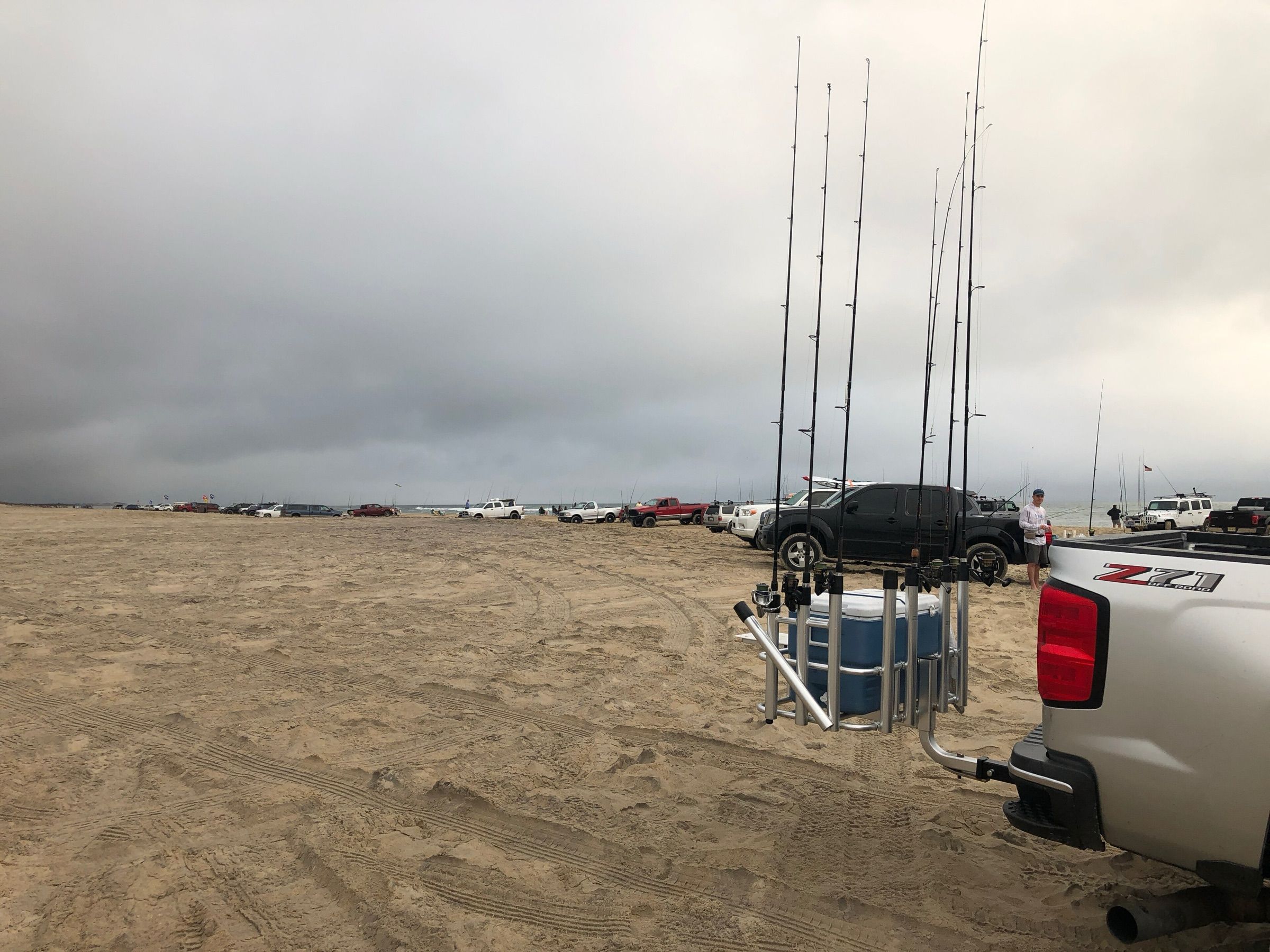
Much of this shoreline is reached by driving on the sand. That requires an off-road vehicle permit from the national seashore, sold online only through Recreation.gov as a 10-day or annual permit. Which ramps and beaches are open to vehicles changes during the year, so check the park’s beach access information before you go.
Source: NPS Cape Hatteras: ORV permits, checked October 24, 2026.
Piers
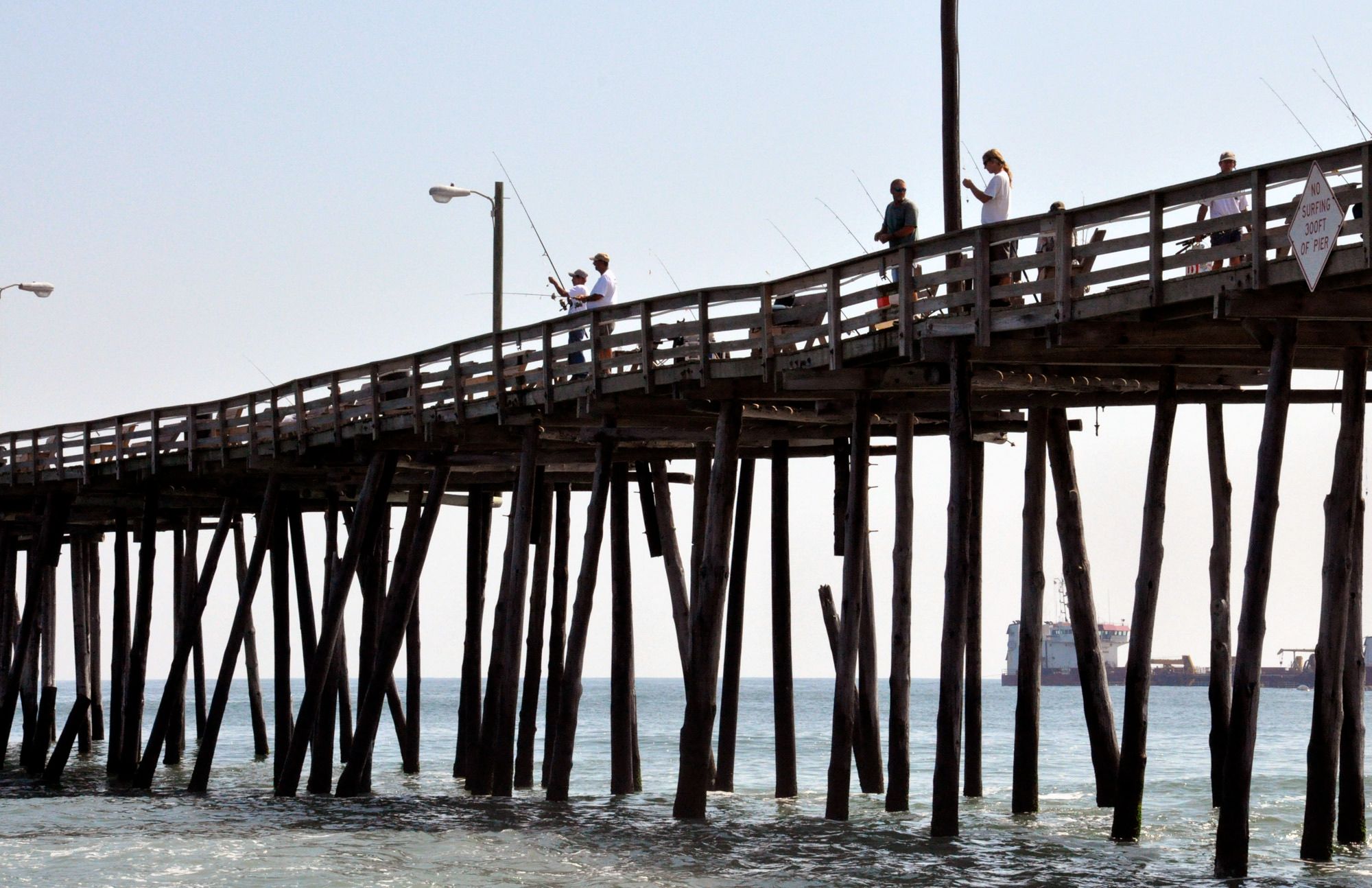
The Avon Fishing Pier is known for its record catches of giant red drum, and the national seashore says a fishing license is included with admission. Reports in the regional press also mention drum landed at the Rodanthe pier. A pier is a good choice if you do not have a four-wheel drive.
Inlets and the sounds
The state notes that adult drum spawn near inlets and passes, which is one reason anglers fish the inlets in fall. In the sounds behind the islands, the visitors bureau says red drum can be caught at night. Farther south and west in Pamlico Sound, the state notes a catch-and-release fishery for drum over 50 pounds around the mouths of the Neuse and Pamlico rivers.
Surf or boat?
Surf and pier is the traditional Outer Banks approach. It costs less, needs no captain, and puts you where the world record came from. Plan on stout surf tackle, a way to haul gear down the beach, and patience through slow tides.
Boat trips work the sounds and inlets. Hatteras Harbor Marina lists red drum among its inshore targets, along with speckled trout, flounder and bluefish. A guide handles the navigation and the rigging, which is worth a lot if you have not fished big drum before. Our Outer Banks trip comparison covers how the options stack up.
Releasing big drum well
The Division of Marine Fisheries puts it plainly: careful handling increases the chance that a released drum survives, and protecting the large spawners helps keep the population healthy. Its ethical angling guidance comes down to a few habits:
- Match your gear to the fish so the fight is shorter.
- Use circle hooks, barbless or with the barb pressed down, when fishing bait. The state also publishes a circle hook rig guide for red drum.
- Keep the fish in the water when you can, and wet your hands before touching it.
- Keep it off dry sand, towels and decks. Rough, dry surfaces strip the fish’s protective slime.
- Support it horizontally, under the head and along the body. Do not hang a big drum by a lip grip or hold it by the gills.
- Keep photos quick. Have someone count down, lift briefly, then get the fish back in the water.
- Revive it if it does not swim off: hold it head first into the water and move it forward until it kicks away.
- If a hook is swallowed, cut the line as close to the hook as you can.
The state’s saltwater fishing tournament also offers a release citation for red drum of 40 inches or longer.
Rules and licenses
Red drum are managed closely in North Carolina, and much of the fishery is catch-and-release. Size limits, bag limits and the methods you may use change over time, so do not rely on memory. Check the Division of Marine Fisheries recreational limits page before every trip. Anglers 16 and older need a Coastal Recreational Fishing License, and charters and piers are covered by a blanket license, according to the visitors bureau. Our fishing licenses guide has background.
Weather
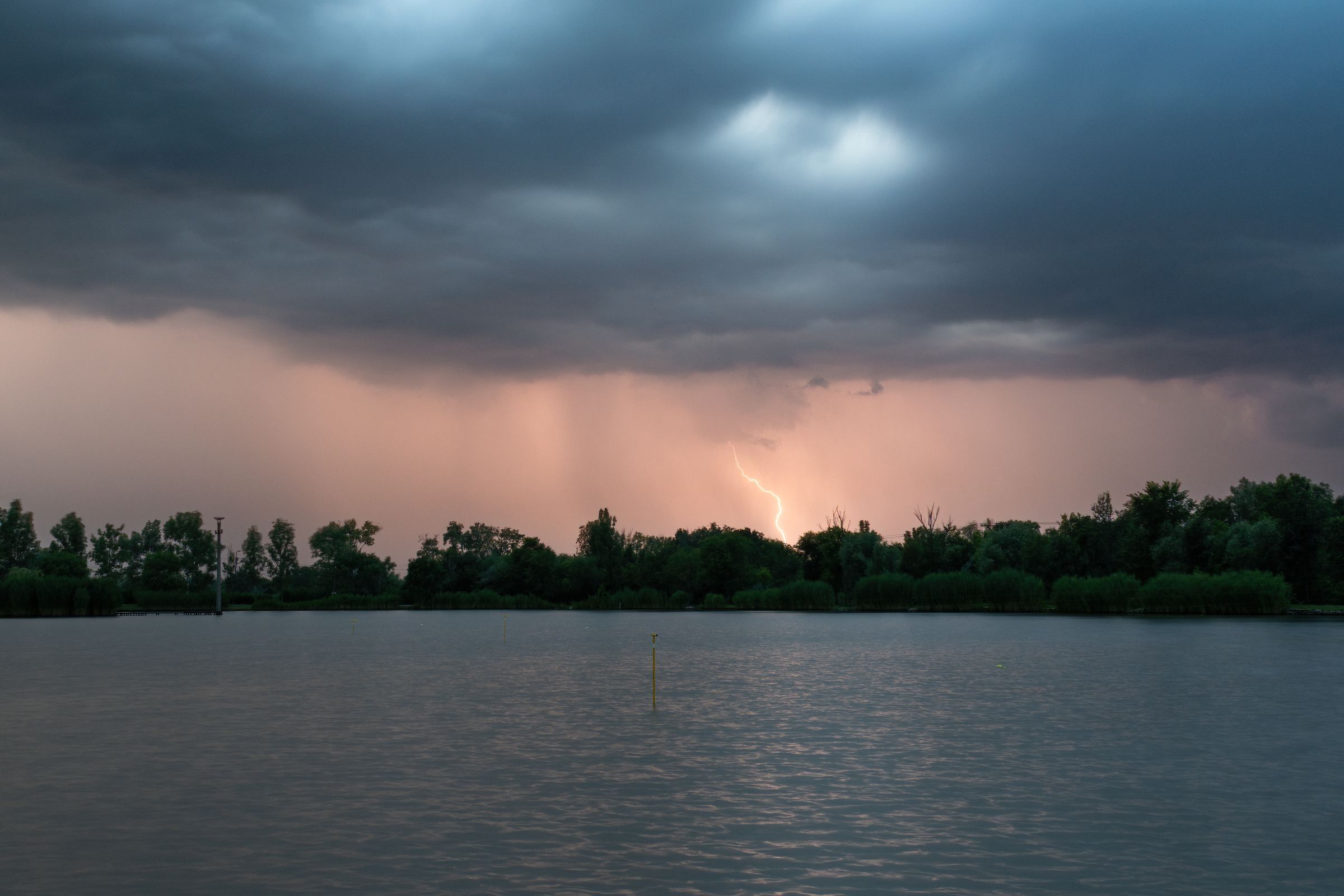
Fall weather on the Outer Banks changes fast. The Atlantic hurricane season runs through November 30, with most activity between mid-August and mid-October, and strong fall winds can rough up the surf and close beach access. Pack layers and rain gear, follow the forecast, and keep your dates flexible. The park asks surf anglers to pack out all trash, including line, bait and fish scraps. Our trip safety and weather guide has more, and our October and November guides list other fall options.
Source: NOAA National Hurricane Center: Tropical cyclone climatology, checked October 24, 2026.
Frequently asked questions
When do big red drum show up on the Outer Banks in fall?
The usual pattern is that drum return to the beaches after Labor Day, and the visitors bureau names spring and fall as the best red drum seasons. Timing shifts with water temperature and weather each year, so check recent reports from a tackle shop before you lock in dates.
Can I keep a big red drum?
Red drum in North Carolina are mostly a catch-and-release fishery, and the state limits which fish may be kept. Size and bag rules change, so check the Division of Marine Fisheries recreational limits page before every trip rather than relying on what you heard last year.
Is surf or boat fishing better for fall drum?
Both work. The surf and piers on Hatteras Island are the classic approach and need no boat. An inshore charter can cover the sounds and inlets and handle the navigation for you. If you are new to big drum, a guide is the faster way to learn the rigs and the release routine.
Where is the world record red drum from?
The all-tackle world record, a 94-pound fish, was caught off Avon on Hatteras Island in 1984.
Sources and fact-checking (13)
Facts checked against these sources on October 24, 2026. Seasons, rules and businesses change; confirm with the official source before you travel. How we research.
- Outer Banks fishing seasons article, Outer Banks Visitors Bureau (outerbanks.org)
- Outer Banks Fishing, Outer Banks Visitors Bureau (outerbanks.org)
- Fishing, Cape Hatteras National Seashore (nps.gov)
- Off-Road Vehicle Permits, Cape Hatteras National Seashore (nps.gov)
- Species Fished calendar, Oregon Inlet Fishing Center (oregon-inlet.com)
- Hatteras Harbor Marina (hatterasharbor.com)
- Red Drum, NC Division of Marine Fisheries (deq.nc.gov)
- Ethical Angling, NC Division of Marine Fisheries (deq.nc.gov)
- Fisheries Director catches up with anglers at Cape Point, NC DEQ (deq.nc.gov)
- Recreational Size and Bag Limits, NC Division of Marine Fisheries (deq.nc.gov)
- Recreational Fishing Licenses, NC Division of Marine Fisheries (deq.nc.gov)
- OBX surf fishing hits peak now, Carolina Sportsman (carolinasportsman.com)
- Tropical Cyclone Climatology, National Hurricane Center (nhc.noaa.gov)