Check current conditions and rules
Official sources for real-time information. Conditions change daily; these pages are the authority, not this guide.
- NWS: Marine forecastsCoastal, offshore and point forecasts, plus advisoriesLast checked Oct 24, 2026
- NOAA National Hurricane CenterActive storms and the tropical outlookLast checked Oct 24, 2026
- NWS: Lightning safetyLast checked Oct 24, 2026
- NWS: Cold water safetyLast checked Oct 24, 2026
- U.S. Coast Guard: Wearing your life jacketFederal life jacket rules for kids and adultsLast checked Oct 24, 2026
- NWS: Heat illnessLast checked Oct 24, 2026
Most bad days on the water start with a forecast someone ignored. Check the marine forecast before every trip, know what an advisory means, respect cold water and lightning, and tell someone where you are going. On a charter, the captain makes the call; on your own, you do.
Read the marine forecast
The National Weather Service publishes marine forecasts separate from land forecasts. Start at weather.gov/marine, which links to:
- Coastal and Great Lakes forecasts for waters along the mainland coast and the Great Lakes
- Offshore and high seas forecasts for trips farther out
- Point forecasts with hourly conditions for a single spot
- Text forecasts by zone, useful on a weak phone signal
Look at wind speed and direction, wave height and period, and how conditions are expected to change through the day, not just at launch time.
NOAA Weather Radio broadcasts National Weather Service warnings, watches and forecasts around the clock and covers adjacent coastal waters. A weather radio is a good backup when phone coverage drops.
Source: NWS: Marine forecasts, checked October 24, 2026.
Small Craft Advisories
A Small Craft Advisory is issued by coastal and Great Lakes forecast offices when conditions may be hazardous to small boats, and also for ice that could threaten them. The criteria are set by region, so the wind or wave threshold on one coast may differ from another.
There is no fixed definition of “small craft.” Any boat that could be affected should treat the advisory seriously, considering the operator’s experience and the boat’s type, size and seaworthiness. For a rental skiff or kayak, an advisory is a strong reason to stay in or fish protected water.
Source: NWS glossary: Small Craft Advisory, checked October 24, 2026.
Hurricane season
Tropical systems shape many saltwater trips.
- Atlantic, Gulf of Mexico and Caribbean: June 1 through November 30. Activity peaks around September 10, with most storms between mid-August and mid-October.
- Eastern Pacific (including Mexico’s Pacific coast): May 15 through November 30, with a peak in late August and most storms between late June and early October.
If you book a coastal trip in these months, buy travel insurance that covers weather, read your charter and lodging cancellation terms, and monitor forecasts in the days before you go. If a warning is issued during your trip, follow local guidance and evacuation orders.
Source: NOAA National Hurricane Center: Tropical cyclone climatology, checked October 24, 2026.
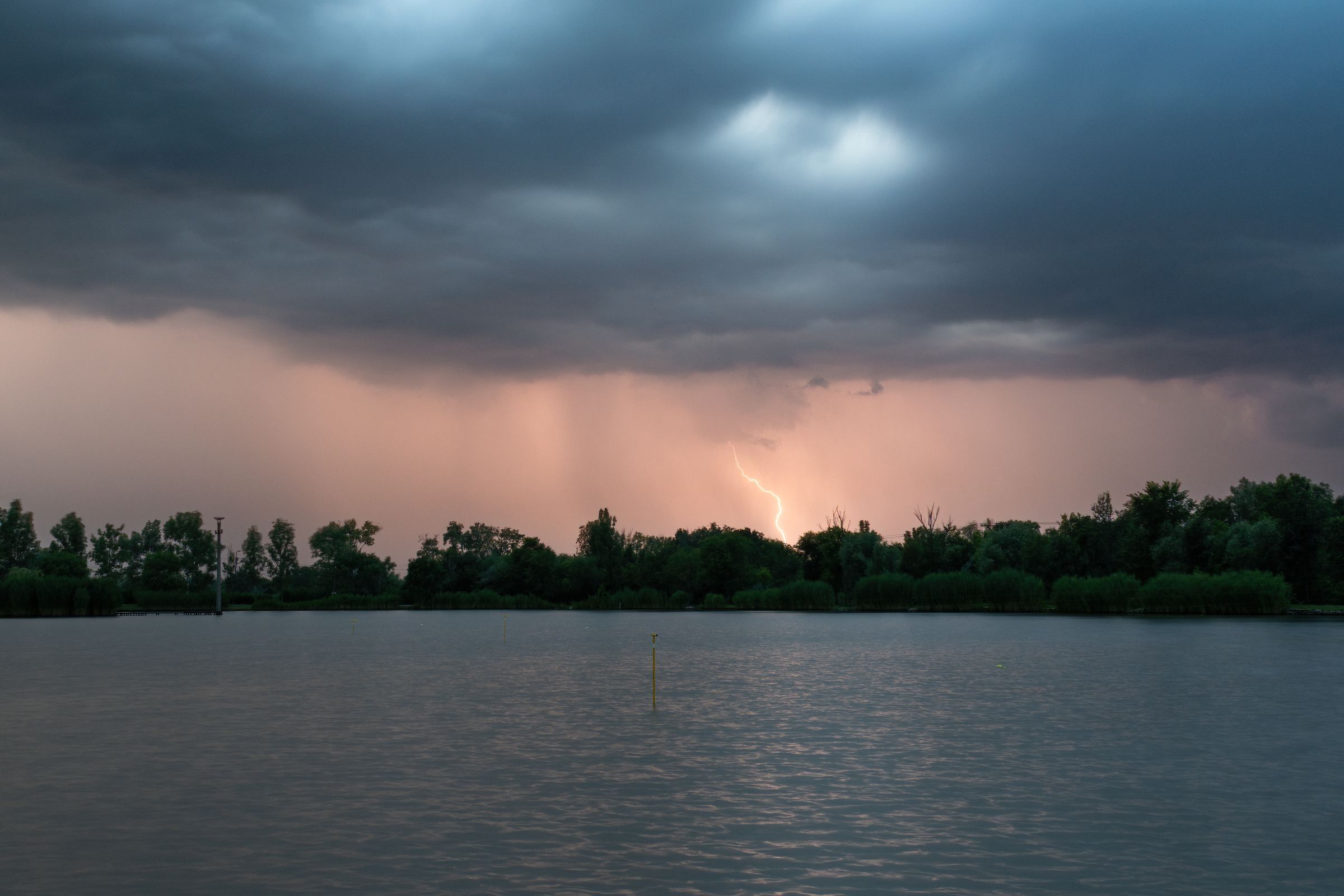
Lightning
Lightning strikes the U.S. about 25 million times a year, mostly in summer, and kills about 20 people a year.
- No place outdoors is safe during a thunderstorm, and a boat is outdoors.
- If you can hear thunder, you are likely within striking distance. Head in right away.
- Move early. Waiting too long to seek shelter is a factor in many lightning deaths and injuries.
If thunderstorms are in the forecast, plan your day so you can reach shelter quickly.
Source: NWS: Lightning safety and NWS: Lightning safety tips, checked October 24, 2026.
Cold water
A fall into cold water is dangerous long before hypothermia sets in. Sudden immersion can trigger cold shock: involuntary gasping, rapid breathing and spikes in heart rate and blood pressure. The worst of it hits in the first two to three minutes and can drown even strong swimmers.
How cold is cold? Water of 50 to 60 degrees F can cause cold shock as severe as near-freezing water, and gasping can start in water as warm as 77 degrees F. The National Center for Cold Water Safety advises caution below 70 degrees F, calls 60 to 70 degree water dangerous, and 50 to 60 degree water very dangerous and immediately life-threatening.
- Wear a life jacket. It keeps you afloat through cold shock and fatigue and greatly improves your odds.
- Dress for the water temperature, not the air. Water stays cold year-round in some places, and weather can cool it quickly even in summer.
- If you go in: stay calm, get out fast if you can, use anything that floats, and conserve heat in the H.E.L.P. position or by huddling with others.
Source: NWS: Cold water safety, checked October 24, 2026.
Life jackets
Children under 13 must wear a Coast Guard approved life jacket on a recreational boat that is underway, unless below deck or in an enclosed cabin, and some states have their own rules. For adults, a life jacket you actually wear is the one that works. Inflatable life jackets come in adult sizes only and are not recommended for weak or non-swimmers. See our fishing with kids guide for fit tips.
Source: U.S. Coast Guard: Wearing your life jacket, checked October 24, 2026.
File a float plan
Before a DIY boat trip, leave a float plan with someone ashore who will act if you are late. Include:
- Who is aboard, and your boat’s description
- Where you are launching and where you plan to fish
- When you will be back, and when they should call for help
- What safety and communication gear you carry
For remote or offshore trips, carry a signaling device such as a VHF radio, an EPIRB or a personal locator beacon.
Sun and heat
A day on the water is long, bright exposure, and UV reflects off water and sand. Wear long sleeves, a wide-brimmed hat and wraparound sunglasses, and use broad-spectrum sunscreen of SPF 15 or higher.
Know the signs of heat illness:
- Heat exhaustion: heavy sweating, weakness, pale and clammy skin, fast weak pulse, cramps, dizziness, nausea. Get to a cooler place, loosen clothing, apply cool wet cloths and sip water. Get help if symptoms worsen or last over an hour.
- Heat stroke: confusion, slurred speech, a body temperature above 103 degrees F, hot skin, a rapid strong pulse, or fainting. This is a medical emergency: call 911 and cool the person while you wait. Do not give fluids.
A pre-launch routine
- Check the marine forecast and any advisories the night before and the morning of.
- Know the water temperature and dress for it.
- Put on life jackets, especially kids.
- Leave a float plan.
- Pack water, sun protection and a charged phone in a waterproof case.
- Agree on a turnaround time and a “go home” rule for thunder or building wind.
For more on choosing a captain who makes good weather calls, read our charter guide.
Frequently asked questions
What is a Small Craft Advisory?
It is an advisory issued by National Weather Service coastal and Great Lakes offices when wind, seas or ice may be hazardous to small boats. The thresholds are set by region, and "small craft" has no fixed size, so operators judge it by their boat and experience.
When is hurricane season?
In the Atlantic, June 1 through November 30, with peak activity from mid-August to mid-October. In the eastern Pacific, May 15 through November 30.
How cold does water have to be to be dangerous?
Colder than you might think. The National Center for Cold Water Safety urges caution below 70 degrees F and calls 50 to 60 degree water very dangerous. Cold shock can cause gasping and drowning in the first minutes, even for strong swimmers.
What should I do if I hear thunder on the water?
Head for shelter right away. If you can hear thunder, you are likely close enough to be struck, and no place outdoors is safe during a thunderstorm.
Sources and fact-checking (12)
Facts checked against these sources on October 24, 2026. Seasons, rules and businesses change; confirm with the official source before you travel. How we research.
- National Weather Service: Marine forecasts (weather.gov)
- National Weather Service glossary: Small Craft Advisory (forecast.weather.gov)
- NOAA Weather Radio All Hazards (weather.gov)
- National Hurricane Center: Tropical cyclone climatology (nhc.noaa.gov)
- National Weather Service: Lightning safety (weather.gov)
- National Weather Service: Lightning safety tips (weather.gov)
- National Weather Service: Cold water safety (weather.gov)
- National Center for Cold Water Safety: Water temperature safety guide (coldwatersafety.org)
- U.S. Coast Guard Boating Safety: Wearing your life jacket (uscgboating.org)
- National Weather Service: Heat illness (weather.gov)
- CDC: Reducing risk for skin cancer (cdc.gov)
- Florida Keys and Key West: Travel FAQ (visitfloridakeys.com)