Check current conditions and rules
Official sources for real-time information. Conditions change daily; these pages are the authority, not this guide.
- U.S. Coast Guard: Wearing your life jacketUnder 13 must wear one while underwayLast checked Oct 24, 2026
- CDC Yellow Book: Motion sicknessIncludes advice on motion sickness medicine for childrenLast checked Oct 24, 2026
- NWS: Heat safetyChildren are more vulnerable to heatLast checked Oct 24, 2026
- NWS: Marine forecastsLast checked Oct 24, 2026
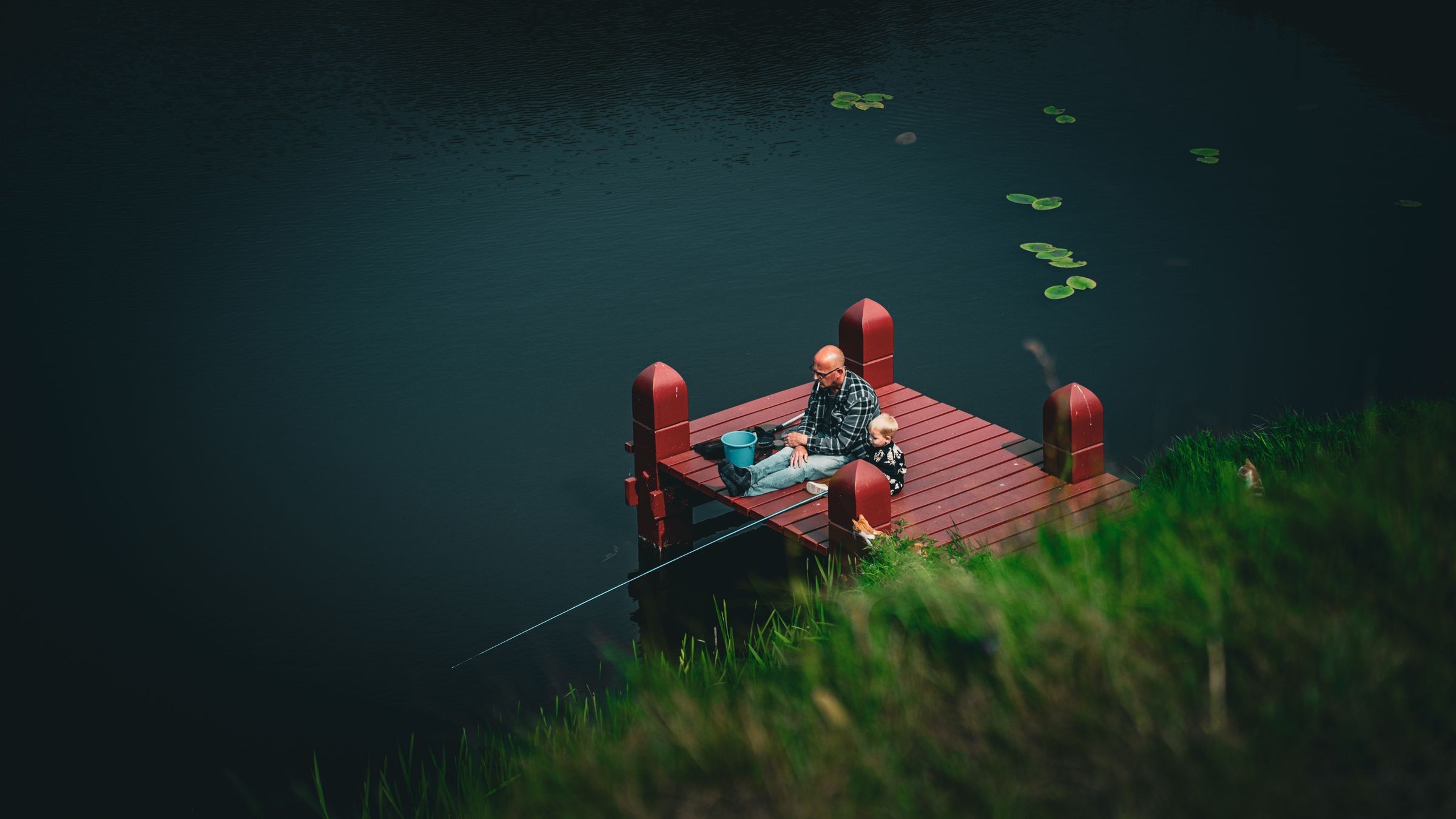
The best fishing trips with kids are short, close to shore and full of bites. Pick water and fish that match your child’s age and patience, keep the first outing to a few hours, and plan an easy exit. Everything else is a bonus.
Match the trip to the age
Young kids (roughly preschool). Think docks, piers, ponds and calm shorelines. Short attention spans mean an hour can be plenty. Bring snacks, a bucket to look at fish, and something else to do nearby.
Early school age. Kids this age can handle a half-day trip on calm water, especially if they get to reel in fish. Panfish, bass and inshore species that bite often are good targets. See bass and walleye.
Older kids and teens. Many are ready for longer days, fly fishing, or a first offshore trip if they handle motion well. Involve them in the planning and let them pick a target species.
Whatever the age, keep it about their fun. A veteran guide’s advice is to keep kids engaged and let them set the pace, and to end a trip early rather than make a child suffer through seasickness.
Why half-day trips work
A half-day charter or a morning on the lake fits a child’s energy, and gets you back before afternoon heat or wind. Ask charter captains whether they run family trips; in the Florida Keys, for example, some operators specialize in family-friendly outings. Our charter guide lists questions to ask, including restrooms and shade on board.
Life jackets
Under federal rules, children under 13 must wear a Coast Guard approved life jacket on a recreational boat that is underway, unless they are below deck or in an enclosed cabin. States can have their own rules, so check locally.
Fit matters more than brand:
- Use a child size, not an adult one. Child life jackets are grouped by weight: infant (up to 33 pounds), child (33 to 55 pounds) and youth (55 to 88 pounds).
- Check the label for weight and chest size.
- Test the fit. A properly worn foam jacket should be snug and should not ride up over the chin or ears. Try it in the water so you know the child’s airway stays clear.
- Skip inflatables for kids. Inflatable life jackets come in adult sizes only and are not recommended for weak or non-swimmers.
If you are on a charter, ask whether they carry life jackets in your child’s size. If not, bring your own.
Source: U.S. Coast Guard: Wearing your life jacket, checked October 24, 2026.
Seasickness
Kids can get motion sick like adults. Start with non-drug measures:
- Choose calm, protected water and short trips.
- Have them look at the horizon instead of a screen or book.
- Sit near the middle of the boat, where motion is lowest.
- Get fresh air and keep them hydrated.
Some motion sickness medicines are used for children, but others, such as scopolamine, should be avoided in kids, and some antihistamines can cause unexpected reactions. Talk to your pediatrician, and try any medicine at home before the trip.
Source: CDC Yellow Book: Motion sickness, checked October 24, 2026.
Sun and heat
Children face higher risks from heat. Cover up with long sleeves, a wide-brimmed hat and wraparound sunglasses, use broad-spectrum sunscreen of at least SPF 15, and look for shade when the UV index is 3 or higher. UV reflects off water and sand. Bring more water than you think you need, and never leave a child in a parked car, even briefly.
Source: NWS: Heat safety, checked October 24, 2026.
Kids’ license exemptions vary
Most places let young kids fish without a license, but the cutoff age varies a lot. Rules change, so use these as a starting point and confirm with the agency.
| Where | Youth rule (check the agency for details) |
|---|---|
| Florida | No license needed under 16 (statute) |
| Alaska | Nonresidents under 16 and residents under 18 do not need a license; harvest records may still apply (ADF&G) |
| Michigan | Under 17 may fish without a license; an optional youth license exists (Michigan DNR) |
| Montana | 11 and under need no license, conservation license or AIS pass (FWP) |
| Missouri | 15 and younger may fish without a permit (MDC) |
| Minnesota | Nonresidents under 16 may fish under a parent’s or guardian’s license (MN DNR) |
| North Carolina coastal | Under 16 need no Coastal Recreational Fishing License (DMF) |
| Yellowstone National Park | 15 and younger may fish with a supervising permitted adult, or get a free permit (NPS) |
| Ontario | Non-Canadian residents under 18 may fish with a licensed adult, sharing that adult’s limits (Ontario) |
| British Columbia tidal waters | Juveniles need a licence too (DFO) |
In Michigan, any adult actively helping a child fish needs a license. When a child’s catch counts against an adult’s limit, as in Ontario, plan the day’s harvest together. Our licenses guide covers adult licenses.
Make it fun
- Aim for action, not trophies. Lots of small fish beat one big one for most kids.
- Bring snacks and drinks for everyone. Long gaps between bites go better with food.
- Give them jobs. Netting, holding the bait bucket, or taking photos keeps them involved.
- Have a plan B. Swimming, beachcombing or an ice cream stop can save a slow day.
- Quit while it is fun. Ending early on a high note makes them want to go again.
For destination ideas, browse family fishing vacations and parent and kid fishing trips.
Frequently asked questions
Do kids have to wear a life jacket on a boat?
Under federal rules, children under 13 must wear a Coast Guard approved life jacket on a recreational vessel that is underway, unless they are below deck or in an enclosed cabin. Some states have their own rules, so check where you are boating.
What is the best first fishing trip for a child?
Something short and close: a few hours from a dock, pier or shoreline, or a half-day inshore charter in calm water, aimed at fish that bite often. Save long offshore days for later.
At what age do kids need a fishing license?
It varies. Montana exempts anglers 11 and under, Missouri 15 and younger, Florida under 16, and Michigan under 17. British Columbia tidal waters require a licence even for juveniles. Check the agency for each place you will fish.
What helps kids with seasickness?
Start with non-drug steps: calm water, short trips, fresh air, a view of the horizon, and a spot near the middle of the boat. Ask your pediatrician before using any medicine, and test it before the trip.
Sources and fact-checking (17)
Facts checked against these sources on October 24, 2026. Seasons, rules and businesses change; confirm with the official source before you travel. How we research.
- U.S. Coast Guard Boating Safety: Wearing your life jacket (uscgboating.org)
- CDC Yellow Book: Motion sickness (cdc.gov)
- CDC: Reducing risk for skin cancer (cdc.gov)
- National Weather Service: Heat safety (weather.gov)
- Florida Sportsman: 10 things to know before going on a fishing charter (floridasportsman.com)
- Florida Keys and Key West: Fishing factoids (visitfloridakeys.com)
- Florida Statutes 379.353 (leg.state.fl.us)
- ADF&G: General license information (adfg.alaska.gov)
- Michigan DNR: License information (michigan.gov)
- Michigan DNR: 2026 fishing regulations (michigan.gov)
- Montana FWP: Fishing license basics (fwp.mt.gov)
- Missouri Department of Conservation: Permit exemptions (mdc.mo.gov)
- Minnesota DNR: Fishing regulations (files.dnr.state.mn.us)
- NC Division of Marine Fisheries: Recreational license FAQs (deq.nc.gov)
- Yellowstone National Park: Fishing (nps.gov)
- Ontario: Fishing licence for non-residents of Canada (ontario.ca)
- Fisheries and Oceans Canada: BC tidal waters sport fishing licence (pac.dfo-mpo.gc.ca)