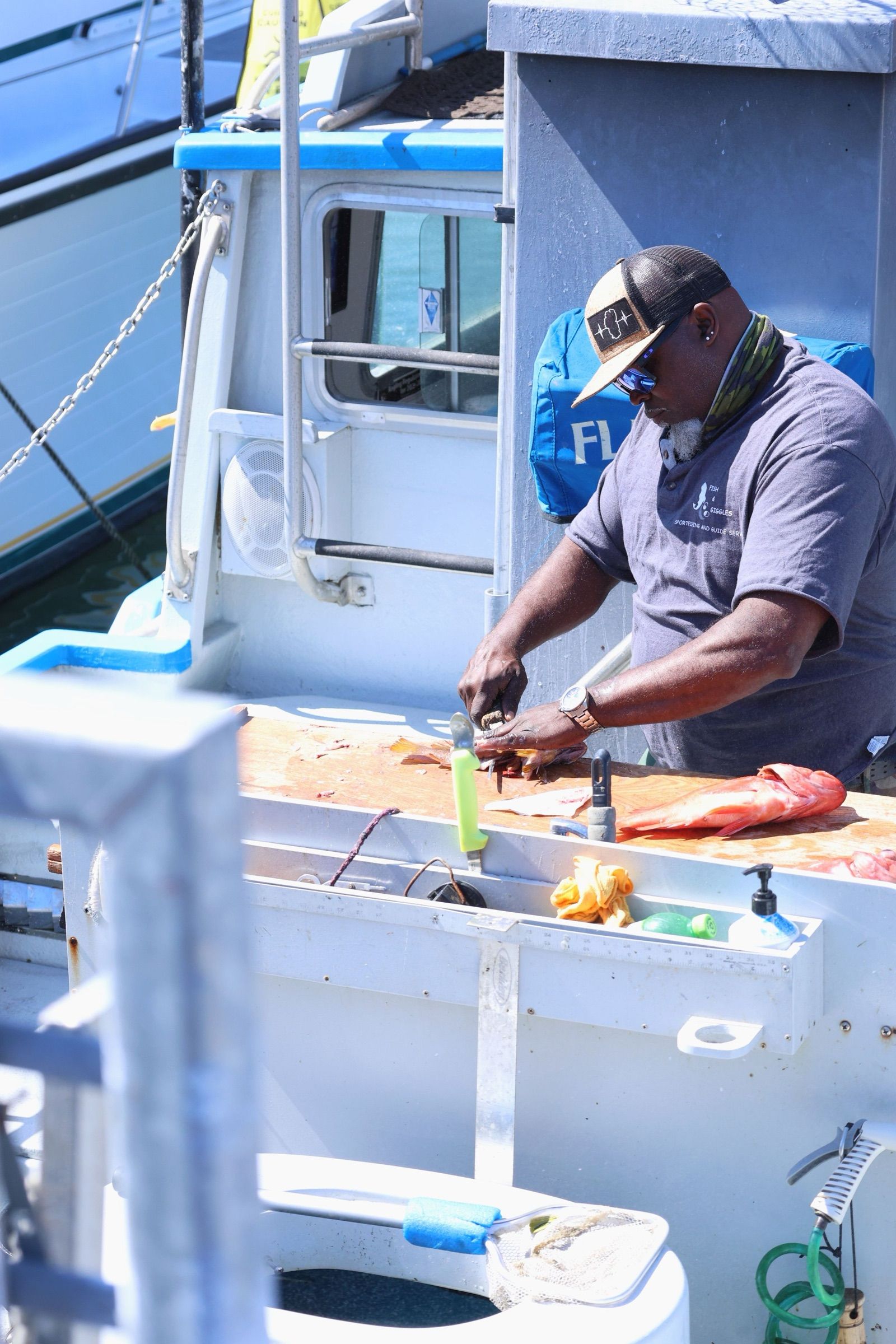
Good charter etiquette comes down to three things: be ready, let the crew run the boat, and pay them fairly. Do those and you will have a better day and a crew glad to see you back.
Before the trip
Confirm the details. Know the meeting time and place, what is included, and the weather and cancellation policy. Our charter guide has a list of questions.
Be clear about your goal. Tell the captain what you hope to catch and how your group likes to fish. Ask whether it is realistic for the season. A specific, honest goal helps the crew plan the day.
Ask about alcohol. Many charters do not allow it. If yours does, keep it modest. A clear head matters around hooks, gaffs and a moving deck.
Bring the right group. Book for the people who will actually fish. Squeezing extra people aboard to split the cost means fewer turns on the rod for everyone.
Bring food and drinks if they are not provided. Long days can include long gaps between bites. Pack enough for your whole party, not just yourself.
Arriving at the dock
- Be on time, or early. Tides, bait and weather windows do not wait.
- Travel light. Bring only what you need for the day, and ask where to stow it.
- Take seasickness medicine before you leave the dock if you need it. Motion sickness medicines work best taken before symptoms start.
- Listen to the safety briefing. Learn where life jackets are and how the crew wants you to move around the boat.
On the water
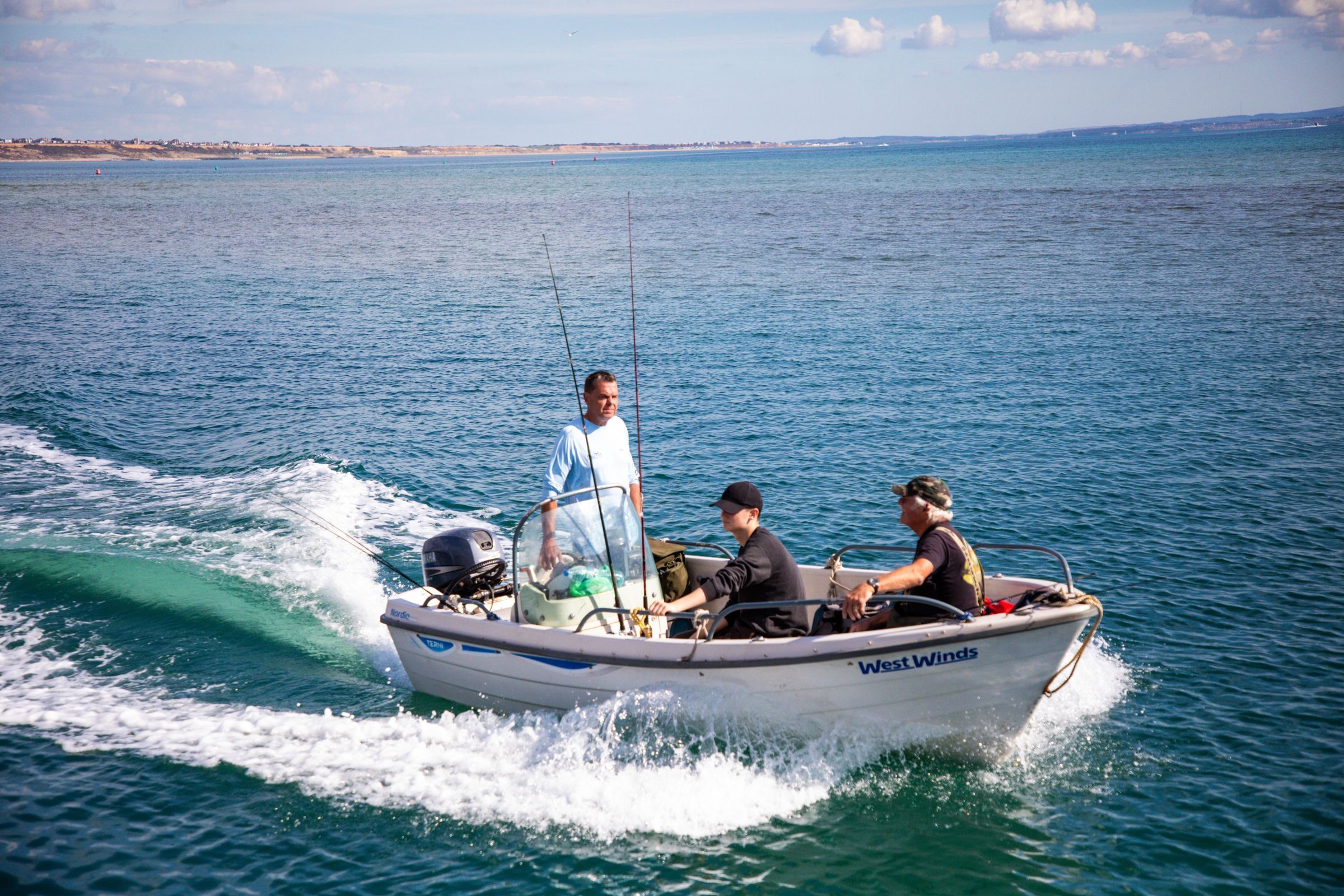
Let the crew run the boat. The captain picks the spots, tactics and timing. If you want to try something different, ask first rather than directing the boat.
Follow instructions quickly. When the mate says reel, stop reeling, or move, there is usually a reason, often one you cannot see from where you stand.
Keep hands off gear you were not invited to touch. Rods in holders, gaffs, knives and electronics are the crew’s tools.
Take your turn and share the rod. Agree on a rotation before the first bite so no one argues in the moment.
Handle fish the way the crew asks. On catch-and-release trips, follow the crew’s lead on photos. In Costa Rica, for example, billfish are released, and captains are trained to let you photograph the fish in the water so it can be released without harm.
If you get seasick, tell the crew. Stay near the middle of the boat, look at the horizon and get fresh air.
Watch the kids. Federal rules require children under 13 to wear a Coast Guard approved life jacket on a moving recreational vessel unless they are below deck or in an enclosed cabin, and some states have their own rules. Let kids set the pace, and do not make a child suffer through a rough day. See our fishing with kids guide.
Tipping: common practice
Tipping the crew is common practice on U.S. fishing charters, including in Florida. Guests often tip the captain and crew based on the quality of service, the length of the trip, and how hands-on the crew was. A common guideline is 15 to 20 percent of the charter cost. Tips are sometimes lower and often higher, depending on the day.
A few practical points:
- Check your bill first. Some charters add a gratuity automatically. Read your confirmation or final bill so you do not tip twice by accident.
- Bring cash. It is the simplest way to tip a crew. Ask ahead if you would rather use another method.
- Tip for effort, not just fish. A tip rewards how hard the crew worked to find you bites. A slow day with a crew that worked hard is still worth tipping fairly.
- Do not put the guide on the spot. Asking the captain what the “normal” tip is can be awkward for them. Use the common guideline and adjust for service.
- Think about the mate. If a mate worked your lines and fish all day, make sure the tip reaches them. If you are not sure how a crew shares tips, give it to the captain for the whole crew, or tip the mate directly.
Tipping customs vary outside the U.S. At international lodges and charters, ask the operator how gratuities are handled and whether there is a suggested amount or shared tip box for staff.
At the end of the day
- Help where invited. Some crews welcome help carrying gear; others prefer you stay out of the way. Ask.
- Ask about your fish. If you are keeping fish, ask about cleaning, ice and how to get it home. In Alaska towns such as Homer, a good trip can mean a box of frozen fillets to take home. Our traveling with fishing gear guide covers flying with fish.
- Say thank you. And if you would fish with them again, tell them and ask how far ahead to book.
Quick checklist
- Confirm time, place, inclusions and weather policy.
- Share a clear, realistic goal.
- Ask about alcohol, food and coolers.
- Arrive early, with seasickness medicine taken if needed.
- Listen to the briefing and follow the crew’s instructions.
- Check whether gratuity is included, then tip in cash, commonly 15 to 20 percent.
Budgeting for the tip from the start makes the end of the day easier. Our fishing trip budget guide includes it as a line item.
Frequently asked questions
How much should I tip on a fishing charter?
A common guideline is 15 to 20 percent of the charter cost, adjusted for the service and how hard the crew worked. Some charters add gratuity automatically, so check your confirmation or bill first.
Who gets the tip, the captain or the mate?
Guests often tip both the captain and crew. If you are unsure how the crew splits it, hand the tip to the captain and say it is for the whole crew, or tip the mate directly as well.
Should I tip if we did not catch much?
Usually, yes, if the crew worked hard. A tip rewards effort and service, not just the size of the catch.
Can I bring alcohol on a charter?
Many charters ban it. Ask when you book, and if it is allowed, keep it modest.
Sources and fact-checking (6)
Facts checked against these sources on October 23, 2026. Seasons, rules and businesses change; confirm with the official source before you travel. How we research.
- Florida Sportsman: 10 things to know before going on a fishing charter (floridasportsman.com)
- Florida Keys and Key West: Travel FAQ (visitfloridakeys.com)
- CDC Yellow Book: Motion sickness (cdc.gov)
- U.S. Coast Guard Boating Safety: Wearing your life jacket (uscgboating.org)
- INCOPESCA: Pesca deportiva (incopesca.go.cr)
- Homer Chamber of Commerce: Fishing (homeralaska.org)