Check current conditions and rules
Official sources for real-time information. Conditions change daily; these pages are the authority, not this guide.
- TSA: Fishing poleRods, hooks and tackle at the checkpointLast checked Oct 24, 2026
- TSA: Frozen foodFrozen fish and ice packsLast checked Oct 24, 2026
- TSA: Dry iceFAA dry ice limit and airline approvalLast checked Oct 24, 2026
- Delta: Sporting equipmentFishing pole size, weight and fee rulesLast checked Oct 24, 2026
- Alaska Airlines: Perishable and big game itemsFish boxes, dry ice and labelsLast checked Oct 24, 2026
- CBP: Prohibited and restricted itemsBringing fish and food back into the U.S.Last checked Oct 24, 2026
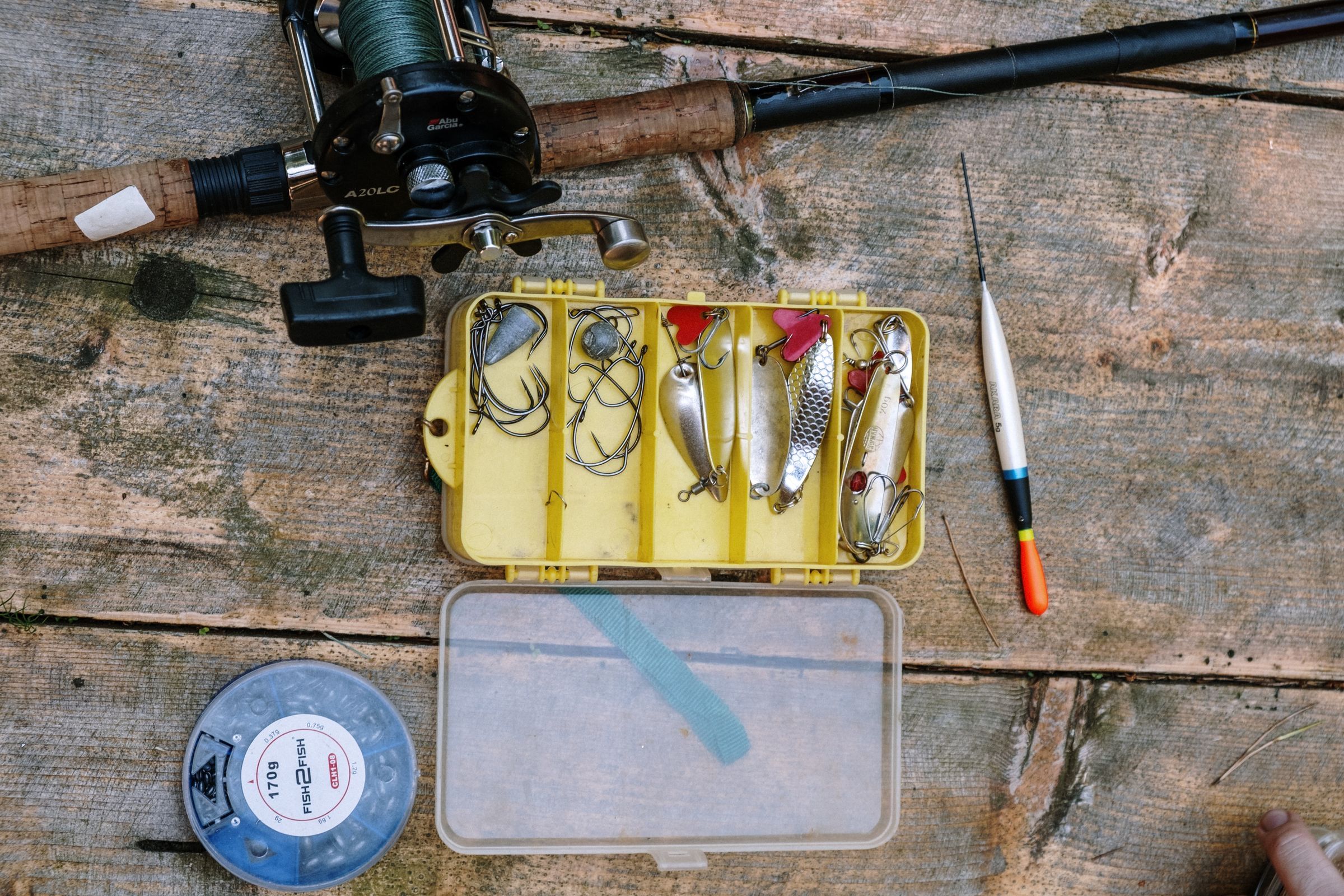
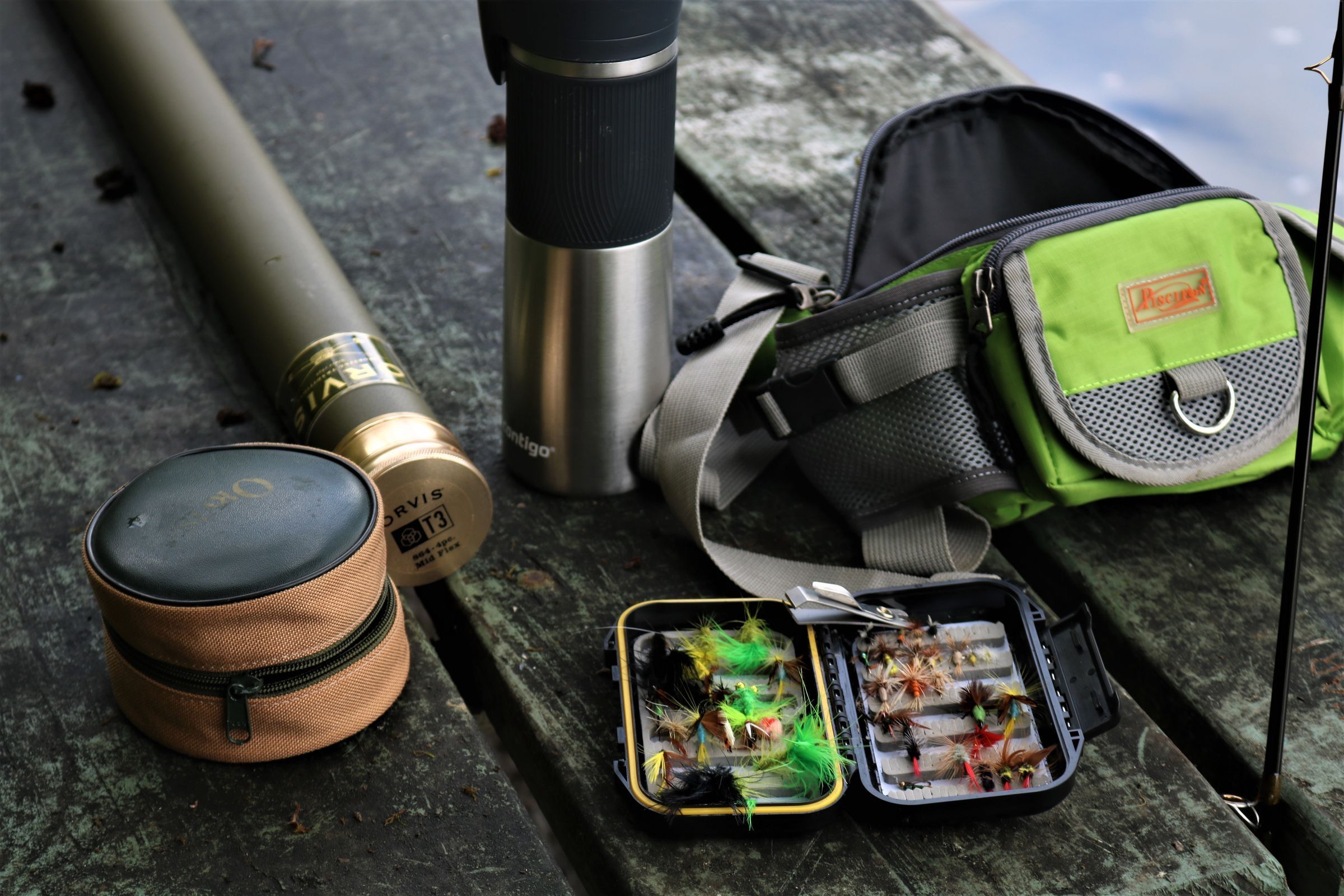
Rods, reels and most tackle fly fine if you pack them the way TSA and your airline expect. Sharp things and knives go in checked bags, fish should travel frozen solid, and the airline, not TSA, decides on sizes and fees. Check both before you leave.
TSA rules for fishing gear
TSA publishes item-by-item guidance, and the officer at the checkpoint makes the final call. For anglers, the key items are:
| Item | Carry-on | Checked | Notes |
|---|---|---|---|
| Fishing rods | Yes | Yes | Airline decides if it fits carry-on size limits |
| Small lures and flies | Yes | Yes | Consider carrying expensive reels and fragile tackle on board |
| Large hooks and sharp tackle | Pack in checked | Yes | Sheath or wrap securely |
| Knives, including fillet knives | No | Yes | Sheath or wrap to protect baggage handlers |
| Multi-tools with blades | No | Yes | Tools with scissors under 4 inches may be carried on |
| Pliers and wrenches | 7 inches or shorter | Yes | Longer tools go in checked bags |
| Life vest with CO2 cartridges | Yes | Yes | Up to two cartridges in the vest plus two spares |
| Empty cooler | Yes | Yes |
Source: TSA: Fishing pole, checked October 24, 2026.
A few practical habits help:
- Carry on what is expensive or fragile. TSA suggests keeping costly reels and delicate tackle, like small flies, with you.
- Check sharp things. Large hooks, gaffs, fillet knives and bladed multi-tools all belong in a checked bag, sheathed or wrapped.
- Keep the CO2 with the vest. Spare cartridges cannot travel without the life jacket.
Airline sporting equipment policies
The airline sets size, weight and fee rules, and they differ. Look up your carrier’s sporting equipment page before you book. Two examples:
- Delta accepts checked fishing poles up to 115 linear inches if they are safely contained. They count toward the standard bag allowance, fishing equipment over 50 pounds incurs an excess weight fee, and items over 115 linear inches are not accepted. Poles that meet Delta’s carry-on size (22 x 14 x 9 inches) may be carried on. See Delta’s sporting equipment page.
Source: Delta: Sporting equipment, checked October 24, 2026.
- Alaska Airlines publishes its rules on a sports equipment page and a separate perishable and big game page, which is worth reading before any Alaska fishing trip.
If you fly a regional or floatplane leg to a lodge, ask the lodge about weight and size limits for that leg too.
Packing rods and reels
- Use a hard-sided rod tube. A multi-piece travel rod fits shorter tubes, which can avoid oversize handling.
- Pad rod tips with soft sleeves or clothing.
- Pack reels in your carry-on if they are valuable, or wrap them well in checked bags.
- Put your name and phone number inside and outside every tube and bag.
Bringing fish home
In Alaska towns such as Homer, a good trip can mean a box of frozen fillets to take home. Getting it there in good shape takes a little planning.
Keep it cold from the start. Fish should be held at or below 40 degrees F, and frozen fish that thaws in transit can spoil. Wrap fillets tightly before freezing.
Know the TSA rules. Frozen seafood is allowed in carry-on and checked bags. If the box contains ice or ice packs, they must be completely frozen when screened; any melt or liquid at the bottom means it will not be allowed through the checkpoint.
Source: TSA: Frozen food, checked October 24, 2026.
Dry ice is limited. TSA lists an FAA limit of 5.5 pounds of properly packaged and marked dry ice, and airline approval is required. Delta allows packages of 5.5 pounds or less to cool non-hazardous perishables, if the package vents carbon dioxide, is labeled as dry ice with its net weight, and lists what is being cooled.
Source: TSA: Dry ice, checked October 24, 2026.
Ask your lodge, charter or processor. Find out who will fillet, package and freeze your fish, how it will be packed, whether the box meets your airline’s rules, and whether shipping is an option instead of checking it.
Budget for it. A fish box may count as an extra checked bag, with any weight charges. See our budget guide.
International trips and customs
Before you leave, check your airline’s rules for every leg, including any local carrier, and keep your passport, license, medications and a change of clothes in your carry-on in case bags are delayed.
Coming home to the U.S., declare food and fish. U.S. Customs and Border Protection notes that certain fish and seafood are subject to restrictions, permits or certificates, endangered species generally cannot be imported, and fish taken in violation of foreign law are not allowed in. Some states have stricter fish and wildlife rules than federal law. Failing to declare agricultural items can bring a civil penalty. Review CBP and U.S. Fish and Wildlife Service guidance before your trip.
Source: CBP: Prohibited and restricted items, checked October 24, 2026.
Catch and release trips. On many billfish trips, such as sailfish in Costa Rica, fish are released, so there is nothing to bring home but photos.
Quick checklist
- Read your airline’s sporting equipment and perishables pages.
- Pack rods in a hard tube; carry on valuable reels.
- Put hooks, knives and bladed tools in checked bags, sheathed.
- Keep CO2 cartridges with your inflatable life jacket.
- Arrange fish processing and packing before your last day.
- Keep fish frozen solid, and check ice and dry ice rules.
- Declare fish and food at customs.
For the rest of your bag, see our packing list.
Frequently asked questions
Can I bring a fishing rod as a carry-on?
TSA allows fishing rods in carry-on and checked bags, but the airline decides whether it fits its carry-on size limits. Delta, for example, allows poles as carry-on if they meet its standard carry-on dimensions.
Can I bring fishing hooks and lures on a plane?
Small lures are allowed in carry-on bags. TSA asks that sharp tackle such as large hooks be sheathed, securely wrapped and packed in checked bags.
Can I fly with an inflatable life jacket?
Yes. TSA allows a life vest with up to two CO2 cartridges inside plus two spare cartridges, in carry-on or checked bags. You may not carry CO2 cartridges without the life jacket.
How do I fly home with frozen fish?
Pack it frozen solid in an insulated box. TSA allows frozen seafood in carry-on and checked bags, but ice must be completely frozen at screening. Dry ice is limited by the FAA and needs airline approval. Check your airline's rules before you fly.
Sources and fact-checking (19)
Facts checked against these sources on October 24, 2026. Seasons, rules and businesses change; confirm with the official source before you travel. How we research.
- TSA: Fishing pole (tsa.gov)
- TSA: Small fishing lures (tsa.gov)
- TSA: Knives (tsa.gov)
- TSA: Multi-tools (tsa.gov)
- TSA: Wrenches and pliers (tsa.gov)
- TSA: CO2 cartridge for life vest (tsa.gov)
- TSA: Fresh meat and seafood (tsa.gov)
- TSA: Frozen food (tsa.gov)
- TSA: Dry ice (tsa.gov)
- TSA: Cooler (empty) (tsa.gov)
- Delta: Sporting equipment (delta.com)
- Delta: Food and alcohol transportation (delta.com)
- Alaska Airlines: Traveling with sports equipment (alaskaair.com)
- Alaska Airlines: Flying with perishable or big game items (alaskaair.com)
- FDA: Selecting and serving fresh and frozen seafood safely (fda.gov)
- U.S. Customs and Border Protection: Prohibited and restricted items (cbp.gov)
- Salt Water Sportsman: How to pack for an international fishing trip (saltwatersportsman.com)
- INCOPESCA: Pesca deportiva (incopesca.go.cr)
- Homer Chamber of Commerce: Fishing (homeralaska.org)