Why anglers go
- Sailfish and marlin out of full-service marinas at Quepos and Los Sueños
- Inshore roosterfish and dorado on light tackle or fly
- Guanacaste fishing within reach of Liberia's international airport
- Rainforest parks and beaches next to the fishing ports
When to fish Costa Rica Pacific Coast
What is commonly targeted month by month. Notes under the chart explain the regional detail.
| Species | Jan | Feb | Mar | Apr | May | Jun | Jul | Aug | Sep | Oct | Nov | Dec |
|---|---|---|---|---|---|---|---|---|---|---|---|---|
| Marlin | Peak | Peak | Peak | Peak | Peak | Peak | Yes | Yes | Yes | Yes | Yes | Peak |
| Sailfish | Yes | Yes | Yes | Yes | Yes | Yes | No | No | No | No | No | Yes |
| Roosterfish | Yes | Yes | Yes | Yes | No | No | No | No | No | No | No | Yes |
| Mahi-mahi | Yes | Yes | Yes | Yes | No | No | No | No | No | No | No | Yes |
| Tuna | Yes | Yes | Yes | Yes | No | No | No | No | No | No | No | Yes |
"Yes" = commonly targeted in a typical year; "Peak" = the months sources single out. Broad patterns only: runs, weather and openings vary every year, and regulations can close a fishery. Check the agency before you book.
- Marlin
- Blue, black and striped marlin are fished year-round. Los Sueños calls December through June its peak billfish season, and marlin are still found at nearby seamounts in the green season.
- Sailfish
- Pacific sailfish are the core offshore catch from the Central Pacific marinas. Quepos lists sailfish among its dry-season highlights, and the billfish tournament calendar runs from January into April.
- Roosterfish
- An inshore fish caught on fly or spinning tackle. The tourism board names roosterfish as a dry-season target out of Quepos.
- Mahi-mahi
- Dorado are listed as a dry-season target in the South Pacific, and Los Sueños boats catch them inshore and offshore. Marina Pez Vela holds dorado tournaments in November.
- Tuna
- Yellowfin are an offshore catch from the Central Pacific. The tourism board names marlin and tuna as dry-season fishing on the Puntarenas coast.
Why go
Costa Rica’s Pacific side is one of the most practical billfish trips you can take from North America. Direct flights land in San José and in Liberia, the marinas are modern, and the sailfish and marlin fishing is the reason the country hosts several major billfish tournaments each season.
It also works for travelers who want more than fishing. The fishing ports sit next to national parks, beaches and rainforest, so a partner or kids who fish for half a day can spend the rest of the trip hiking, wildlife-watching or on the beach.
The tradeoff is cost. This is a fly-in, charter-based trip, and the best-known marinas are built around resorts. If you want a budget saltwater trip, it may not be the one. If you want a good chance at a billfish with straightforward logistics, it belongs on your short list.
The fishing
What you fish for
Offshore: Pacific sailfish; blue, black and striped marlin; yellowfin tuna; dorado (mahi-mahi); and wahoo. Los Sueños describes billfish days with high release counts as common in its peak season.
Inshore: roosterfish, caught on fly or spinning tackle, along with dorado, snapper, amberjack and other reef fish. Quepos lists marlin, snapper, greater amberjack, wahoo, dolphinfish, yellowfin tuna and roosterfish among its catches.
How the seasons work
The Pacific coast has a well-defined dry season from December to March, with April as a transition month. The rainy, or green, season runs from May to October, and November is another transition. July and August often bring a drier spell called the veranillo, or “little summer,” and September and October are the rainiest months. On the Pacific side, rain mostly falls in the afternoon and early evening.
The fishing tracks that pattern loosely:
- December to April (dry season): the classic window. The tourism board lists sport fishing for sailfish, marlin and roosterfish out of Quepos, marlin and tuna on the Puntarenas coast, and marlin and dorado in the South Pacific as dry-season highlights. Los Sueños calls December through June its peak billfish season.
- January to April: the main tournament stretch. Los Sueños runs its three-leg Signature Triple Crown in January, February and March. Marina Pez Vela hosts the Quepos Billfish Cup in February and the Offshore World Championship in April.
- May to November (green season): fewer visitors and afternoon rain. Los Sueños says marlin are still found at nearby seamounts, and Marina Pez Vela’s event calendar includes dorado tournaments in November.
Treat these as patterns. Ocean conditions, bait and weather vary from year to year.
Billfish handling
At the Central Pacific marinas, sailfish and marlin are fished as release fish. Marina Pez Vela’s overnight trips run sailfish and marlin as catch-and-release while tuna and mahi can be kept, and Los Sueños measures its billfish days in releases. Ask your captain about their release practice and what you can take home.
Where to fish
Guanacaste (North Pacific)
Guanacaste is known for marlin fishing all year. Favorite bases include Coco and Ocotal beaches, Tamarindo, Sámara and Carrillo. The Catalina Islands are a dry-season destination for both fishing and diving, and the Gulf of Papagayo is a diving and kayaking area. The tourism board also notes that several world records for released swordfish have come from these waters. Guanacaste’s big advantage is access: Daniel Oduber Quirós International Airport in Liberia has direct flights from the United States.
Central Pacific: Los Sueños and Herradura
Los Sueños Resort and Marina sits at Playa Herradura on the Central Pacific coast and calls itself the Billfish Capital of the World. Its charter fleet is certified by the Costa Rican tourism ministry, and Maverick Sportfishing runs charters from the marina’s commercial pier year-round. Inshore trips here target roosterfish and dorado on fly or spinning tackle. Many Central Pacific fishing ports are about an hour from Juan Santamaría International Airport.
Central Pacific: Quepos and Marina Pez Vela
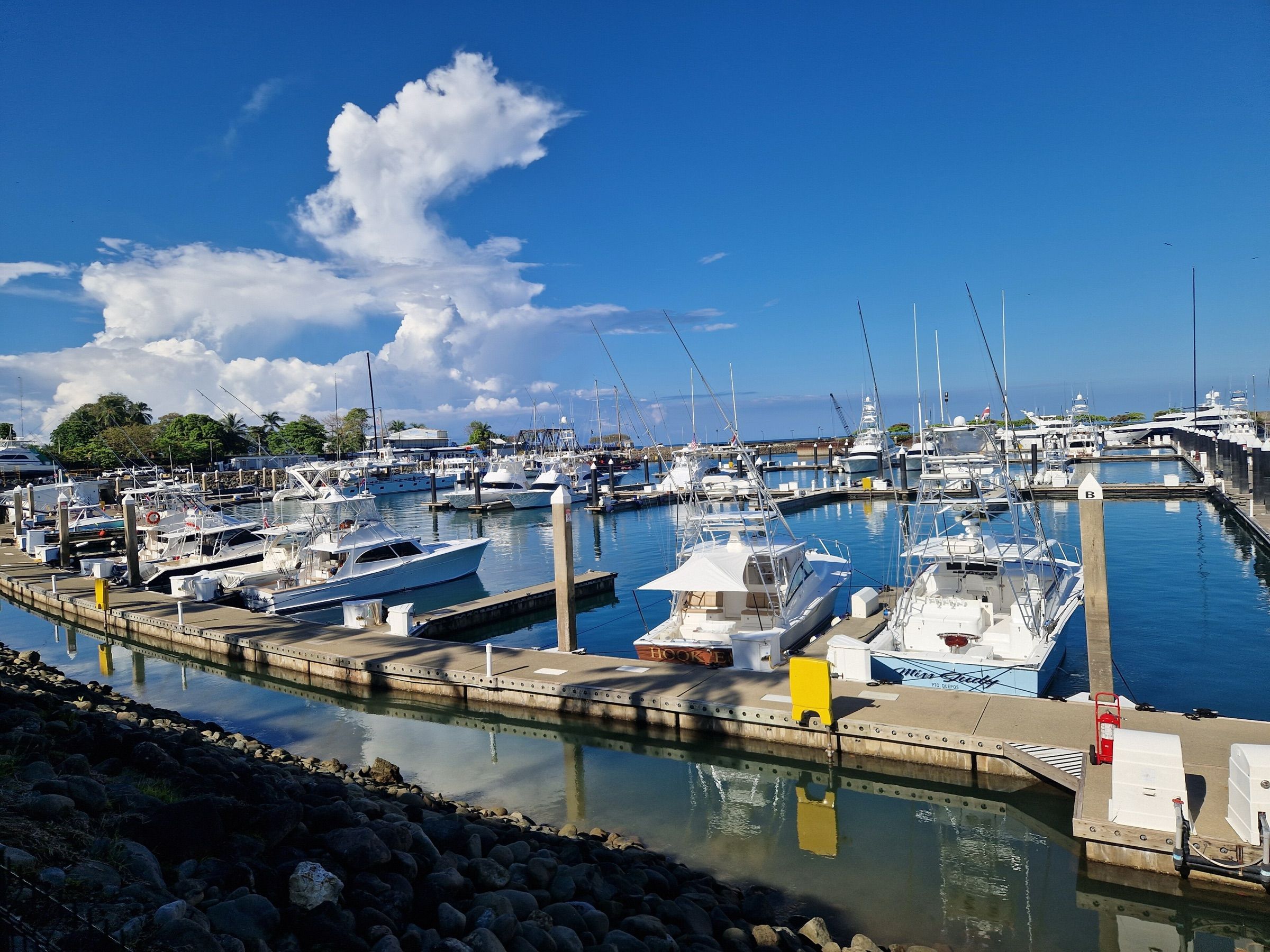
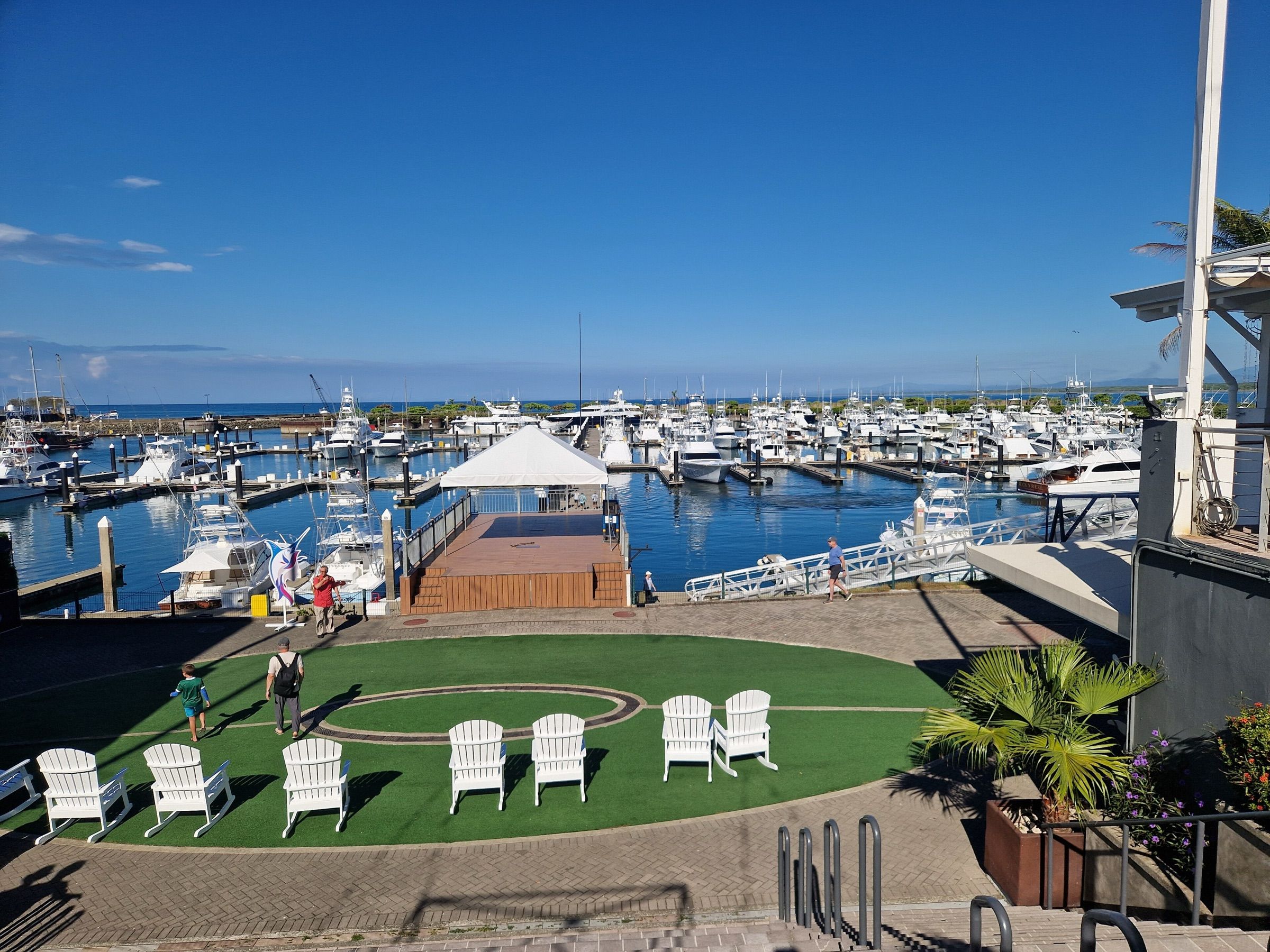
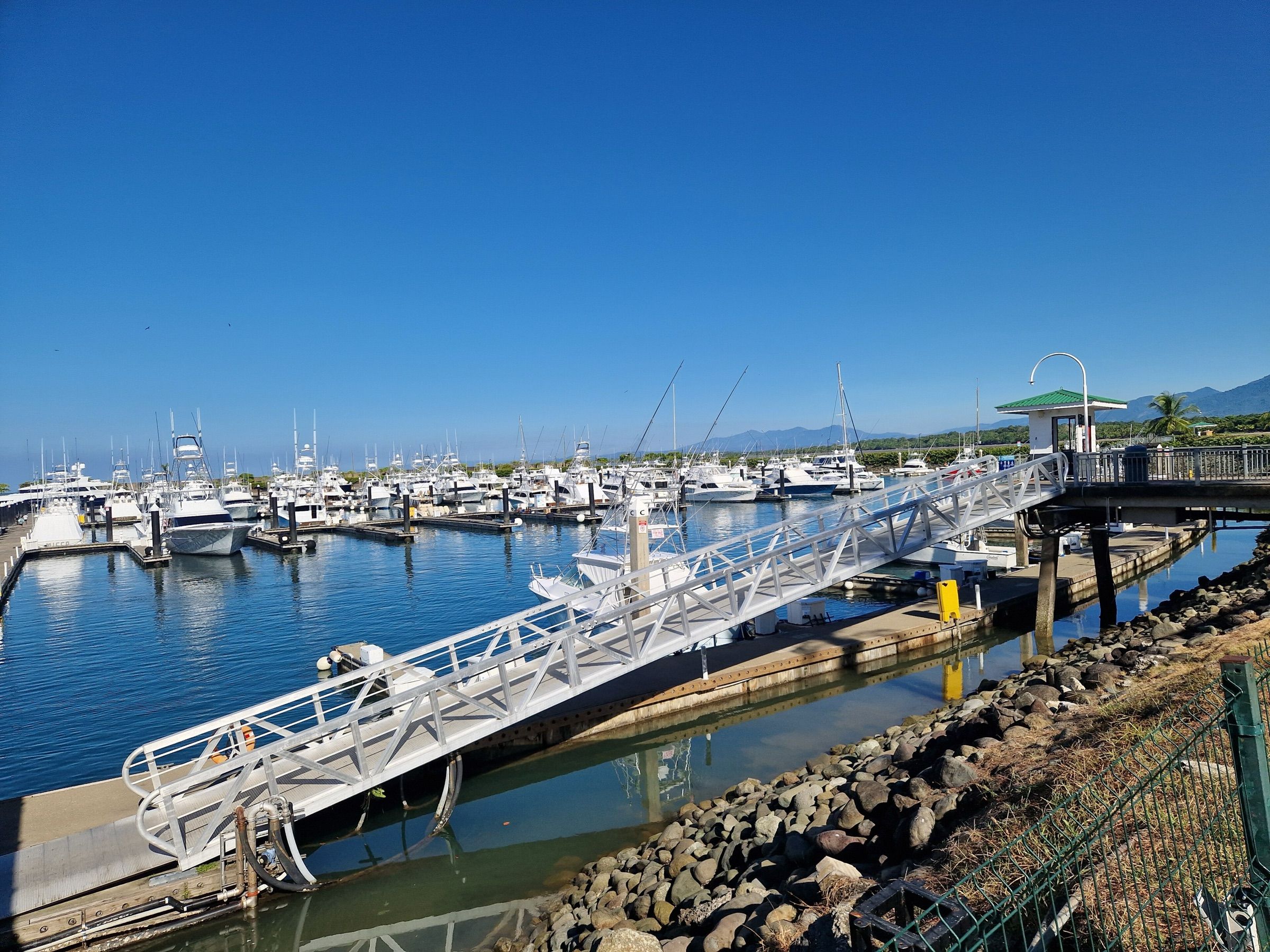
Quepos is about 165 km, or around three hours, from San José and is known at home and abroad for its sport fishing. Marina Pez Vela, a marina and yacht yard in town, has room for about 100 boats and sits about six kilometers from Manuel Antonio National Park. You can book inshore, offshore, fly-fishing and overnight trips, on boats from the mid-20-foot range up to 40 feet and more. Overnight trips leave in the evening, reach the fishing grounds at sunrise, and run one to three fishing days.
South Pacific: Golfito and the Osa
The south is more remote. Fishing centers include Drake, Puerto Jiménez, Zancudo, the Golfo Dulce and Golfito, which has the services you need for a comfortable stay. Airstrips at Golfito, Drake, Coto 47 and Palmar Sur connect to San José by domestic flights. The tourism board lists marlin and dorado as dry-season fishing in the South Pacific.
Charters and guides
Most fishing here is by charter out of a marina. Day trips come in half-day, three-quarter-day and full-day lengths at Marina Pez Vela, and multi-day overnight trips are an option there for anglers who want to reach farther grounds. Every major fishing area has hotels, guides, boats and gear on hand.
Before you book, ask:
- Is your sport fishing license included, or do you need to buy your own from INCOPESCA?
- What is the boat size and how many anglers does it fish?
- Is the trip inshore (roosterfish, dorado) or offshore (billfish, tuna), and how far is the run?
- What is the billfish release practice, and which fish can you keep?
Our guide to choosing a fishing charter covers the rest.
Where to stay
Base yourself where the boats leave. Los Sueños is a resort and marina community at Herradura, convenient if you want an easy airport transfer. Quepos has a broad mix of hotels, restaurants and shops close to Marina Pez Vela and Manuel Antonio. In Guanacaste, beach towns such as Coco, Ocotal and Tamarindo put you close to the Liberia airport. Golfito and the Osa suit travelers who want a more remote trip.
Beyond fishing
The Central Pacific puts Carara and Manuel Antonio national parks next to the fishing ports. In the dry season, visitors bird-watch at Carara, spend time on Herradura Beach and take boat tours to see reptiles. Humpback whales arrive off Quepos around July and stay until November. In Guanacaste, you can soak in hot springs, hike Rincón de la Vieja, watch turtles at Ostional and dive the Catalina Islands. Near Golfito, the Golfito National Wildlife Refuge has forest trails and views over the Golfo Dulce.
Trip costs
The big costs are flights, lodging and charter days. Marina-based charters and resort lodging put most trips in the premium range, and overnight fishing trips add more. Your sport fishing license is a separate small cost if your charter does not cover it; INCOPESCA publishes current fees. We do not quote charter prices, since they vary by boat, season and trip length.
Getting there and around
Fly into Juan Santamaría International Airport near San José for the Central Pacific, or Daniel Oduber Quirós International Airport in Liberia for Guanacaste. Both have direct flights from the United States. From San José, many Central Pacific fishing ports are about an hour away; Quepos is about three hours by road. For the South Pacific, domestic flights reach Golfito, Drake, Coto 47 and Palmar Sur.
Rain shapes logistics in the green season. Some unpaved roads, such as the last stretch to Playa Cabuyal on the Papagayo Peninsula, are best driven in a four-wheel-drive vehicle when it is wet. The eastern Pacific hurricane season runs from May 15 to November 30, overlapping the green season, so keep an eye on forecasts. See our trip safety and weather guide and traveling with fishing gear.
Licenses and rules
Costa Rica’s sport fishing license (carné) is issued by INCOPESCA. It is required for sport fishing from land, from a boat or underwater, and captains and crew need their own. Boat-based licenses come in 8-day, one-month and one-year terms, and you apply online by registering and paying the fee.
Rules on what you can keep, protected species and closed areas change, so check INCOPESCA before every trip and ask your captain. For U.S. travelers, check the State Department’s Costa Rica page for current entry requirements. Our fishing licenses guide has general background.
Frequently asked questions
When is the best time to fish Costa Rica's Pacific coast?
The dry season, December through April, is the classic window, and Los Sueños calls December through June its peak billfish season. The big Central Pacific billfish tournaments run from January into April. Marlin are caught year-round, so the green season can still fish well if you can live with afternoon rain.
Quepos or Los Sueños?
Both are full-service marinas with charter fleets in the Central Pacific. Los Sueños, at Playa Herradura, is closer to the San José airport and is built around a resort. Quepos, home of Marina Pez Vela, sits next to Manuel Antonio National Park and has a wide range of hotels and restaurants in town.
Do I need a fishing license in Costa Rica?
Yes. INCOPESCA requires a sport fishing license (carné) for anyone fishing from land, a boat or underwater, and visitors can apply online. Boat-fishing licenses come in 8-day, one-month and one-year terms. Check the INCOPESCA site for current requirements.
Are billfish released in Costa Rica?
At the Central Pacific marinas, sailfish and marlin are fished as release fish. Marina Pez Vela's overnight trips, for example, run billfish as catch-and-release while keeping some tuna and mahi. Ask your captain what you can keep and check current rules with INCOPESCA.
Sources and fact-checking (13)
Facts checked against these sources on October 23, 2026. Seasons, rules and businesses change; confirm with the official source before you travel. How we research.
- Fishing, Visit Costa Rica (Costa Rica Tourism Board) (visitcostarica.com)
- Climate, Visit Costa Rica (visitcostarica.com)
- 5 Reasons to Visit Quepos, Visit Costa Rica (visitcostarica.com)
- Activities in Guanacaste, Visit Costa Rica (visitcostarica.com)
- Golfito National Wildlife Refuge, Visit Costa Rica (visitcostarica.com)
- Papagayo Peninsula: Playa Cabuyal, Visit Costa Rica (visitcostarica.com)
- Marina Pez Vela (marinapezvela.com)
- Fishing in Costa Rica, Marina Pez Vela (marinapezvela.com)
- Los Sueños Resort and Marina (lossuenos.com)
- Deep Sea Fishing, Los Sueños Resort and Marina (lossuenos.com)
- Carnés de pesca, INCOPESCA (incopesca.go.cr)
- INCOPESCA (incopesca.go.cr)
- Tropical Cyclone Climatology, National Hurricane Center (nhc.noaa.gov)