Why anglers go
- More than 70,000 lakes in Sunset Country, directly north of Minnesota
- Walleye, northern pike, muskie, lake trout and bass on many of the same lakes
- Fly-in lodges, outpost cabins, boat-in camps and drive-in resorts
- Floatplane bases in towns such as Red Lake, Kenora and Nestor Falls
- Lake of the Woods, Lac Seul and thousands of remote lakes reached only by air
Check current conditions and rules
Official sources for real-time information. Conditions change daily; these pages are the authority, not this guide.
- Ontario: Fishing regulations summarySeasons and limits by zoneLast checked Oct 24, 2026
- Government of Canada: What you need to enter CanadaDocuments for crossing into CanadaLast checked Oct 24, 2026
- CBSA: What visitors can bring into CanadaDeclaring food, plant and animal productsLast checked Oct 24, 2026
- Ontario: Forest firesActive fires and restricted fire zonesLast checked Oct 24, 2026
- Environment Canada: Ontario forecastsForecasts for Kenora, Red Lake and other townsLast checked Oct 24, 2026
When to fish Northwestern Ontario Fly-In Fishing
What is commonly targeted month by month. Notes under the chart explain the regional detail.
| Species | Jan | Feb | Mar | Apr | May | Jun | Jul | Aug | Sep | Oct | Nov | Dec |
|---|---|---|---|---|---|---|---|---|---|---|---|---|
| Walleye | No | No | No | No | Yes | Peak | Yes | Yes | Yes | No | No | No |
| Northern pike | No | No | No | No | Yes | Peak | Yes | Yes | Yes | No | No | No |
| Muskie | No | No | No | No | No | Yes | Yes | Yes | Yes | No | No | No |
| Lake trout | Yes | Yes | Yes | No | Yes | Yes | Yes | Yes | Yes | No | No | No |
| Bass | No | No | No | No | Yes | Yes | Yes | Yes | Yes | No | No | No |
"Yes" = commonly targeted in a typical year; "Peak" = the months sources single out. Broad patterns only: runs, weather and openings vary every year, and regulations can close a fishery. Check the agency before you book.
- Walleye
- Found on the large majority of lakes in the region and the main fish on most fly-in trips. Many lodges reopen for the spring walleye opener, and early summer is typically the best walleye action.
- Northern pike
- In most lakes in the region, with big fish common enough that many lodges and anglers release large pike. Early summer is typically strong as pike hunt the shallows.
- Muskie
- Muskie open later than walleye, in June. Lake of the Woods, Eagle Lake, Lac Seul and other large lakes hold them, and Sunset Country describes muskie fishing as building through mid and late summer.
- Lake trout
- Deep, cold, clear lakes suit lake trout. They are often easiest to catch in the first few weeks after ice-out, when they come shallow, and they are also an ice fishing target in winter on many lakes.
- Bass
- Smallmouth are the main bass, on rocky lakes mostly in the southern half of the region, with largemouth in weedy bays on some lakes. Sunset Country describes bass fishing as strong later in the open-water season.
Why go
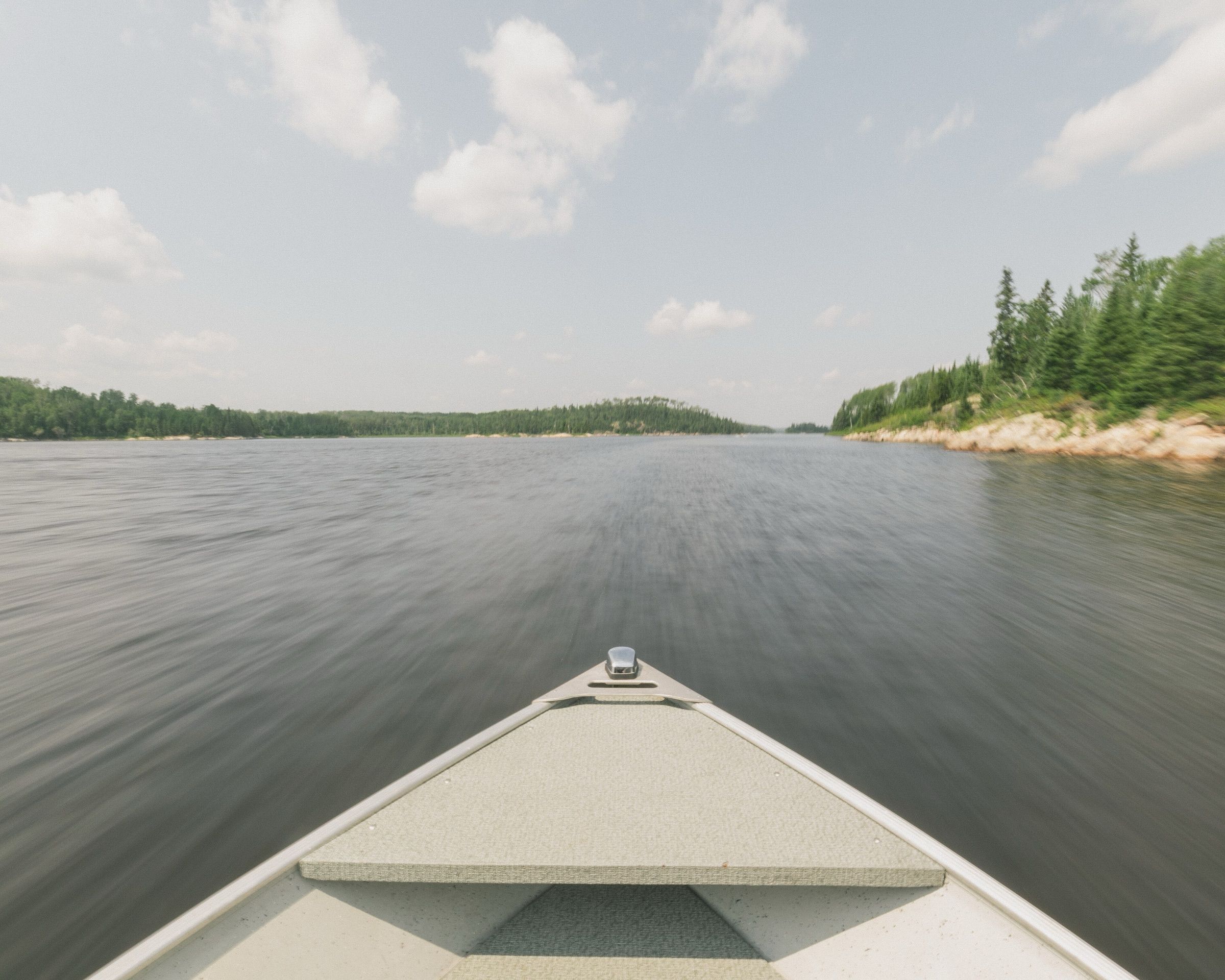
Northwestern Ontario is the closest true wilderness fishing most Midwestern anglers can reach. The region, marketed as Ontario’s Sunset Country, sits directly north of Minnesota and holds more than 70,000 lakes. Many of them have the same five fish: walleye, northern pike, muskie, bass and lake trout. Some lakes have road access and a resort dock. Thousands of others can only be reached by floatplane.
That range is the point. You can drive across the border to a housekeeping cabin with a rental boat, take a boat to an island camp, or fly into a lake where your group has the only cabin for a week. Fly-in trips suit anglers who want lightly fished water and are willing to plan around weight limits and weather. Drive-in trips suit first-timers, families and anyone who wants to bring their own boat.
Most anglers on their first Canada trip choose a drive-in or boat-in lodge, then try a fly-in later, but nothing stops you from flying in the first time.
The fishing
Walleye are the backbone. They live in the large majority of lakes here, and the routine on many trips is to eat smaller walleye at shore lunch and release the big ones. Northern pike are in most lakes, and fish over 40 inches are realistic. Lake trout like the deep, cold, clear lakes; brook trout are in some cold rivers and lakes. Smallmouth bass are common on rocky lakes in the southern half of the region, with largemouth in weedy bays on some waters. Muskie are found in the big lakes, including Lake of the Woods, Eagle Lake, Lac Seul, Pipestone and Rowan.
Crappie, perch and whitefish round out the list, and crappie and perch are good fish for kids.
How the seasons work
The main open-water season runs from May through September. Many lodges that close for winter reopen for the spring walleye opener. Early summer is typically best for walleye and pike in the shallows. Muskie open later, in June, and muskie and bass fishing builds through mid and late summer. Lake trout are often easiest in the first few weeks after ice-out, when they move shallow, and are a popular ice fishing target in winter. Ice fishing generally picks up after January 1, once the ice is safe, and runs into March.
Every species has its own open season, and those dates differ among the region’s fisheries management zones and on individual lakes. Treat these as broad patterns and confirm the dates for your lake in the Ontario regulations. For species background, see walleye, northern pike, muskie and bass.
Fly-in lodge, outpost cabin or drive-in
Fly-in lodges
A fly-in lodge has staff, a main building and often motel-style units or cabins. On the American plan, all meals are served at the lodge. On a housekeeping plan, your cabin has a stocked kitchen and you cook for yourselves. When the plane pulls up to the dock, staff usually take your gear from there. This is the most comfortable remote option and the most expensive.
Outpost cabins
An outpost is a small cabin, typically two to four bedrooms, and often the only building on the lake. The outfitter flies you in and out and supplies the cabin, boats and motors with fuel, and propane. You bring food, sleeping bags and tackle, and you cook, clean and fillet. Outposts suit self-reliant groups who want a lake to themselves. Some outfitters go a long way: Amik Outposts, based near Red Lake, flies to outpost lakes 70 to 150 air miles north of town.
Drive-in and boat-in lodges
Drive-in resorts and housekeeping cabins let you bring your own boat, or rent one from the lodge. Boat-in camps sit on islands or remote shores you reach by water without flying. Many resorts also have campgrounds, boat launches and fish cleaning houses, and houseboat rentals are another way to stay on the water. Lake of the Woods, around Sioux Narrows and Nestor Falls, is a huge multi-species lake with road-access lodges, some open year-round.
Our fly-in fishing lodges guide covers the differences in more depth, and comparing fishing lodges has a checklist that works for any of them.
Floatplane logistics and weight limits
Most fly-in trips start at the outfitter’s airbase. Plan to arrive the day before. Sydney Lake Lodge suggests driving to Kenora and staying overnight before your flight, and booking hotels early because they fill months ahead. Amik Outposts asks guests not to book a flight home on the same day they fly out of camp, because weather can delay pickups.
Weight is the rule that shapes your packing. There is no standard number, so get your outfitter’s limit in writing. Examples:
- Amik Outposts prices its outpost trips on 100 pounds per person, food and drinks included, and suggests about 60 pounds of personal gear, 25 pounds of groceries and 15 pounds of beverages. A larger plane does not mean a bigger allowance.
- Sydney Lake Lodge recommends 100 pounds per person and bags, boxes or coolers of no more than about 40 pounds each.
To stay under, weigh bags at home, carry a small tackle box rather than a big one, choose frozen or dried food over cans, leave travel clothes in the car, and share heavy items across the group. Ask whether the camp sells drinks, minnows or ice, which saves weight. Nestor Falls Fly-In Outposts, about an hour’s drive north of the border, runs its own aircraft and pilots, a setup several outfitters advertise.
Crossing the border with gear and fish
Check the rules before you leave, not at the crossing. The Government of Canada lists what you need to enter Canada by citizenship and travel method, and it recommends a valid passport for U.S. citizens. Children need proof of citizenship, and a past impaired-driving conviction can affect whether you are admitted, so call ahead if that applies to anyone in your group.
Source: Government of Canada: What you need to enter Canada, checked October 24, 2026.
At the border, you must declare all food, plant and animal products, and the Canada Border Services Agency sets rules on alcohol, tobacco and other goods; see what visitors can bring. Sunset Country advises that live bait cannot be brought into Ontario, so plan to buy it there. Many anglers buy most groceries in Canada to keep the border simple.
Source: CBSA: What visitors can bring into Canada, checked October 24, 2026.
Coming home, how many fish you can take depends on your licence, the species and your zone’s limits. Ontario sets rules for packaging fish so officers can identify species and, where needed, size. U.S. Customs and Border Protection has its own fish and wildlife requirements, and some states are stricter than federal law. Some outfitters, including Nestor Falls Fly-In Outposts, run catch-and-release trips where you may eat fish in camp but not take any home, so ask before you book. See traveling with fishing gear for packing rods and tackle.
Licences and rules
Visiting anglers from outside Canada generally need an Outdoors Card plus an Ontario fishing licence, bought through the province’s licensing service. A one-day licence is available without the card, and an eight-day licence can be bought online. Not every lodge sells licences, so buy yours before you arrive. The region falls in several fisheries management zones, each with its own seasons, limits and exceptions, and some lakes have their own slot sizes. Rules change every year; read the current regulations summary before you go. Our fishing licenses guide covers general planning.
Family fit
Families do well at drive-in resorts. The Red Lake area has beaches, a heritage centre, golf and provincial park campgrounds alongside drive-in and fly-in lodges. Mid-summer brings warm water for swimming, and crappie and perch keep kids busy. A fly-in outpost is a bigger commitment: there is no way out until pickup day, so be honest about how your children will handle a week with no road. See family fishing trips for more.
Trip costs
Costs are driven by structure more than by the lake. In rough order from lower to higher:
- Drive-in housekeeping cabin, where you drive, cook and may bring your own boat
- Fly-in outpost, where you pay for the flights but cook and do the chores
- Housekeeping plan at a fly-in lodge
- American plan fly-in lodge, with meals and service
Distance flown, aircraft size, overweight flights, guides, licences, the exchange rate and the drive to the airbase all add up. Price the whole trip with our trip budget calculator.
Getting there and around
Most U.S. anglers drive. Sunset Country lists highway crossings from Minnesota at Fort Frances and International Falls, Rainy River and Baudette, and Pigeon River, with most destinations within a few hours of the border. Red Lake is reached via Dryden and Highway 105. One Red Lake outfitter suggests flying to International Falls and driving about four and a half hours, flying to Winnipeg and renting a car, or flying into Red Lake directly. If you would rather stay south of the border, compare Minnesota Lake Country.
Frequently asked questions
What is the difference between a fly-in lodge and an outpost cabin?
A fly-in lodge has staff and a main building. On the American plan all meals are served; on a housekeeping plan you cook in a stocked cabin. An outpost is a rustic cabin, often the only one on the lake, where the outfitter supplies flights, the cabin, a boat and motor, and you bring food and do the chores.
How much luggage can I take on the floatplane?
It depends on the outfitter. A Red Lake outpost operator prices trips on 100 pounds per person including food and drinks, and a Kenora-area lodge recommends 100 pounds per person with bags of about 40 pounds. Get your outfitter's limit in writing and weigh everything at home.
When is the best time to fish Northwestern Ontario?
The main season runs from May through September. Early summer is typically best for walleye and pike, and bass and muskie fishing builds later in the summer. Lake trout come shallow just after ice-out. Each species has its own open season by zone, so check the regulations for your lake.
Do I need a passport to fish in Northwestern Ontario?
Check the Government of Canada's entry requirements for your citizenship and how you are travelling, and U.S. requirements for coming home. Canada recommends a valid passport for U.S. citizens as the most widely accepted document. Children and travellers with past criminal records have extra considerations.
Can I bring my fish home to the United States?
Often yes, within Ontario's catch and possession limits and the rules for your licence. Ontario sets rules for packaging fish so species and size can be identified, and U.S. Customs and Border Protection has its own requirements for fish and wildlife. Some outfitters run catch-and-release only and do not allow fish to go home.
Can I bring live bait from the U.S.?
Plan on buying bait in Ontario. Sunset Country advises that live bait cannot be brought into Ontario, and many camps sell minnows and leeches. Check current Ontario bait rules before you pack anything.
Sources and fact-checking (26)
Facts checked against these sources on October 24, 2026. Seasons, rules and businesses change; confirm with the official source before you travel. How we research.
- Ontario's Sunset Country: Fishing (visitsunsetcountry.com)
- Ontario's Sunset Country: Fly-in fishing (visitsunsetcountry.com)
- Ontario's Sunset Country: Walleye fishing (visitsunsetcountry.com)
- Ontario's Sunset Country: Muskie fishing (visitsunsetcountry.com)
- Ontario's Sunset Country: Lake trout fishing (visitsunsetcountry.com)
- Ontario's Sunset Country: Northern pike fishing (visitsunsetcountry.com)
- Ontario's Sunset Country: Smallmouth bass fishing (visitsunsetcountry.com)
- Northern Ontario Travel: Planning a fishing trip to Northwest Ontario (northernontario.travel)
- Northern Ontario Travel: First time fishing in Canada tips (northernontario.travel)
- Northern Ontario Travel: Planning your summer fishing trip in Sunset Country (northernontario.travel)
- Northern Ontario Travel: Planning a family fishing trip to Canada (northernontario.travel)
- Northern Ontario Travel: There's more than just fishing in the Red Lake region (northernontario.travel)
- Northern Ontario Travel: Fishing in Sioux Narrows-Nestor Falls (northernontario.travel)
- Northern Ontario Travel: A guide to fly-in Ontario lodges (northernontario.travel)
- Amik Outposts: Canadian fly-in fishing (canadianflyinfishing.com)
- Amik Outposts: Weight allowances (canadianflyinfishing.com)
- Amik Outposts: Travel information (canadianflyinfishing.com)
- Sydney Lake Lodge: Fishing trip planning (sydneylake.com)
- Nestor Falls Fly-In Outposts (nestorfalls.com)
- Ontario: Fishing licence (non-residents of Canada) (ontario.ca)
- Ontario fishing regulations summary (ontario.ca)
- Ontario: Fisheries management zones (ontario.ca)
- Ontario: Packaging, transporting or exporting fish (ontario.ca)
- Government of Canada: What you need to enter Canada (canada.ca)
- CBSA: What visitors can bring into Canada (cbsa-asfc.gc.ca)
- U.S. Customs and Border Protection: Prohibited and restricted items (cbp.gov)