Check current conditions and rules
Official sources for real-time information. Conditions change daily; these pages are the authority, not this guide.
- NPS: Alaska aviation safetyPassenger safety for small planesLast checked Oct 24, 2026
- Environment Canada: Ontario forecastsForecasts for Ontario airbase townsLast checked Oct 24, 2026
- Ontario: Forest firesActive fires and restricted fire zonesLast checked Oct 24, 2026
- Government of Canada: What you need to enter CanadaDocuments for crossing into CanadaLast checked Oct 24, 2026
- Ontario: Fishing regulations summarySeasons and limits by zoneLast checked Oct 24, 2026
A fly-in trip puts you on a lake you cannot drive to. You drive or fly to an airbase, load into a floatplane, and land at a lodge dock or an outpost cabin where your group may be the only people on the water for the week. It costs more than a drive-to trip, mostly because of the aircraft, fuel and pilots, and it asks more planning of you. In return you get lightly fished water and a lot of quiet.
How fly-in trips work
You start at the outfitter’s airbase. In Northern Ontario that might be a town such as Nakina or Kenora; Sydney Lake Lodge, for example, suggests driving to Kenora and staying the night before your flight. Some Alaska lodges fly guests out of Anchorage, and Wilderness Place Lodge advises overnighting in Anchorage first because flights depend on the weather.
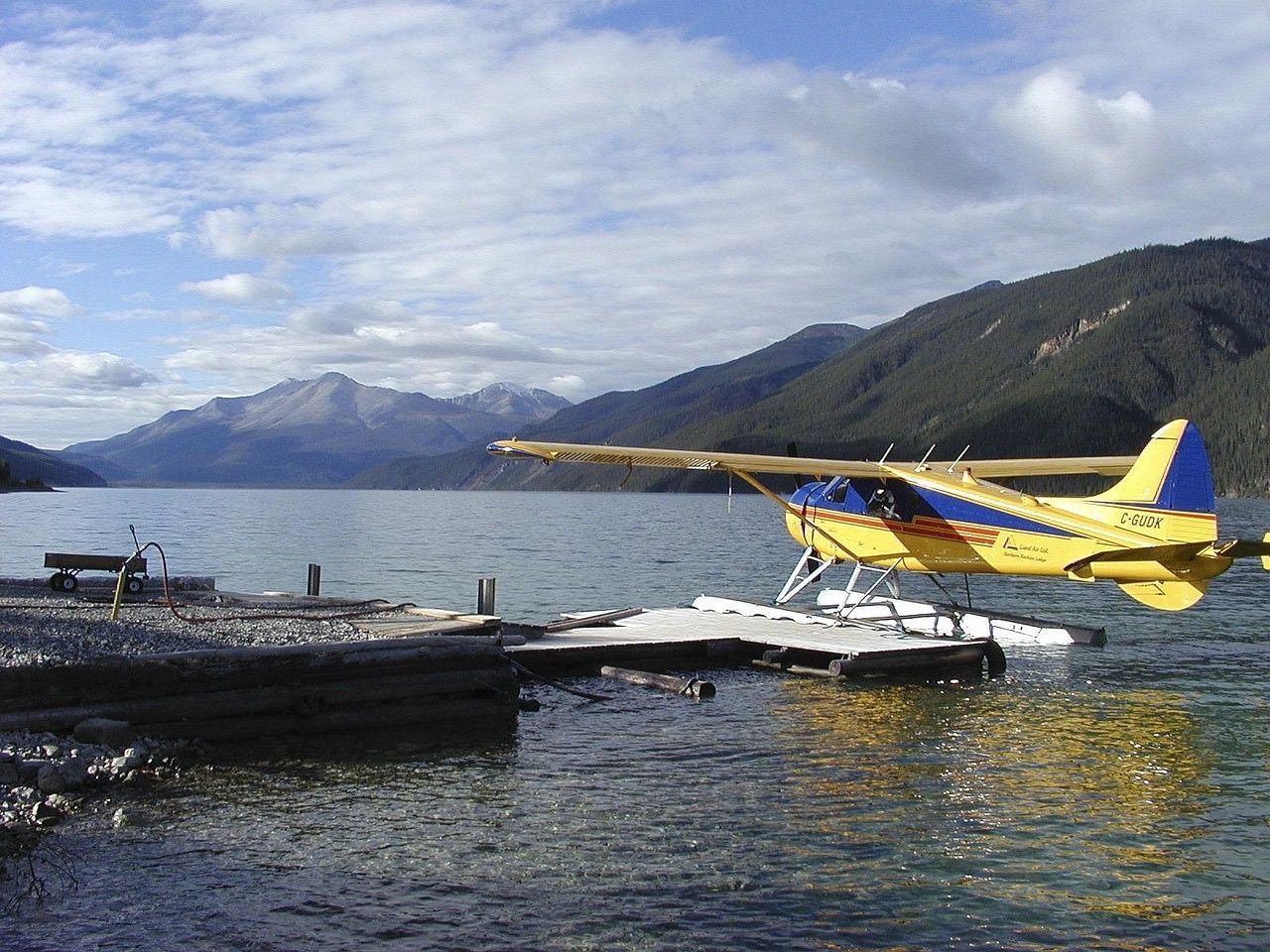
The aircraft are small floatplanes. The de Havilland Beaver is the workhorse of Ontario fly-in fishing, and some outfitters also fly the larger Otter. Gear is weighed, loaded, and you land on the lake.
Lodge or outpost
A fly-in lodge has staff, a main building and meals. On an American plan all meals are served at the lodge; on a housekeeping plan you get a stocked kitchen and cook for yourself. Staff typically unload the plane for you.
An outpost is a rustic cabin, often two to four bedrooms and often the only building on the lake. The outfitter typically supplies the flights, the cabin with kitchen equipment, a boat and motor with gas, and propane for the appliances. You bring food, sleeping bags and fishing gear, and you do the cooking, cleaning and filleting. See our fishing lodges guide for how the plans compare.
Weight limits
This is the rule that shapes your packing. Floatplane performance depends on the load, so operators enforce limits strictly. There is no single standard, which is why you need your outfitter’s number:
- Sydney Lake Lodge in Northern Ontario recommends 100 pounds per person and suggests keeping each bag, box or cooler to about 40 pounds.
- 7 Lakes Wilderness Camps, flying from the Nakina area, allows 130 pounds per person including tackle, clothing, sleeping bag, and food and drinks on a housekeeping trip. Coolers are capped at 55 quarts because larger ones do not fit the planes, and overweight gear can need an extra flight billed separately.
- Katahdin Air in Maine counts the passenger’s body weight in its per-person allowance and charges by the pound above it.
- Wilderness Place Lodge in Alaska asks for soft duffel bags only, no hard suitcases.
Practical ways to stay under: weigh bags at home, pack frozen or dried food instead of canned goods, leave extra tackle and lead behind, and share heavy items like depth finders and cast-iron pans across the group. Ask whether the camp sells drinks or ice on site, which can save weight.
Seasons
Fly-in seasons follow the open-water months. One Nakina-area outfitter runs from May into September, targeting walleye, pike, brook trout and lake trout early, then walleye, pike and lake trout through the summer, with whitefish and perch noted later in its season. In Alaska, Travel Alaska’s lodge listings generally run between May and October, with each lodge setting its own dates. If your airbase town has limited lodging, book the night before early; Sydney Lake Lodge notes that Kenora hotels often fill months ahead.
Who fly-in trips suit
Fly-ins suit anglers who want a remote wilderness trip, a lake with little pressure, and a week without roads. Outposts suit self-reliant groups comfortable with camp chores, and some outfitters steer anyone who is not toward their drive-in camps. Families can go too, though a parent should be honest about how a child will handle a week with no way out.
They suit people less well if they need a firm return date for work, have medical needs that call for quick access to care, or dislike small planes.
Safety and weather delays
Weather is the part of a fly-in trip you cannot plan around, only for. Leave the decision to fly to the pilot, and never push one to go in doubtful conditions. The National Park Service’s Alaska advice is to be ready to start late or stay out longer than planned, and for Lake Clark it suggests leaving a few extra days on each side of your travel. Bring books or cards for days when wind keeps you off the water.
Source: NPS Lake Clark: Directions, checked October 24, 2026.
Before and during flights:
- Ask the weight limit for people and gear, pack to it, and do not ask the pilot to exceed it.
- Ask for a full safety briefing and learn where the radio, emergency locator transmitter, fire extinguisher, flotation and first aid kit are.
- Wear sturdy footwear and carry warm layers and rain gear on every flight.
- Speak up if something feels wrong. Postponing a flight is always an option.
Source: NPS: Alaska aviation safety, checked October 24, 2026.
Once you are dropped off, the plane is not coming back until pickup day. Leaving early means reaching the airbase, usually by satellite phone, and paying for a special flight. Ask whether the camp has a satellite phone or rent one. On the water, wear a life jacket, carry a GPS and learn the lake’s shallows, since hazards may not be marked. When you arrive, check that the motors, appliances and plugs work while the plane is still at the dock.
Before you book
Get these in writing: the weight limit and overweight policy, exactly what the camp supplies (boats, motors, fuel, propane, drinking water, linens), how delays at each end are handled, and what is not included. Then price the whole trip with our budget guide and compare options with comparing fishing lodges. For Alaska specifics, see Alaska fishing lodges and the Kenai Peninsula.
Examples from our directory
Hotel · Soldotna
Kenai River Lodge
A family-owned riverfront hotel in Soldotna with more than 400 feet of guest-only bank fishing on the Kenai River, stairs down to the water, and fish-cleaning tables.
- Fish cleaning
Access: drive-to, on Riverside Drive in Soldotna
Amenities as the property lists them (checked 2026-10-23). Confirm details, rates and availability directly.
Fishing lodge · Cooper Landing
Kenai Riverside Lodge
A lodge on the upper Kenai River in Cooper Landing, run by Alaska Wildland Adventures, with multi-day guided fishing packages for salmon, rainbow trout and Dolly Varden, plus Resurrection Bay trips.
- Guided fishing packages
- Meals included
Season: Fishing packages run from early June into late September.
Access: drive-to, Milepost 50.1 of the Sterling Highway, about two hours south of Anchorage
Amenities as the property lists them (checked 2026-10-23). Confirm details, rates and availability directly.
Fishing lodge · Soldotna
Soldotna B&B Trophy Lodge
A 12-room lodge on the Kenai River in Soldotna with a private dock, guided freshwater and saltwater fishing packages, and charters for salmon, trout, steelhead and halibut out of Homer and Seward.
- Guided fishing packages
- Dock or boat slips
Season: The lodge's fishing page lists target windows by species, from halibut starting in May to silver salmon into October.
Access: drive-to, on the Kenai River in Soldotna
Amenities as the property lists them (checked 2026-10-23). Confirm details, rates and availability directly.
Frequently asked questions
How much luggage can I bring on a fly-in fishing trip?
It depends on the operator and the aircraft. Published limits we found range from a recommended 100 pounds per person at one Ontario lodge to 130 pounds per person, food included, at an Ontario outpost outfitter, and some operators count body weight too. Get the exact number in writing before you pack.
What happens if weather delays the floatplane?
You wait. Pilots will not fly in unsafe conditions, and delays at either end of a trip are common enough that the National Park Service advises building extra days into Alaska air taxi plans. Ask your outfitter how it handles delayed arrivals and pickups.
Is a fly-in outpost cheaper than a fly-in lodge?
Usually. Outposts are self-catered and you do the chores, while American plan lodges include meals and service and sit at the top of the price range. Housekeeping plans fall in between.
Can I leave an outpost early?
Only by calling the airbase, usually by satellite phone, and paying for an extra flight if one can be arranged. Treat a fly-in drop-off as a commitment for the whole stay.
Sources and fact-checking (12)
Facts checked against these sources on October 24, 2026. Seasons, rules and businesses change; confirm with the official source before you travel. How we research.
- A Guide to Fly-in Ontario Lodges (Northern Ontario Travel) (northernontario.travel)
- Do-It-Yourself Fly-In Fishing (Northern Ontario Travel) (northernontario.travel)
- Ontario's Array of Fishing Opportunities (Fish'n Canada, Northern Ontario Travel) (northernontario.travel)
- Canada Fly-In Fishing Outposts (7 Lakes Wilderness Camps) (nakinaoutpostcamps.com)
- Fishing Trip Planning (Sydney Lake Lodge) (sydneylake.com)
- FAQ (Katahdin Air) (katahdinair.com)
- Packing for Your Alaska Wilderness Adventure (Wilderness Place Lodge) (wildernessplacelodge.com)
- Northwind outpost trip (Outdoor Canada) (outdoorcanada.ca)
- Come Fly With Me (MidWest Outdoors) (midwestoutdoors.com)
- Alaska Aviation Safety (National Park Service) (nps.gov)
- Directions and air taxi planning, Lake Clark National Park and Preserve (National Park Service) (home.nps.gov)
- Fishing in Alaska (Travel Alaska) (travelalaska.com)