The salmonfly hatch is the event many southwest Montana trips are built around: a giant stonefly, big trout looking up, and dry flies the size of your finger. It is also a moving target. Plan for a window, not a date, and pick a base that lets you chase it. For the wider picture on rivers, seasons and licenses, see our southwest Montana guide.
What the salmonfly is
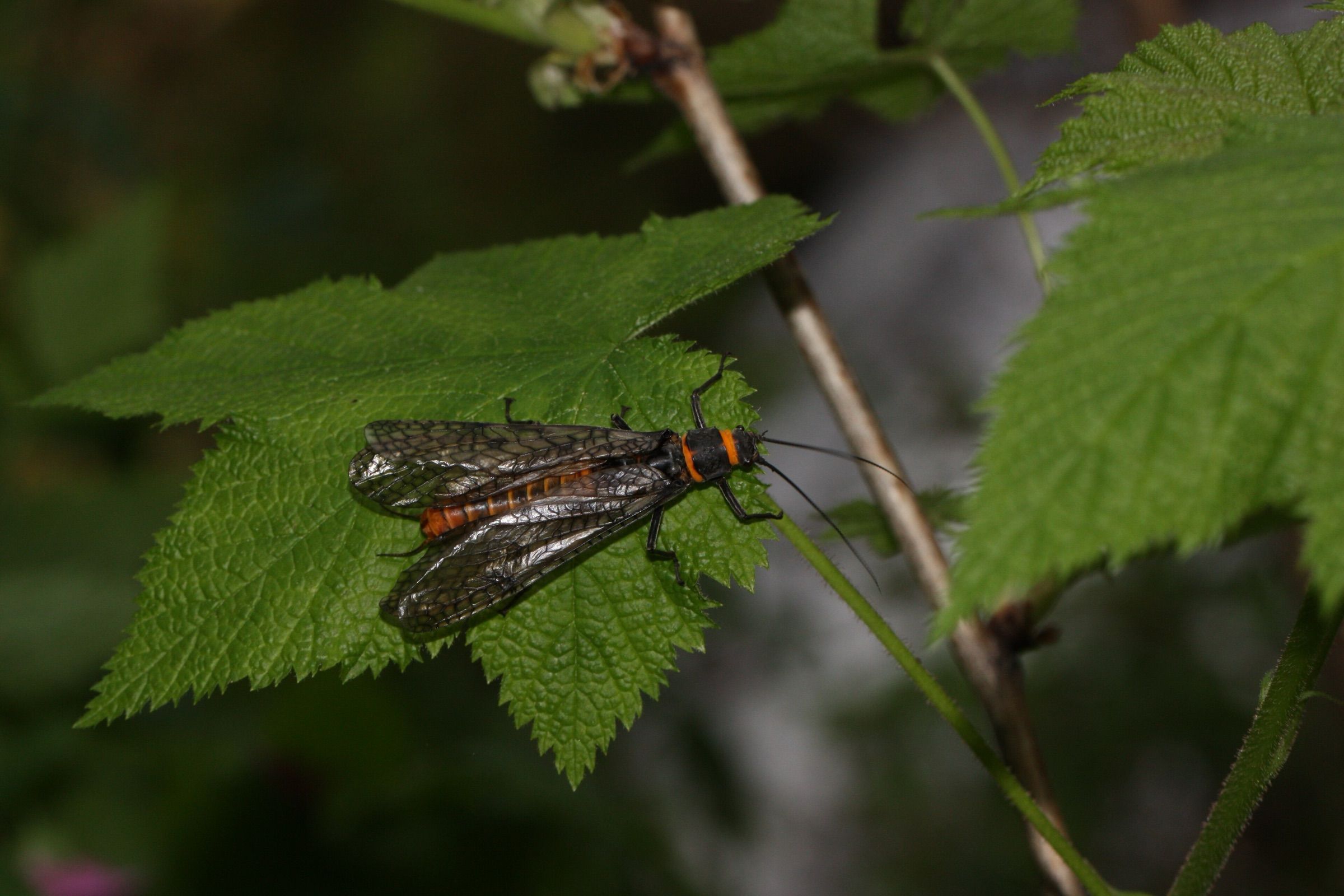
The salmonfly is a large stonefly with an orange body; adults can run about three inches long. The nymphs live for several years in fast, rocky riffles, then crawl out onto the bank to hatch in early summer, usually as runoff ends. Montana State University researchers who study the bug describe it as an important food for trout and birds during the hatch.
Big trout that ignore most surface insects will eat a salmonfly, so this is one of the few times of year when large fish come up for a dry fly. Trout can also gorge quickly, which shortens the feeding window on any given day.
Which rivers have it
The hatch occurs on many Montana rivers. In southwest Montana, the names that come up most are:
- The Madison, where the hatch usually begins in late June and works upriver over two to three weeks or more, toward the Slide area below Quake Lake. On the upper river, a heavy golden stone hatch often overlaps it.
- The Big Hole, where the hatch generally runs about three weeks in June, starting on the lower river and moving upstream. The canyon water between Dewey and Melrose gets busy during the hatch.
- The Yellowstone and the Gallatin, both named among Montana’s salmonfly rivers. West Yellowstone’s visitor bureau lists the hatch as an early summer highlight for the area.
For how these rivers differ in character, access and base towns, see which southwest Montana river to fish.
The usual timing pattern
Treat everything here as a pattern. In southwest Montana, the hatch is usually happening somewhere during a stretch of about six weeks, from mid or late May into early July. Early rivers can start in late May, and colder rivers can run into early July. On most rivers in a typical year, June is the heart of it.
The trigger is mostly water temperature, with guides pointing to peak water temperatures in the mid-50s Fahrenheit. That is why the hatch tends to follow the end of spring runoff: as snowmelt drops and rivers clear and warm, the nymphs move. Outfitters describe a window of roughly two to three weeks after runoff subsides on a given river when the fishing is especially good, and salmonflies are a big part of it.
Why it is hard to predict
Several things move the hatch every year:
- Runoff. A big snowpack and a late, cold spring push everything later. A light snowpack or a warm spell can pull it earlier.
- Water temperature. The hatch tracks warming water, so it can differ by weeks between rivers, and between stretches of the same river.
- Uneven progress. Some guides say it moves a few miles upstream a day. In practice, some years it creeps steadily upriver and in others it seems to surge up and down the river.
- Habitat and warming water. Researchers studying the Madison and Gallatin list warmer water, fine sediment and flow changes as threats to salmonfly populations, so the strength of the hatch can vary too.
The practical answer is flexibility. If your dates are fixed, choose a base with more than one hatch river within reach, and stay in touch with a local fly shop or guide in the weeks before you go.
Where in the hatch to fish
Guides talk about the head, the middle and the tail of the hatch. At the leading edge, trout are often already full from eating nymphs, and dry-fly fishing can be hit or miss. The middle, where bugs are thickest, is often the slowest, since fish are stuffed. Many guides prefer the trailing edge, roughly four to seven days behind the peak, when trout still remember the bugs and there is little else hatching. Nymph fishing before the hatch arrives can also be good.
Booking guides and lodging
Prime post-runoff dates tend to book faster than other parts of the season, so reserve guides and lodging early once you know the window you want.
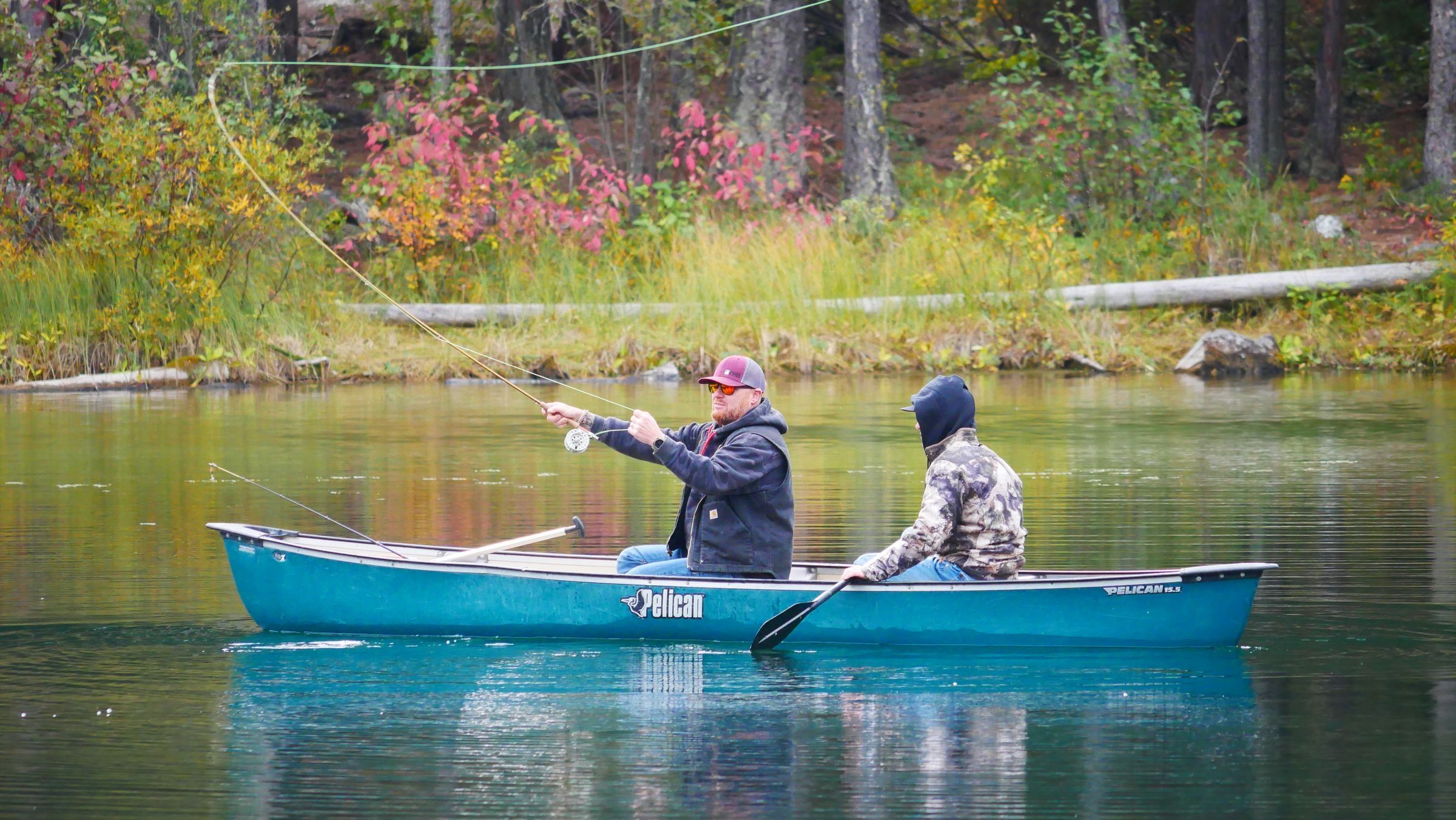
- Float or wade. Floating is usually the better option during the hatch, because rivers are still carrying a lot of water. A guided drift boat lets you cover miles to find the bugs. Wading still works on the Madison’s walk-and-wade water and some spring creeks.
- Ask about flexibility. Ask the outfitter whether they will move you to a different river or stretch based on where the hatch is that week, and whether they fish several rivers.
- Pick a central base. Ennis puts you on the Madison, Dillon and Twin Bridges put you near the Big Hole, and Bozeman reaches several rivers. Our where to stay in southwest Montana guide compares the towns.
- Expect company. The hatch draws a crowd of boats, sometimes called the boat hatch. If you want quieter water, fishing behind the hatch or on a smaller stretch helps.
Our guided vs DIY fishing guide covers the bigger decision, and the trip budget calculator helps you price guide days and lodging.
If you miss it
Missing the salmonflies is not a lost trip. For three to four weeks after the hatch passes, golden stones, pale morning duns and caddis offer steady fishing. Before it arrives, hungry trout and few competing insects make for good nymphing. And when the hatch is early, late or weak on one river, another river or another stretch is often fishing well.
If your dates land in the middle of runoff instead, a tailwater such as the Missouri below Holter Dam is the usual fallback. For later options, July and August bring dry flies and hoppers; see our July and August guides.
Rules to check before you go
You need a Montana fishing license from Montana Fish, Wildlife & Parks. In hot, low-water periods, FWP can put a stretch under a hoot owl restriction, which ends fishing each day from 2 p.m. to midnight, or close it. Check the FWP closures page and current regulations before each trip, since rules change. Our fishing licenses guide and traveling with fishing gear cover the general planning.
Frequently asked questions
When is the salmonfly hatch in Montana?
In southwest Montana it usually comes off somewhere between late May and early July, with June the center of it on most rivers. The Big Hole hatch typically runs about three weeks in June, and the Madison usually starts in late June. Exact dates move every year with runoff and water temperature.
How long does the salmonfly hatch last?
On a whole river it often lasts two to three weeks as it works upstream, but on any one stretch it can be brief. Some years it moves steadily upriver; in others it seems to jump around, which is why local fly shop reports matter more than the calendar.
Should I float or wade during the salmonfly hatch?
Floating is usually the better choice, since the hatch comes when rivers are still high from runoff and a drift boat lets you cover water to find the bugs. Wading still works in places, such as the Madison's walk-and-wade water, if you plan on fast, strong current.
What should I do if I miss the salmonfly hatch?
Keep fishing. For several weeks after the salmonflies pass, golden stones, pale morning duns and caddis keep trout looking up, and some guides prefer the days just behind the hatch, when fish still remember the big bugs. Another river or stretch may also be hatching on a different schedule.
Sources and fact-checking (9)
Facts checked against these sources on October 24, 2026. Seasons, rules and businesses change; confirm with the official source before you travel. How we research.
- Glacier to Yellowstone (Montana Angler): The salmonfly in Montana, the five truths about the hatch (glaciertoyellowstone.com)
- Montana Angler: Montana fishing seasons (montanaangler.com)
- Montana Angler: Big Hole River (montanaangler.com)
- Montana Angler: Missouri River (montanaangler.com)
- Madison River Fishing Company: Madison River hatches (mrfc.com)
- Montana State University: Montana Salmonfly Research Group (montana.edu)
- Destination Yellowstone (West Yellowstone): Fishing (destinationyellowstone.com)
- Montana FWP: Waterbody restrictions and closures (fwp.mt.gov)
- Montana FWP: Fishing licenses and permits (fwp.mt.gov)