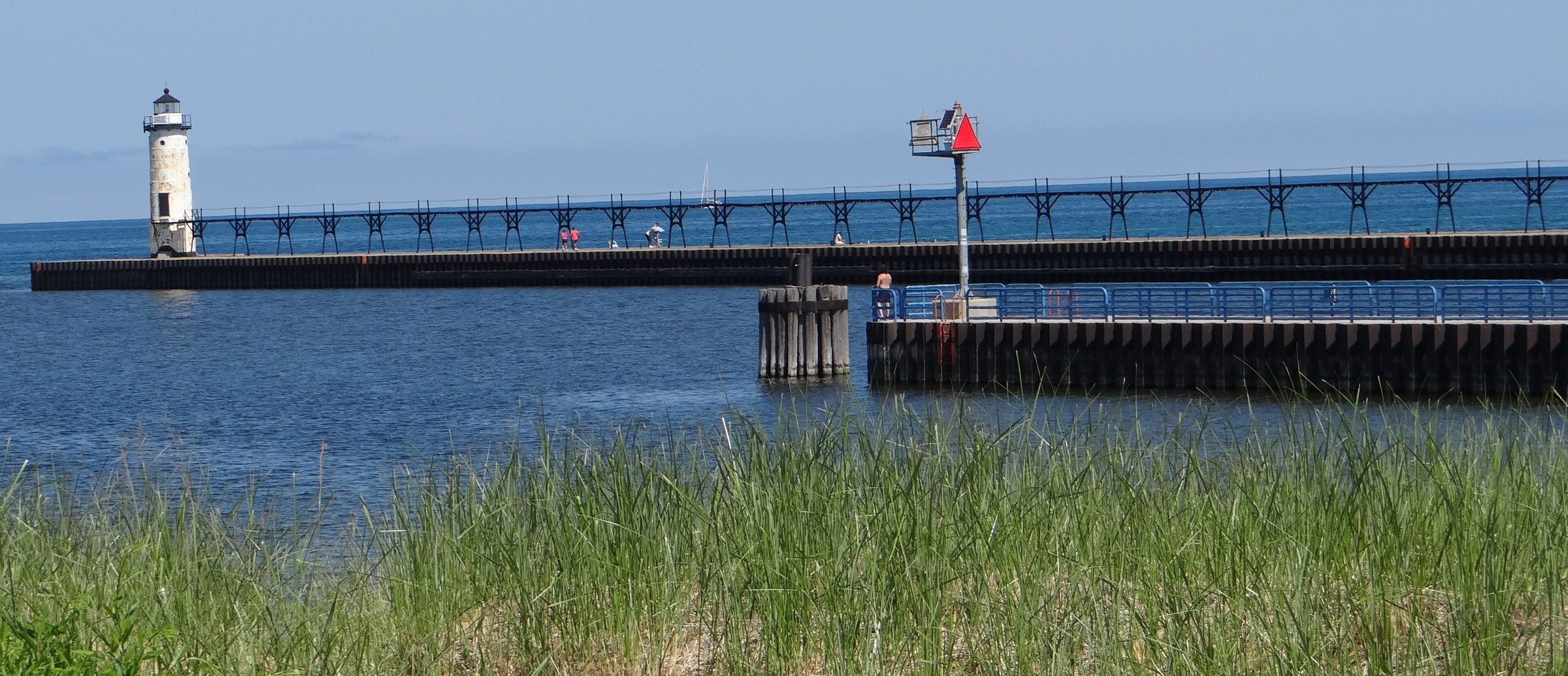
Why anglers go
- Lake Michigan charter ports from Ludington north to Charlevoix and Little Traverse Bay
- Fall Chinook and coho runs on the Pere Marquette, Manistee and Betsie rivers
- Steelhead in the rivers from late fall into spring
- Inland lakes for walleye, bass, pike and panfish, plus lake trout in Torch and Elk lakes
- Au Sable River trout water and Houghton Lake ice fishing
When to fish Northern Michigan
What is commonly targeted month by month. Notes under the chart explain the regional detail.
| Species | Jan | Feb | Mar | Apr | May | Jun | Jul | Aug | Sep | Oct | Nov | Dec |
|---|---|---|---|---|---|---|---|---|---|---|---|---|
| Salmon | No | No | No | Yes | Yes | Yes | Yes | Yes | Yes | Yes | No | No |
| Steelhead | Yes | Yes | Yes | Yes | Yes | No | No | No | No | Yes | Yes | Yes |
| Lake trout | Yes | Yes | Yes | Yes | Yes | Yes | Yes | Yes | Yes | Yes | Yes | Yes |
| Walleye | Yes | Yes | Yes | Yes | Yes | Yes | Yes | Yes | Yes | Yes | Yes | Yes |
| Trout | No | No | No | Yes | Yes | No | No | No | No | No | No | No |
"Yes" = commonly targeted in a typical year; "Peak" = the months sources single out. Broad patterns only: runs, weather and openings vary every year, and regulations can close a fishery. Check the agency before you book.
- Salmon
- Two different fisheries. Charter boats troll Lake Michigan for Chinook and coho from spring through summer, and coho on the east side of the lake fish best in early spring and again in late summer and early fall. River runs come later: Chinook are usually catchable in the rivers by mid-August, and the Manistee River has a late-October coho run.
- Steelhead
- Lake-run steelhead enter their spawning rivers from late October into early May. Fall fish often hold in the rivers over winter, and spawning comes in March and April.
- Lake trout
- Usually caught by trolling deep in Lake Michigan and its bays, shallower in spring and fall, and through the ice in Great Lakes bays in winter. Torch, Elk and Crystal lakes are among the inland lakes known for lake trout all year.
- Walleye
- Walleye feed through the winter as well as in open water, so they are fished year round on inland lakes. Jigs and live bait early, trolling later in the season, and spoons in deep water in fall.
- Trout
- The statewide trout opener falls on the last Saturday in April, and the DNR points spring trout anglers in the northeast Lower Peninsula to the Au Sable River.
Why go
Northern Michigan gives you three kinds of fishing trip in one region. You can troll Lake Michigan for salmon and lake trout out of a string of harbor towns, wade or drift rivers for fall salmon and winter and spring steelhead, or settle onto an inland lake for walleye, bass, northern pike and panfish. The Au Sable and other cold streams add trout for fly anglers.
This guide focuses on the northwest Lower Peninsula: the Lake Michigan shore from Ludington north through Manistee, Frankfort, Grand Traverse Bay and Charlevoix, plus the rivers and inland lakes behind it. It suits drive-in anglers from the Midwest, families who want fishing mixed with beach days, and anyone chasing the fall salmon run.
The appeal is choice. If the big lake blows up, a river or an inland lake is usually a short drive away. Pure Michigan counts about 11,000 inland lakes in the state and more than 150 fish species.
The fishing
Lake Michigan salmon and trout. Chinook are the headline fish. They like cooler water than coho, so anglers often reach them deep, using downriggers and lead-core or copper line, and catching them 100 feet down or more is normal. In low light they can come up near the surface. Coho can be caught in Lake Michigan any time, but the east side tends to fish best in early spring and again in late summer and early fall. Lake trout fill the gaps: they are usually trolled near bottom in deep water, come shallower in spring and fall, and are taken through the ice in Great Lakes bays in winter.
Summer trolling is about finding fish deep and offshore. DNR reports from June and September describe Ludington, Manistee and Frankfort boats working 90 to 300 feet of water with spoons, plugs and flasher-fly rigs set 45 to 100 feet down. Lake trout often bail out a slow salmon day.
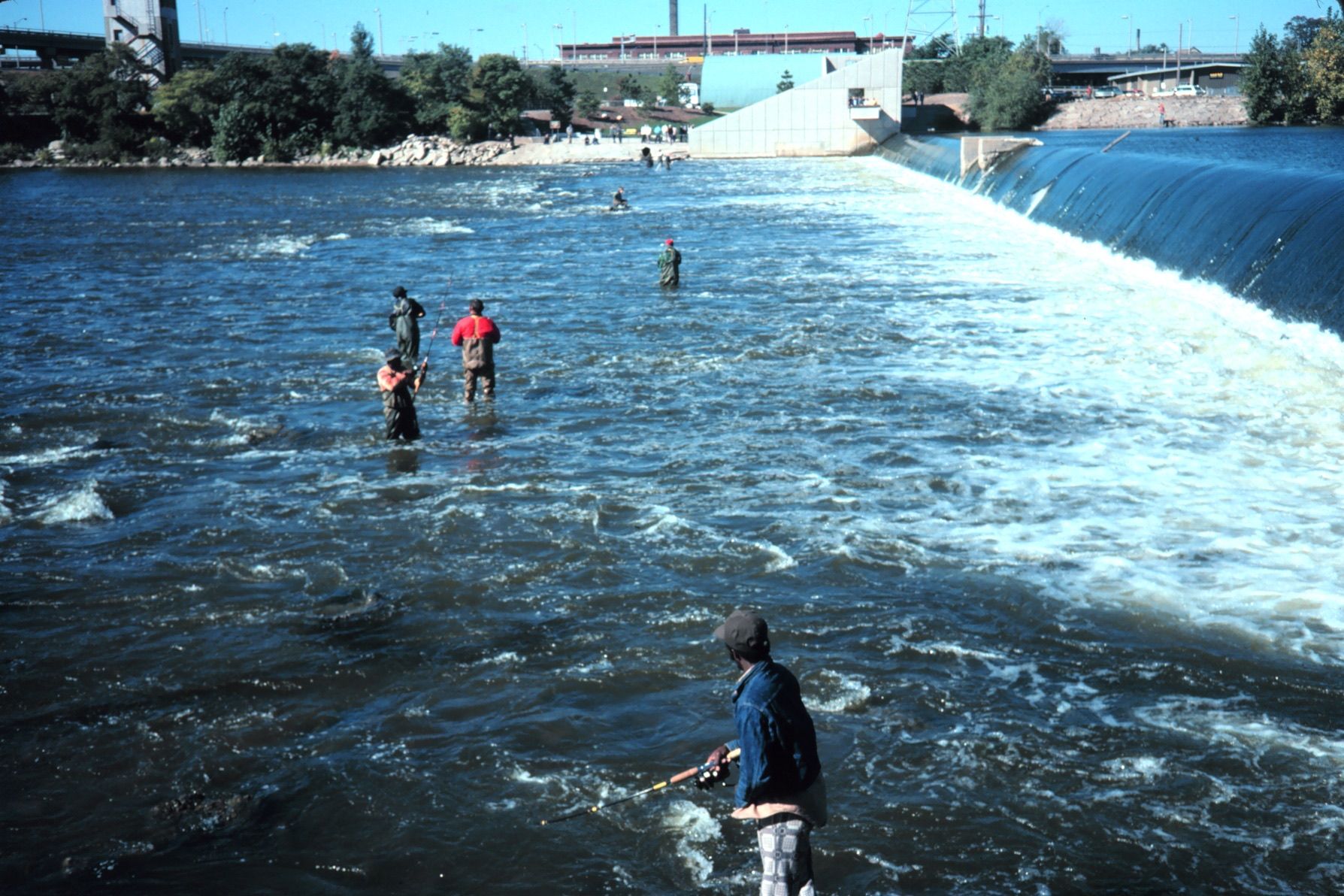
River runs. Chinook start upstream in late summer and are usually in catchable numbers by mid-August. River anglers use spoons, spinners and plugs, or spawn fished on the bottom or under a bobber. Coho stage in Platte Bay before their run, and the Manistee River has a known late-October coho fishery. By early October, salmon are pushing toward river mouths and holding in deep holes upstream.
Steelhead take over as the salmon fade. Lake-run steelhead enter the rivers from late October through early May, and many fall fish spend the winter in the river before spawning in March and April. Steelhead are also taken by trollers, pier anglers and surf anglers on the big lake.
Inland lakes. Walleye feed through the winter, so they are a year-round fish. Jigs and minnows work early, trolled crankbaits and crawler harnesses later, and deep jigging spoons in fall. Smallmouth bass dominate as you head north, and the DNR singles out lakes across the northern Lower Peninsula for smallmouth. Pike hold in weedy shallows and are a staple of ice fishing. Muskie are native mainly in the western Upper Peninsula, but the DNR has stocked them in lakes statewide, so ask locally which northern lakes hold them.
Trout streams. The Au Sable River near Grayling holds brown, brook and rainbow trout, and the DNR has designated it a blue ribbon trout stream. The statewide trout opener falls on the last Saturday in April.
Ice fishing. Winter brings walleye, pike and panfish through the ice on inland lakes, and lake trout in Great Lakes bays. Conditions vary a lot from year to year.
Where to fish
Ludington and the Pere Marquette
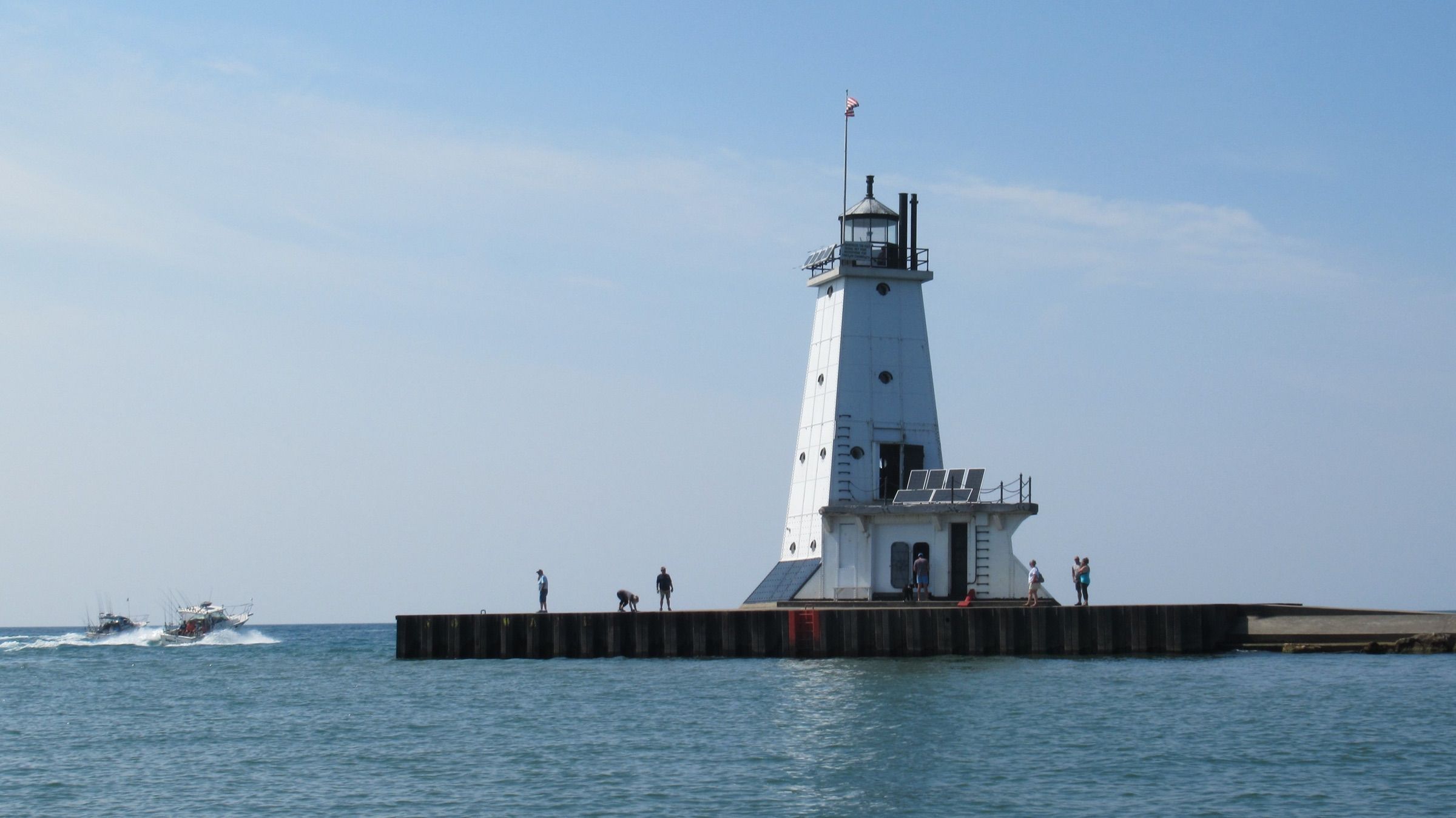
Ludington sits at the mouth of the Pere Marquette River. Boats run for Chinook off Big Sable Point and to the south in summer, and late-summer salmon move into Pere Marquette Lake and the channel, where anglers jig, drift eggs and troll. The Pere Marquette itself is a federally designated Wild and Scenic River for 66.4 miles, from the forks of its Middle and Little South branches down to US-31, with salmon and steelhead runs. Its tributary, the Baldwin River, was the first American river stocked with European brown trout, in 1884.
Manistee and Onekama
Manistee anglers fish the piers, the channel and Manistee Lake for salmon, and troll straight out for Chinook, coho, steelhead and lake trout. The Manistee River carries salmon and steelhead runs and a late-October coho fishery. The DNR runs a weir on the Little Manistee River, where it collects steelhead eggs in spring and Chinook eggs in fall for hatcheries across the state. Just north, Onekama boats troll Lake Michigan for Chinook and coho.
Frankfort, the Betsie and the Platte
Frankfort produces salmon for trollers, pier anglers and harbor jiggers through late summer. The Betsie River runs into the harbor and holds Chinook in deep holes and near Homestead Dam in fall. North of town, Platte Bay is lake trout water in summer and a staging area for coho before their run up the Platte River. The Platte ends inside Sleeping Bear Dunes National Lakeshore, and a state fish hatchery sits upstream.
Grand Traverse Bay
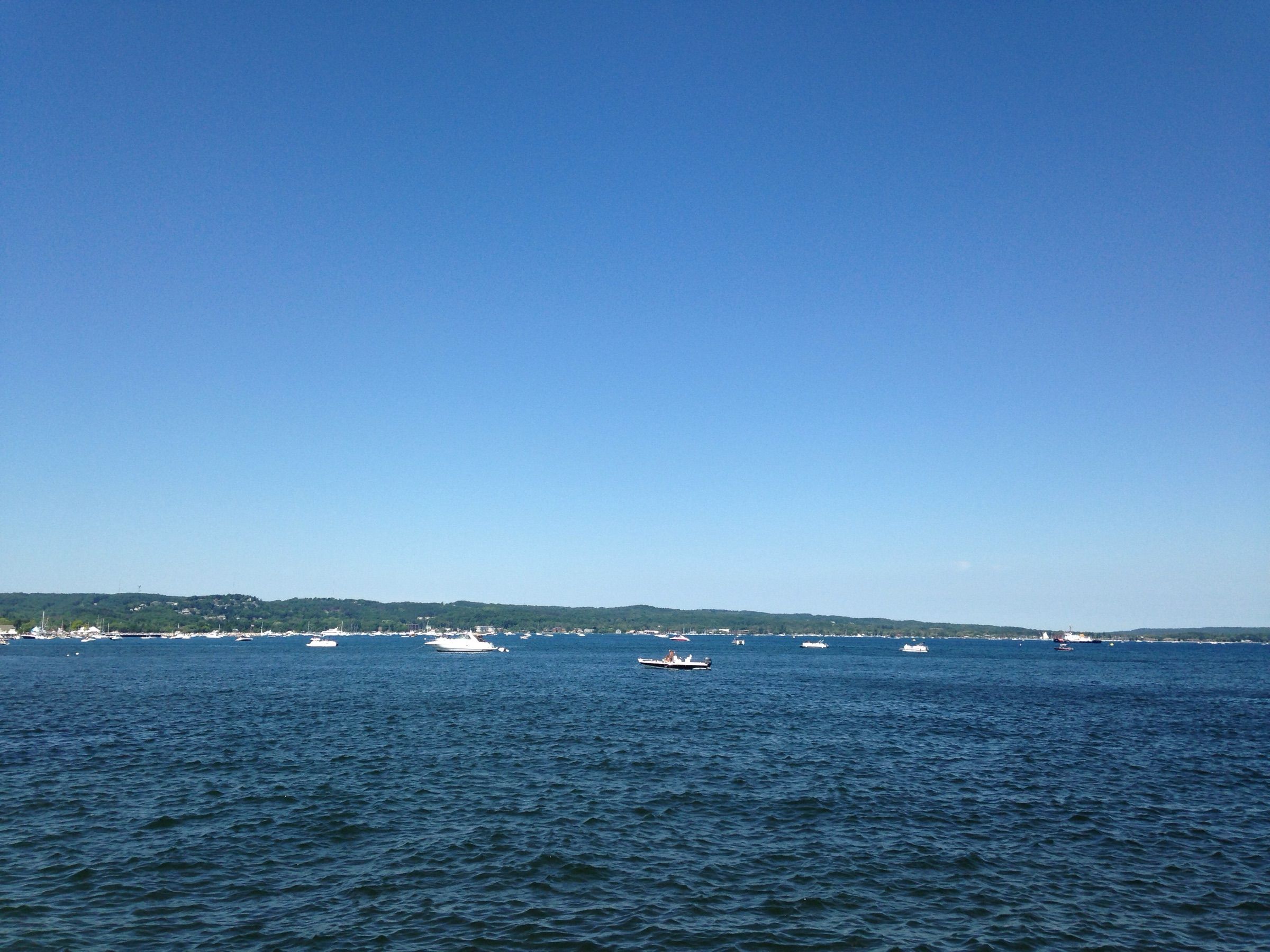
Traverse City puts you between West and East Grand Traverse Bay. Trollers work the bays for lake trout and Chinook in late summer, including around the Boardman River mouth on the west arm and out of Elk Rapids on the east arm. Both bays also give up smallmouth bass on flats and breaklines, which makes them a good choice when the open lake is rough.
Charlevoix and Little Traverse Bay
Charlevoix trollers fish deep water for Chinook, lake trout and the odd steelhead. Little Traverse Bay holds salmon, lake trout and smallmouth, and fall fish run into the Bear River.
Inland lakes
Torch, Elk and Crystal lakes are among the DNR’s better-known inland lake trout waters, fished with Great Lakes tactics. For walleye, pike, bass and panfish, Houghton Lake is the big one. It is Michigan’s largest inland lake, about 20,000 acres and mostly shallow, and it holds pike, walleye, bluegill, crappie, perch and both bass species.
The Au Sable River
The Au Sable around Grayling is often described as one of the top brown trout rivers east of the Rockies. The Holy Waters stretch, from Burtons Landing to Wakeley Bridge, is known for steady insect hatches and wadeable water, and it has its own special rules, so read the regulations for that stretch before you fish it. Trout Unlimited was founded by Michigan anglers on this river in 1959.
Charters and guides
Lake Michigan charters run out of every port in this guide. Most trips troll with downriggers and lines set deep, so expect an early start and a long morning on the water. Spoons, plugs and flasher-fly combinations are standard.
When you call a captain, ask what species have been biting that week, how far out they are running, and whether lake trout are a likely fallback. Ask about cleaning and how they handle your catch, and what the plan is if wind keeps boats in port.
On the rivers, guides run drift boats for fall salmon and for steelhead from late fall into spring. A guide for the first day is worth it on a new river, since access, wading and gear rules vary by stretch.
Where to stay
Base yourself near the fishing you want most. Ludington, Manistee and Frankfort put you on the harbor and close to the Pere Marquette, Manistee and Betsie. Traverse City is the most central base, with both bays at hand and the most lodging and dining. Charlevoix and the Little Traverse Bay towns suit a quieter northern trip.
For inland-lake and trout trips, Grayling sits on the Au Sable and Houghton Lake is a winter and summer base for lake fishing. If you want a cabin on the water, see our guides to lakefront cabins and fishing resorts for what to look for.
Beyond fishing
Sleeping Bear Dunes National Lakeshore, between Frankfort and Traverse City, has miles of sand beach, high dunes and bluffs rising 450 feet above Lake Michigan, clear inland lakes and South Manitou Island with its lighthouse. Canoe liveries run trips on the Au Sable, which also hosts a long-distance canoe marathon from Grayling to Oscoda. In winter, Houghton Lake’s Tip-Up Town festival adds family events to the ice fishing.
Trip costs
What drives the cost here is how you fish. Pier, shore and inland-lake fishing cost little beyond a license and gear. A Lake Michigan charter or a guided drift-boat day is the main expense, and splitting a boat with friends brings the per-person cost down. Michigan sells a daily license as well as an annual one, which can help on a short trip. See our budget trip guide for more.
Getting there and around
Cherry Capital Airport in Traverse City is the closest airport for most of this region. Most anglers drive, and you will want a car: the ports, rivers and inland lakes are spread along the coast and across the northern Lower Peninsula.
Licenses and rules
The Michigan Department of Natural Resources sells licenses and sets fishing rules. You need a license if you are 17 or older and fishing public waters, and any adult helping a child fish needs one too. Michigan also offers two Free Fishing Weekends a year, when license fees are waived but all rules still apply.
Trout and salmon rules vary by stream type, and some river stretches have gear restrictions, so check the current Michigan Fishing Regulations and the DNR’s trout and salmon maps before each trip. Rules change, so read the current edition rather than relying on last year’s. Our fishing licenses guide covers the basics.
Frequently asked questions
When do salmon run in northern Michigan rivers?
Chinook start moving upstream in late summer and are usually in catchable numbers by mid-August, with fishing continuing into fall. Coho run a bit later, and the Manistee River has a well-known late-October coho fishery. Timing shifts with water temperature and weather each year, so check the DNR weekly fishing report before you go.
When is steelhead season in northern Michigan?
Steelhead enter the rivers from late October into early May. Many fall fish stay in the rivers through winter, and spawning happens in March and April. Fall and spring are the seasons most anglers plan around, with winter fishing for the hardy.
Which port should I book a Lake Michigan charter from?
Ludington, Manistee, Frankfort, Onekama, Charlevoix and the Grand Traverse Bay launches all produce Chinook, coho, steelhead and lake trout over a season. Pick the town that suits the rest of your trip, then ask the captain how the bite has been running that week.
Do I need a fishing license in Michigan?
Yes, if you are 17 or older and fishing public waters. Kids under 17 can fish without one but must follow the rules. Michigan also holds two Free Fishing Weekends each year, when license fees are waived for residents and visitors. Check the DNR license page for current options.
Is there ice fishing in northern Michigan?
Yes. Houghton Lake, the state's largest inland lake, hosts the Tip-Up Town USA festival each January, and pike, walleye and panfish are common ice targets around the region. Lake trout are also taken through the ice in Great Lakes bays. Ice varies a lot from winter to winter, so check local conditions.
Is northern Michigan good for a family fishing trip?
It works well. Piers, inland lakes and panfish give kids steady action close to town, and Sleeping Bear Dunes adds beaches and trails. Save the deep-water salmon charter for older kids who can handle a long morning on the big lake.
Sources and fact-checking (28)
Facts checked against these sources on October 23, 2026. Last updated October 24, 2026. Seasons, rules and businesses change; confirm with the official source before you travel. How we research.
- Pere Marquette River, National Wild and Scenic Rivers System (rivers.gov)
- Chinook salmon, Michigan DNR (michigan.gov)
- Coho salmon, Michigan DNR (michigan.gov)
- Steelhead, Michigan DNR (michigan.gov)
- Lake trout, Michigan DNR (michigan.gov)
- Walleye, Michigan DNR (michigan.gov)
- Smallmouth bass, Michigan DNR (michigan.gov)
- Northern pike, Michigan DNR (michigan.gov)
- Muskellunge, Michigan DNR (michigan.gov)
- Spring Trout Fishing, Michigan DNR (michigan.gov)
- Little Manistee River Weir, Michigan DNR (michigan.gov)
- Weekly fishing report, Michigan DNR (michigan.gov)
- Weekly Fishing Report: June 24, 2026, Michigan DNR (content.govdelivery.com)
- Weekly Fishing Report: September 2, 2026, Michigan DNR (content.govdelivery.com)
- Weekly Fishing Report: October 7, 2026, Michigan DNR (content.govdelivery.com)
- Fishing, Michigan DNR (michigan.gov)
- Fishing and hunting license information, Michigan DNR (michigan.gov)
- Free Fishing Weekend, Michigan DNR (michigan.gov)
- Fishing, Pure Michigan (michigan.org)
- Types of Salmon Fishing, Pure Michigan (michigan.org)
- Houghton Lake, Pure Michigan (michigan.org)
- Houghton Lake (Michigan), Wikipedia (en.wikipedia.org)
- Tip-Up Town festival gives Houghton Lake an economic boom, 9&10 News (9and10news.com)
- Au Sable River (Michigan), Wikipedia (en.wikipedia.org)
- Pere Marquette River, Wikipedia (en.wikipedia.org)
- Platte River (Michigan), Wikipedia (en.wikipedia.org)
- Sleeping Bear Dunes National Lakeshore, NPS (nps.gov)
- Cherry Capital Airport (tvcairport.com)