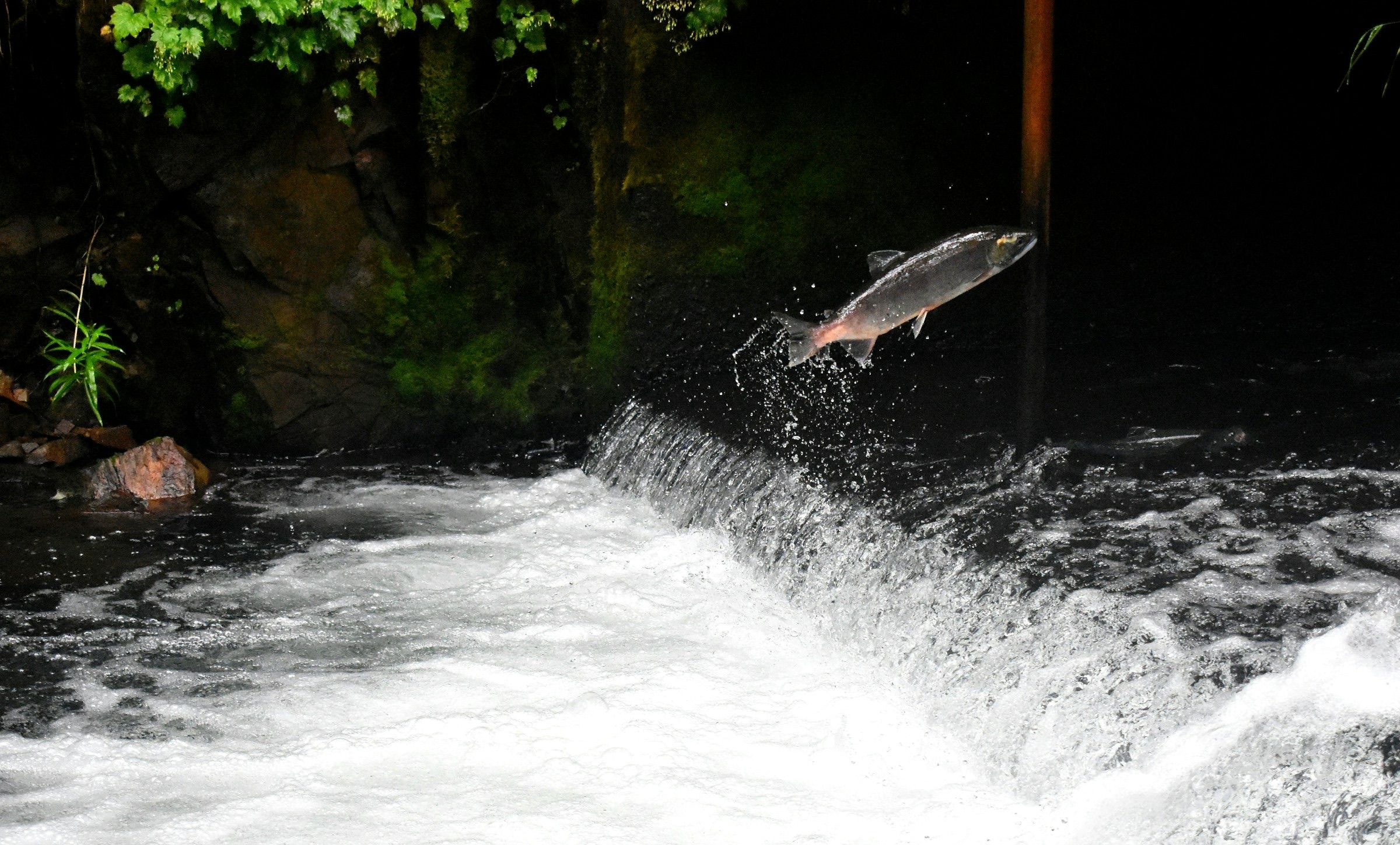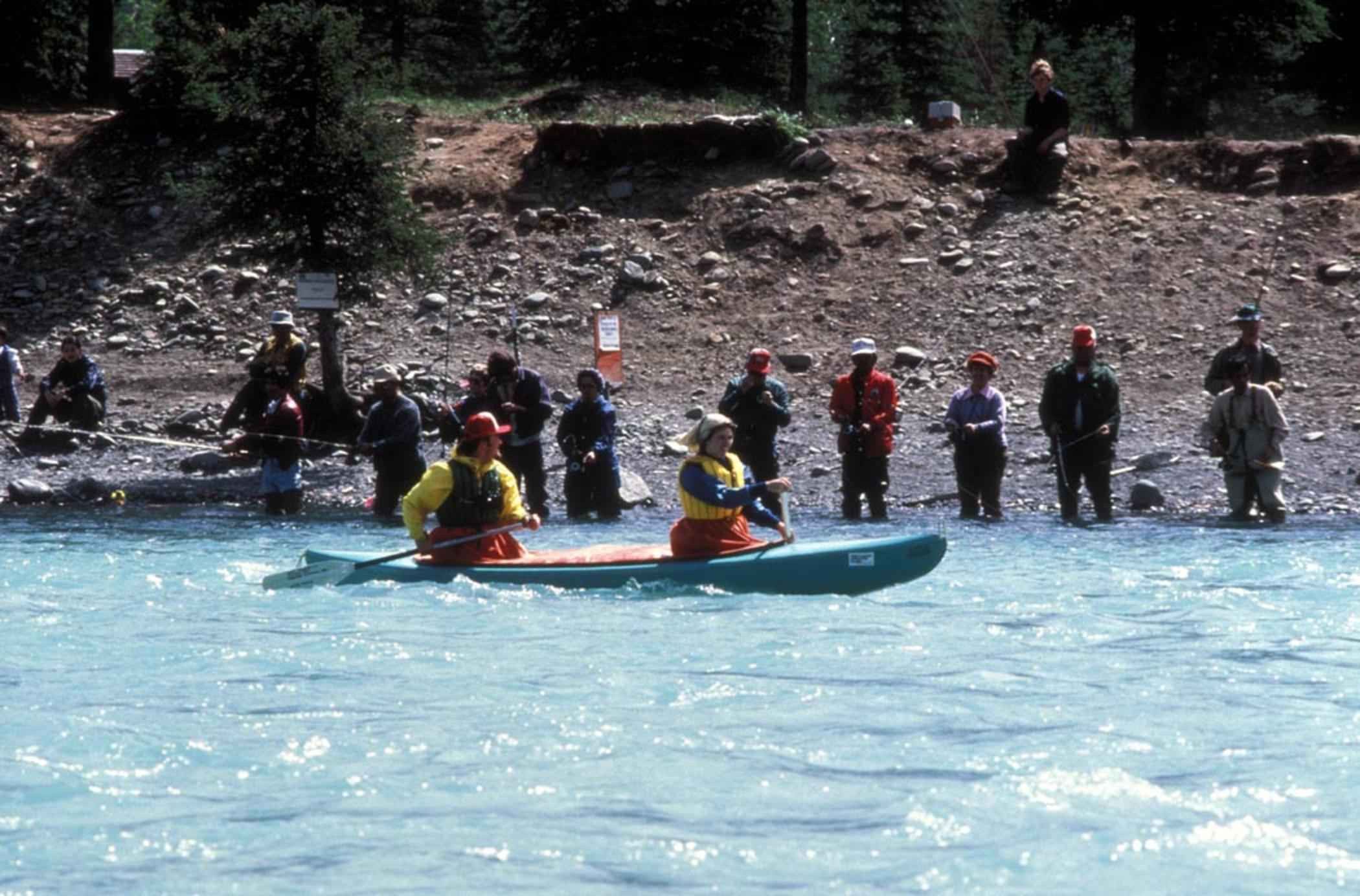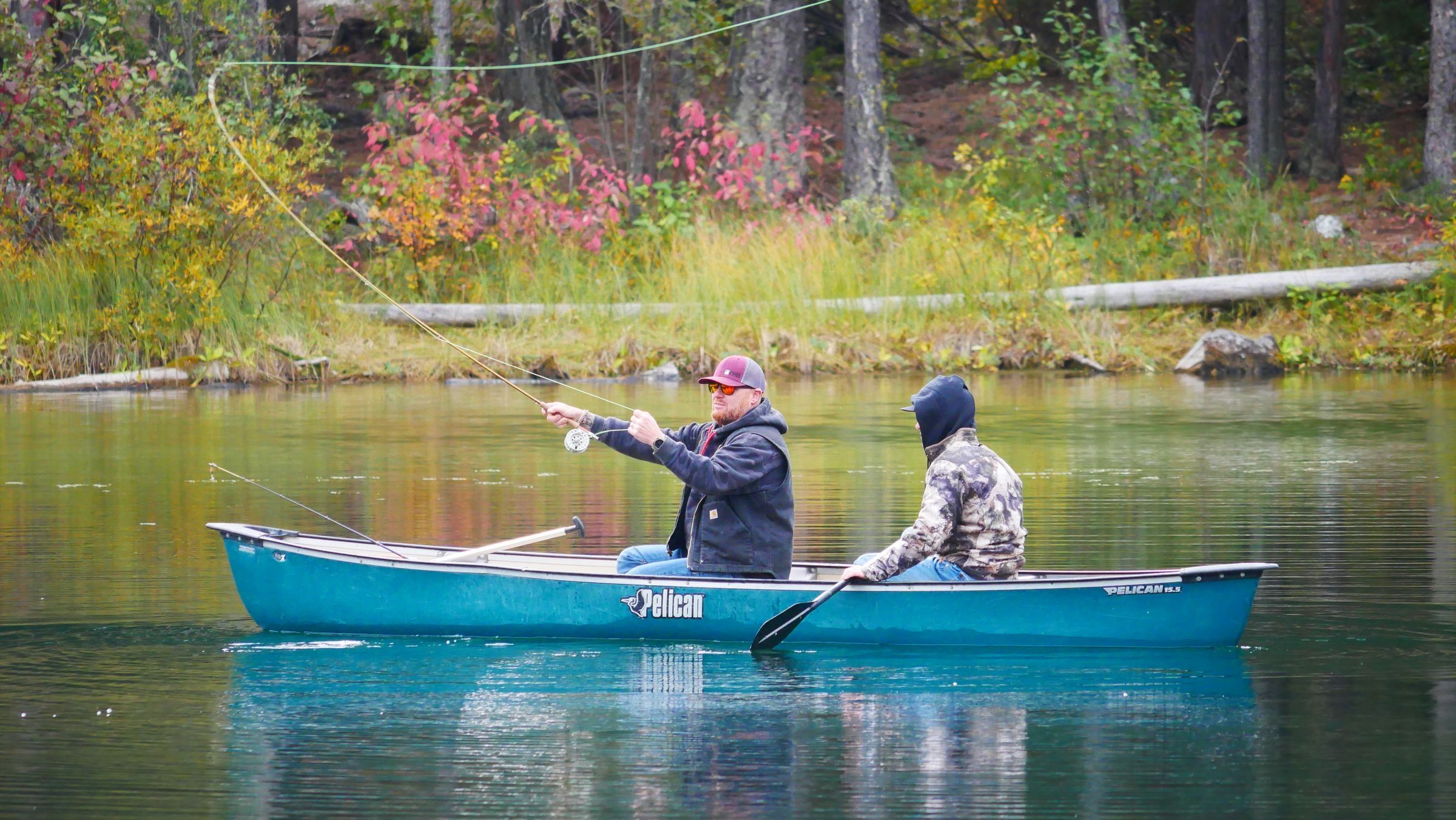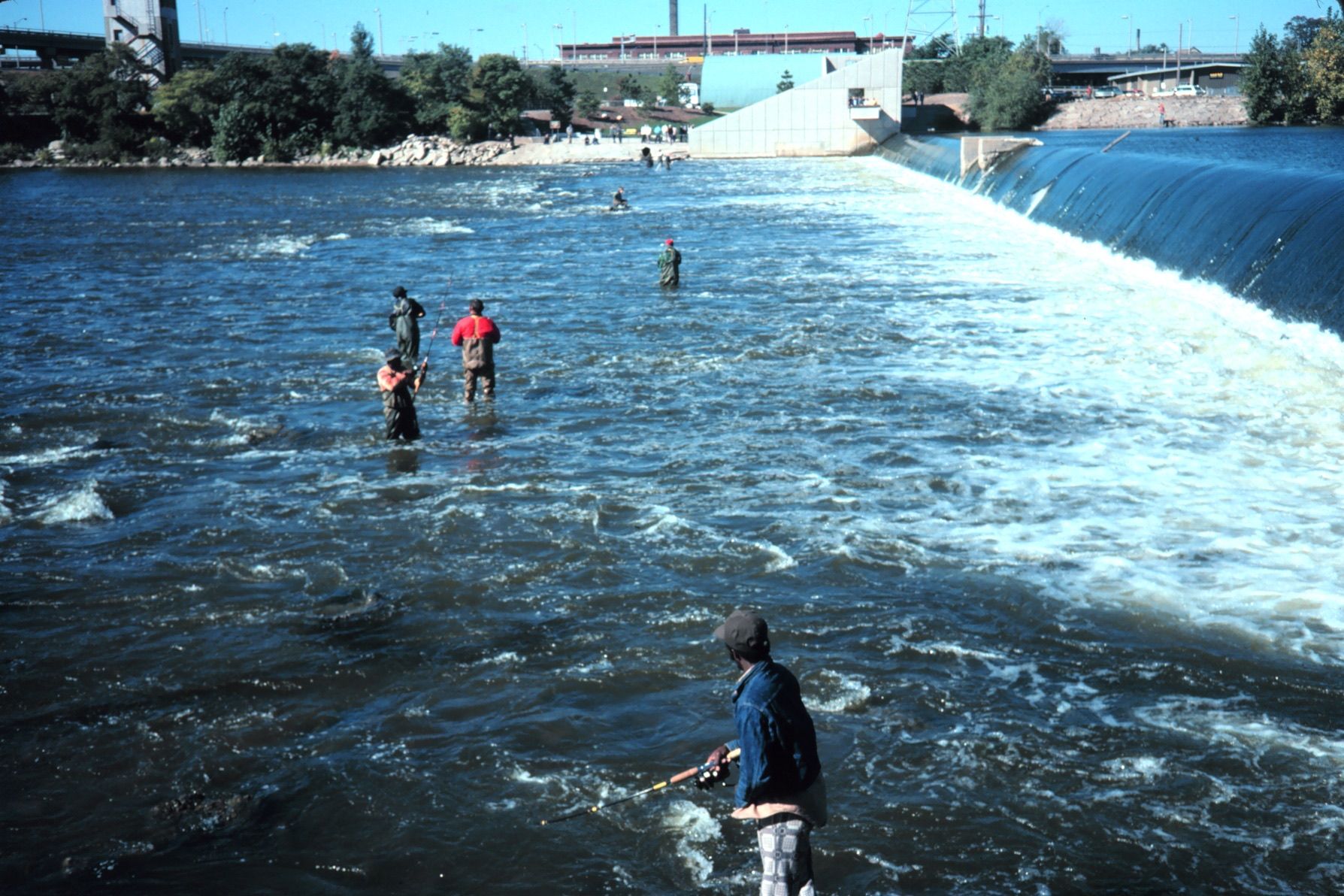
The fall salmon run is the busiest, most social fishing season in northern Michigan. Chinook and coho come in from Lake Michigan to spawn, and for a few weeks they stack up in harbors, river mouths and deep holes upstream. You can fish them from a pier, a harbor boat, a drift boat or on foot. For the region as a whole, see our northern Michigan guide.
How the run works
Two salmon matter here. Chinook, or kings, are the big fish. They begin moving upstream in late summer and are usually in the rivers in catchable numbers by mid-August. Before they run, they gather off the harbors, and DNR reports from early September describe Frankfort Chinook darkening as they staged for the river run.
Coho run on their own schedule. They stage in Platte Bay, where trollers and surf anglers both work them, before running up the Platte River, and the Manistee River has a well-known late-October coho fishery.
Steelhead follow the salmon. Lake-run steelhead enter the rivers from late October, so a late-fall trip can mix the tail of the salmon run with the first steelhead.
The usual timing pattern
Treat this as a pattern, not a schedule:
- Mid to late August: Chinook start entering rivers. Harbor and pier fishing picks up at the ports.
- September: The heart of the Chinook run. Fish stage off river mouths and push upstream.
- Late September into October: Fish hold in deep holes and below dams. Coho become more important.
- Late October: Manistee coho, and steelhead starting to show.
Warm water slows everything. DNR reports from early September describe warm water from southerly winds slowing the harbor bite, and an October report found salmon still moving slowly toward river mouths. Wind and rain can change conditions on the big lake from day to day, so the DNR weekly fishing report is worth reading in the weeks before a trip.
Rivers and ports
Manistee and the Little Manistee
The Manistee is one of the state’s main Chinook rivers, including the water below Tippy Dam. In town, anglers fish the piers, the channel and Manistee Lake. The Little Manistee, a tributary, has a DNR weir that is usually in place from about mid-August to mid-November and blocks fish passage while it is in. Chinook eggs are usually taken there in the first two weeks of October.
Ludington and the Pere Marquette
The Pere Marquette is another of the DNR’s named Chinook rivers. Late-summer salmon move into Pere Marquette Lake and the channel at Ludington, where anglers jig, drift eggs and troll.
Frankfort, the Betsie and the Platte
At Frankfort, pier anglers catch Chinook and coho overnight and early in the morning in late summer, and harbor jiggers work the channel. The Betsie River holds Chinook in deep holes and near Homestead Dam into October. North of town, coho stage in Platte Bay before running the Platte River, home of the Platte River State Fish Hatchery.
Traverse City and the Boardman
Trollers catch Chinook off the mouth of the Boardman River in West Grand Traverse Bay in late summer, and Elk Rapids boats work the east arm. The DNR has stocked Chinook in the Boardman since the 1980s, and returning salmon are harvested at a weir near the river mouth in September and October. See our Traverse City guide for more.
Little Traverse Bay
Fall Chinook, coho and steelhead run into the Bear River at Little Traverse Bay, though DNR reports from October describe slow fishing there in some weeks.
Crowds and river etiquette
Popular holes, dams and river mouths get crowded during the peak of the run. The DNR has asked anglers on the Betsie and Platte to mind their behavior after complaints about trespassing, littering, illegal parking and camping, and noise. A few habits help:
- Stay off posted land. Landowners along these rivers post their property. Use public access and state land.
- Pack out everything, including line, bait containers and fish waste.
- Give other anglers room, and take turns at a crowded run instead of crowding in.
- Fish legally. Snagging, hooking a fish that has not taken the bait in its mouth, is illegal. Conservation officers run extra patrols during the runs, and penalties can include a misdemeanor charge, fines and loss of your license. Report violations to the DNR’s Report All Poaching line.
Regulations
The Michigan Department of Natural Resources sets the rules and sells licenses. Trout and salmon rules depend on the type of stream and stretch, and the DNR publishes inland trout and salmon maps to show which rules apply where. Rules can change from one stretch of the same river to the next.
Michigan’s regulations run on a yearly cycle that turns over at the end of March, so read the current Michigan Fishing Regulations and the trout and salmon maps for every river you plan to fish. Do not rely on last year’s rules or on what someone tells you at the river. Our fishing licenses guide covers how licenses work.
Weirs and hatcheries to visit
Watching salmon at a weir is a good outing for non-anglers and kids.
- Platte River State Fish Hatchery, near Beulah, is open to the public at no charge. The grounds are open daily from dawn to dusk, and the hatchery buildings during the day. It is the main coho egg collection site for the upper Great Lakes, and adult salmon return there from mid-September to late October.
- Little Manistee River Weir, near Manistee, is the DNR’s egg-take and salmon harvest site, with a phone hotline updated during busy periods.
- Boardman River Weir, in Traverse City, harvests returning salmon in September and October. Call the number on the DNR page for harvest dates and times.
Check hours and activity before you drive, since operations depend on how the run is going.
Guided or DIY
You can fish the run on your own. Piers, harbor channels and public river access give a shore angler real chances, and Chinook can be taken on spoons, spinners and plugs or on spawn. The catch is crowds and rules: on a new river, you have to work out access, legal stretches and gear rules yourself.
A guide makes the most sense for a first trip or a short one, since a local guide already knows the access points, the legal stretches and where the crowds go. Ask how they handle crowding at popular holes and what their plan is if the run is late. See guided vs DIY fishing and choosing a fishing charter for what to ask.
Planning tips
- Base in the port town for the river you want: Manistee, Ludington, Frankfort or Traverse City.
- Pack for cold mornings and wet days, with waders and layers. Our packing list helps.
- Leave room in your schedule. A few days on the water gives you a better chance of catching fish moving.
For more fall options, see fall salmon fishing, our September and October guides, and how this run compares with Alaska in Kenai vs northern Michigan for salmon.
Frequently asked questions
When is the fall salmon run in northern Michigan?
Chinook start moving upstream in late summer and are usually in catchable numbers in the rivers by mid-August, with the run building through September. Coho tend to run later, and the Manistee River has a known late-October coho fishery. Timing shifts with water temperature and weather, so check the DNR weekly fishing report before you go.
Which northern Michigan rivers have fall salmon runs?
The Manistee, Pere Marquette, Betsie and Platte are the best-known in this region, along with the Little Manistee, the Boardman in Traverse City and the Bear River at Little Traverse Bay. Rules differ by river and by stretch, so read the regulations for each one you plan to fish.
Can I watch salmon run without fishing?
Yes. The Platte River State Fish Hatchery near Beulah is open to the public at no charge, and adult salmon return there to spawn from mid-September to late October. The DNR also runs weirs on the Little Manistee and Boardman rivers; call the numbers on their DNR pages for activity and harvest dates.
Is snagging salmon legal in Michigan?
No. The DNR describes snagging as hooking a fish that has not taken the bait in its mouth, calls it illegal, and steps up patrols on rivers such as the Betsie and Platte during the fall runs. Penalties can include fines and loss of your license.
Sources and fact-checking (12)
Facts checked against these sources on October 24, 2026. Seasons, rules and businesses change; confirm with the official source before you travel. How we research.
- Chinook salmon, Michigan DNR (michigan.gov)
- Coho salmon, Michigan DNR (michigan.gov)
- Types of Salmon Fishing, Pure Michigan (michigan.org)
- Little Manistee River Weir, Michigan DNR (michigan.gov)
- Platte River State Fish Hatchery and Weir, Michigan DNR (michigan.gov)
- Boardman River Weir, Michigan DNR (michigan.gov)
- Weekly Fishing Report: September 2, 2026, Michigan DNR (content.govdelivery.com)
- Weekly Fishing Report: October 7, 2026, Michigan DNR (content.govdelivery.com)
- Conservation officers urge anglers to remember proper etiquette on and off the river, Michigan DNR (content.govdelivery.com)
- Fishing regulations, Michigan DNR (michigan.gov)
- Weekly fishing report, Michigan DNR (michigan.gov)
- Steelhead, Michigan DNR (michigan.gov)