Check current conditions and rules
Official sources for real-time information. Conditions change daily; these pages are the authority, not this guide.
- USGS: Manistee River near WellstonCurrent flow below Tippy DamLast checked Oct 24, 2026
- NWS Gaylord: Local forecast officeLocal forecast for Manistee CountyLast checked Oct 24, 2026
- Michigan DNR: Fishing regulationsCurrent rules, in effect until March 31, 2027Last checked Oct 24, 2026
- Michigan DNR: Weekly fishing reportWhat anglers caught in the last weekLast checked Oct 24, 2026
- NWS: Cold water safetyLast checked Oct 24, 2026
The Big Manistee is the main reason many anglers come to Manistee. Below Tippy Dam it carries runs of Chinook, coho and steelhead from Lake Michigan, a summer fishery for walleye, pike and smallmouth, and resident brown trout. This guide covers the lower river, from the dam down to Manistee Lake and the harbor.
The river below Tippy Dam
The 26 miles from the DNR boat ramp below Tippy Dam to the M-55 bridge are part of the National Wild and Scenic Rivers System, designated in 1992 and managed by the Huron-Manistee National Forests. The federal program describes the steelhead, Chinook and coho fishery here as superior, built on both natural reproduction and stocking. DNR stocking records show rainbow trout (steelhead), coho and brown trout going into the river every year recently.
The river is also used heavily in every season, and the federal program lists commercial guided fishing as one of its most popular activities. Lake sturgeon and river redhorse spawn in it.
Below the corridor, the river flows into Manistee Lake, and the Little Manistee joins the lake near Stronach. From there the channel runs past downtown to Lake Michigan.
Seasons on the river
Fall salmon
Chinook start upstream in late summer and are usually in catchable numbers in Michigan rivers by mid-August. Pure Michigan lists the Manistee at Tippy Dam among the state’s popular fall Chinook spots, and the DNR describes fall anglers lined up shoulder to shoulder there. The Tippy Dam record, per the DNR, is a 47-pound Chinook.
DNR reports from mid-September and early October describe a good share of the season’s salmon already in the river while boats on Lake Michigan struggled with warm water. River anglers use spoons, spinners and plugs, or spawn on the bottom or under a bobber. Coho run later, and the Manistee has a well-known late-October coho fishery. See the northern Michigan fall salmon run guide for the wider picture.
Steelhead, fall through spring
Lake-run steelhead enter Michigan rivers from late October to early May. Many fall fish stay in the river through winter, and spawning happens in March and April. On the Manistee, DNR reports describe late-fall steelhead taken by drifting beads and spawn, with plugs and spinners also working.
Spring is the other peak. In late March and early April, DNR reports describe steelhead spread from Tippy Dam to the mouth, with shore anglers bouncing beads and boat anglers drifting beads and running plugs. Fish were reported in the stretch from Tippy Dam to High Bridge, between High Bridge and Bear Creek, and from Bear Creek down to Manistee Lake. Fresh fish often move quickly upstream.
Summer
In summer, the federal program notes that walleye and pike fishing become the main activity on the lower river. Brown trout, smallmouth and walleye live in the river year round, and the whole stream is an important trout fishery. Summer is also canoe season, so expect paddlers on warm weekends.
Access sites
You have more public access here than on many salmon rivers. The Wild and Scenic corridor has eight developed river access sites:
- Tippy Dam Recreation Area, run by the state, at the top of the corridor. It has a boat launch, a fishing pier, a fish cleaning station, vault toilets, paddlesport rentals and a rustic campground open all year. A Recreation Passport is required for vehicles.
- Forest Service sites at High Bridge, Bear Creek, Rainbow Bend and Blacksmith Bayou. These need a vehicle parking pass.
- Two private campgrounds also sit in the corridor.
Landowners along these rivers post their property. Respect the signs, and use the public sites and state or federal land to reach the water.
Drift boat or wade
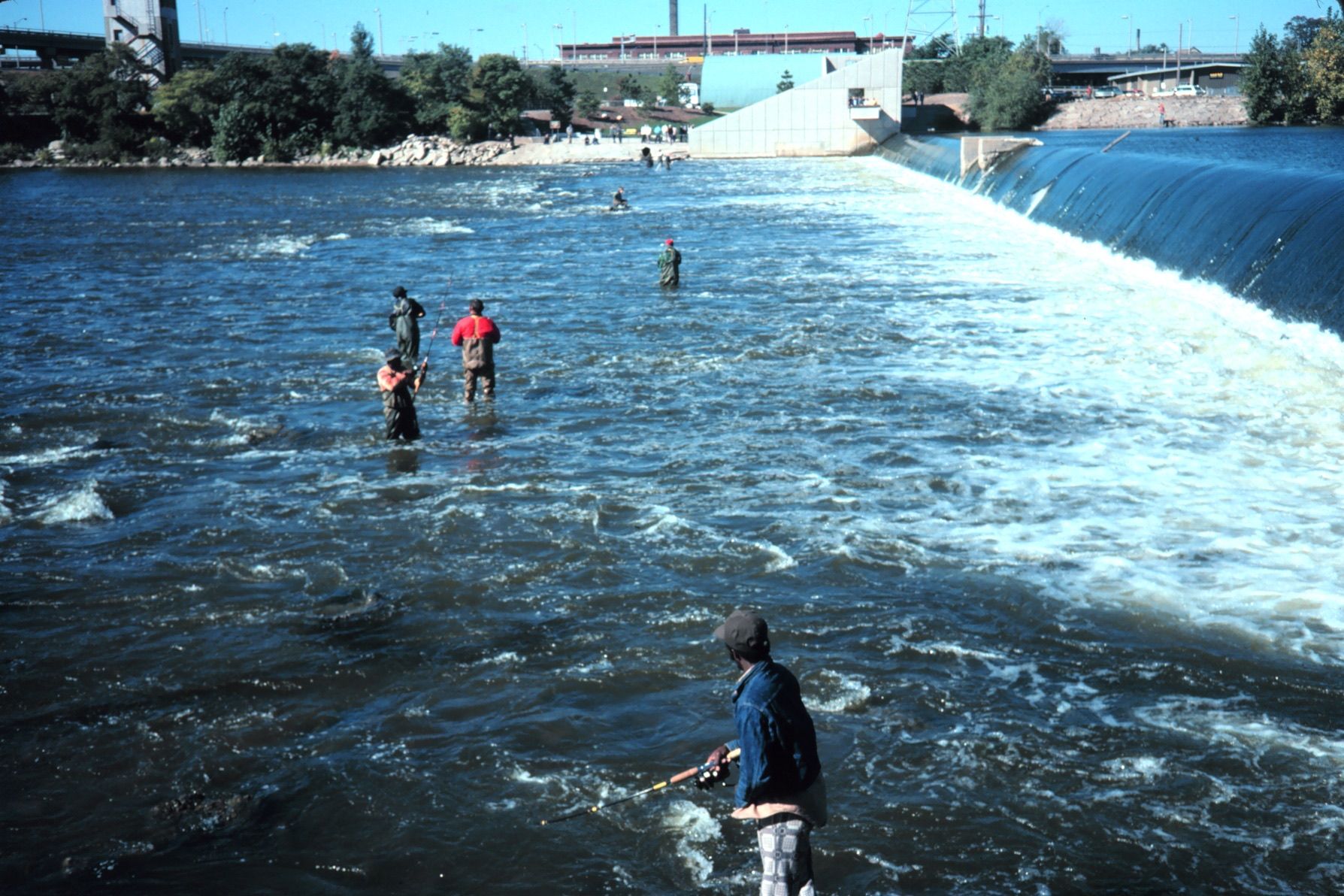
Wading works best near Tippy Dam and at the public access sites. It costs nothing beyond a license and a parking pass, and it is how many people fish the fall run. The tradeoff is crowds at the dam and limited reach on a big river.
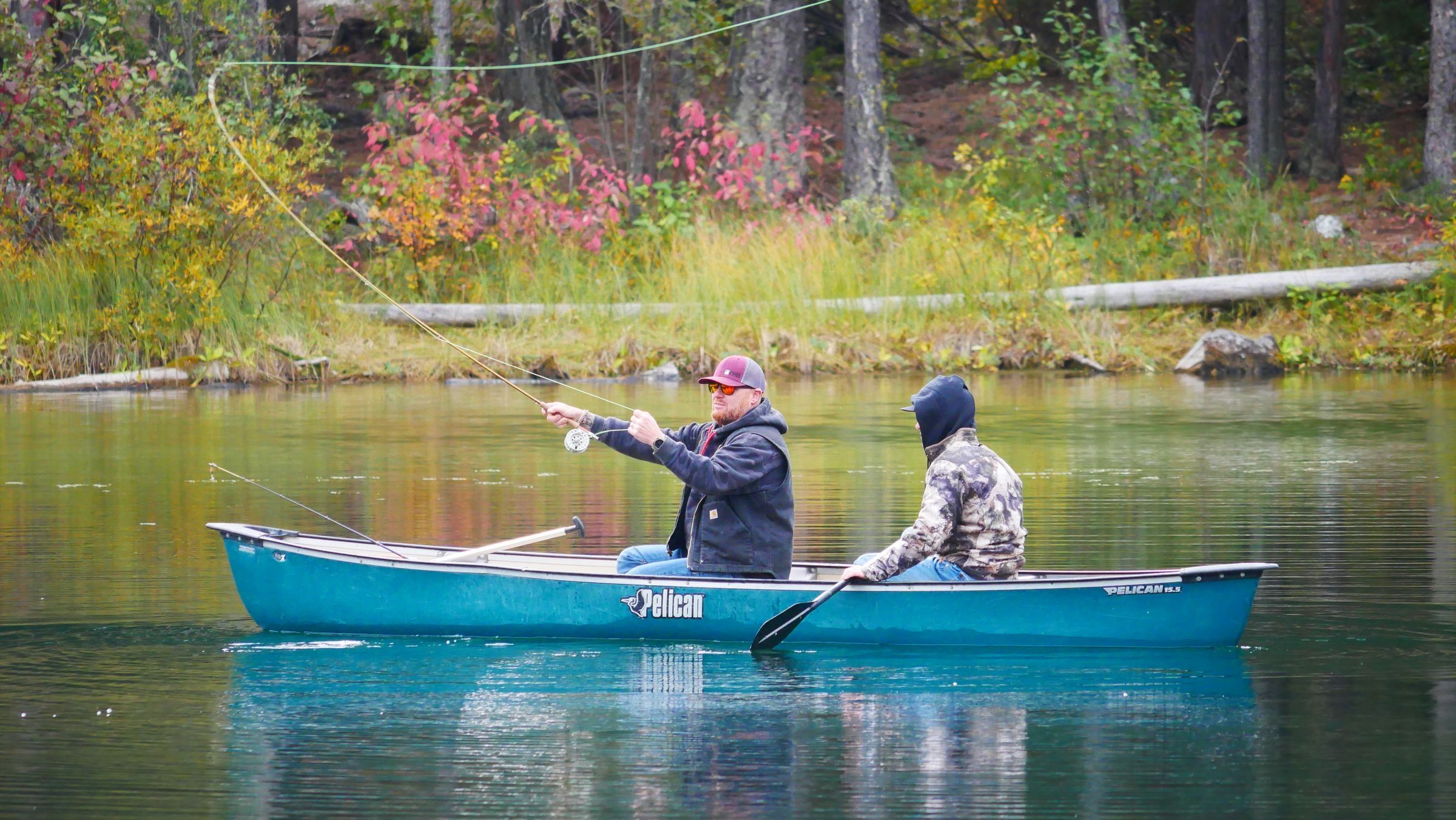
A drift boat lets you fish long stretches between access sites, reach water that is hard to wade, and spread out from the crowd. Most anglers who want a boat hire a guide, since the river is big, the launches are spread out, and running it takes local knowledge.
Guides
Guided fishing is one of the most popular uses of this river, especially for salmon in fall and steelhead from fall into spring. When you book, ask:
- Which stretch they plan to fish and how they handle crowding at the dam.
- What happens if water is high, cold or muddy.
- Whether gear is included and which methods they use, such as plugs, beads or flies.
- How they keep you within the rules for that stretch.
Our guided vs DIY fishing and first guided fishing trip guides cover the rest.
Crowds and etiquette
Tippy Dam is busy during the fall run. A few habits keep the day civil: give the angler next to you room, take turns in a crowded run, pack out line and bait containers, and never cut across private land to reach the next hole. Snagging, hooking a fish that has not taken the bait in its mouth, is illegal in Michigan, and conservation officers have stepped up patrols on northwest Michigan rivers such as the Betsie and Platte during the fall runs. You can report violations to the DNR’s Report All Poaching line.
Safety and flows
The Manistee is a big, cold river. DNR reports from spring describe high, fast water below Tippy Dam, and spring rain and runoff can push stained water and floating debris down to Manistee Lake and the harbor. Before you wade:
- Check the USGS gauge near Wellston for current flows.
- Wear a wading belt and use a staff in spring and fall.
- Dress for cold water and cold mornings, even in October.
Source: USGS: Manistee River near Wellston, checked October 24, 2026.
Source: NWS: Cold water safety, checked October 24, 2026.
Our fishing trip safety and weather guide has more.
Rules
The Michigan DNR sets the rules, and trout and salmon regulations change by stream type and stretch. Lake sturgeon in the Manistee River and Manistee Lake are covered by special rules, and anglers sometimes hook them by accident. Read the current Michigan Fishing Regulations and the DNR’s inland trout and salmon maps before each trip, and check the DNR weekly fishing report for conditions. See our fishing licenses guide for how licenses work.
Planning tips
- For fall salmon, plan a few days so you can wait out warm water or a slow push of fish.
- For steelhead, late fall and March into April are the times most anglers plan around.
- Pack waders, layers and rain gear. Our packing list helps.
- On a rough Lake Michigan day, the inland lakes make a good backup.
Frequently asked questions
When is the best time to fish Tippy Dam?
It depends on the fish. Chinook are usually in Michigan rivers in catchable numbers by mid-August and the run builds through September, coho follow with a late-October fishery on the Manistee, and steelhead run from late October into spring. Spring and fall are the busiest seasons below the dam.
Do I need a guide to fish the Big Manistee?
No. A state recreation area at Tippy Dam and Forest Service access sites downstream give wading anglers real options. A guide with a drift boat covers more water and knows the access and rules, which helps on a short first trip.
Do I need a parking pass on the Manistee River?
Usually. A Recreation Passport is required for vehicles at Tippy Dam Recreation Area and other state sites, and the Forest Service's developed sites along the river need a vehicle parking pass. Check the agency page for the site you plan to use.
Are there special rules on the Manistee River?
Yes. Michigan's trout and salmon rules vary by stream type and stretch, and lake sturgeon in the river have special rules. Read the current Michigan Fishing Regulations and the DNR's inland trout and salmon maps before you fish.
Sources and fact-checking (20)
Facts checked against these sources on October 24, 2026. Seasons, rules and businesses change; confirm with the official source before you travel. How we research.
- Manistee River, National Wild and Scenic Rivers System (rivers.gov)
- Tippy Dam Recreation Area, Michigan DNR (michigan.gov)
- Chinook salmon, Michigan DNR (michigan.gov)
- Coho salmon, Michigan DNR (michigan.gov)
- Steelhead, Michigan DNR (michigan.gov)
- Types of Salmon Fishing, Pure Michigan (michigan.org)
- Fish stocking history dashboard, Michigan DNR (midnr.maps.arcgis.com)
- Little Manistee River Weir, Michigan DNR (michigan.gov)
- Fishing regulations, Michigan DNR (michigan.gov)
- Recreation Passport, Michigan DNR (michigan.gov)
- Manistee River near Wellston, MI, USGS Water Data (waterdata.usgs.gov)
- Conservation officers urge anglers to remember proper etiquette on and off the river, Michigan DNR (content.govdelivery.com)
- Weekly Fishing Report: April 5, 2023, Michigan DNR (content.govdelivery.com)
- Weekly Fishing Report: March 29, 2023, Michigan DNR (content.govdelivery.com)
- Weekly Fishing Report: November 9, 2022, Michigan DNR (content.govdelivery.com)
- Weekly Fishing Report: September 17, 2025, Michigan DNR (content.govdelivery.com)
- Weekly Fishing Report: October 8, 2025, Michigan DNR (content.govdelivery.com)
- Weekly Fishing Report: April 22, 2026, Michigan DNR (content.govdelivery.com)
- Weekly Fishing Report: February 11, 2026, Michigan DNR (content.govdelivery.com)
- Weekly fishing report, Michigan DNR (michigan.gov)