Choosing Kenai Peninsula dates comes down to one question: which fish do you most want, and where? The peninsula’s salmon arrive in waves, river by river, from late spring into fall. Pick the species first, then the water, then build the rest of the trip around it.
One rule before anything else: every date below is a broad pattern from the Alaska Department of Fish and Game (ADF&G), not a promise. Runs vary in size and timing from year to year, and ADF&G can open, close, restrict or liberalize a fishery by emergency order at any time. Plan around the pattern, then confirm close to your trip.
The calendar at a glance
These ranges come from ADF&G’s run timing sheets for the Kenai, Soldotna and Homer area.
| Species | Water | Typical timing |
|---|---|---|
| Sockeye (red) | Russian River, early run | Mid-June to mid-July |
| Sockeye (red) | Kenai River, late run | July to mid-August, peak late July |
| Sockeye (red) | Russian River, late run | Mid-July to mid-August |
| Sockeye (red) | Kasilof River | June through August |
| Coho (silver) | Kenai River | Late July to mid-October |
| Coho (silver) | Russian River | Early August to end of September |
| Coho (silver) | Kasilof River | Late July through September |
| Pink (humpy) | Kenai and Kasilof | Mid-July through August, mostly even years |
| King (Chinook) | Kenai River | Historically mid-May to late June and July; closed in recent seasons |
| Rainbow trout | Kenai and Russian | Mid-June through April |
| Dolly Varden | Kenai and Russian | Mid-May through October |
Choosing dates by species
Sockeye
Sockeye are the main summer draw, and the busiest time on the peninsula.
- For the Russian River early run, aim for mid to late June. The run usually arrives by mid-June, with a historic midpoint in late June, and most fish are through by mid-July.
- For the Kenai late run, aim for the second half of July. Late-run sockeye typically enter the lower river in early July and peak in late July, and most arrive during the last two weeks of the month. In a good run, the sonar can count more than 20,000 fish a day.
- For the Russian River late run, plan from mid-July into August.
Sockeye travel close to shore, so this is mostly bank fishing, and a guide is optional.
Coho (silver)
Coho carry the season into fall. On the Kenai they start arriving in late July, with more fish from early to mid-August into early October. The Russian River confluence sees coho from about late July or early August, with most of that run past the weir by the second week of September.
Coho runs swing widely. The Russian River weir has counted over 9,000 coho in some years and only about 2,000 in others. If coho are your target, late August and September give you the most room for a run that comes early or late. In salt water, Resurrection Bay silvers begin entering the outer bay in the last week of June, with fishing into mid-September, and shore fishing near Seward typically peaks in mid-September.
Pink
Pinks have a two-year cycle, and on the Kenai their numbers are highest in even-numbered years. They are typically in the river from mid-July through August, mostly below the Sterling Highway bridge in Soldotna. They are a good fish for kids and new anglers: plentiful and willing to hit almost any lure.
King
Kenai kings historically came in two runs: an early run from mid-May through June, and a late run from early July with the best fishing in mid to late July. In recent seasons, though, ADF&G has closed the Kenai to king fishing for both runs, including catch-and-release, by emergency orders issued before the season. Kasilof king fishing has been limited to hatchery fish under its own emergency rules.
Do not book a trip around Kenai kings without reading the current emergency orders. If you want a king on the line, ask charter operators in Seward and Homer about saltwater options and the current rules there.
Rainbow trout and Dolly Varden
Trout are the peninsula’s quiet season. ADF&G lists Kenai and Russian River rainbows from mid-June through April, and fall is often best, when trout feed on salmon eggs and carcasses. Spring and late fall trout fishing on the Russian River is a much quieter experience than summer. Dolly Varden are typically fished mid-May through October.
Reading ADF&G run timing
ADF&G’s run timing sheets are the best starting point, but read them the way the agency intends.
- They describe typical windows, not this year’s run. The ranges come from historical patterns. A late spring, a weak run, or a strong one can shift fishing by days or weeks.
- Check the edition date. Each sheet carries a publication date. Older editions can list different ranges, so use the newest one you can find and confirm with the Soldotna office or regulations.
- Run timing is not season dates. A fish being present does not mean the fishery is open. Seasons, areas, tackle and bag limits are in the Southcentral regulations booklet, and emergency orders override it.
Watching fish counts
ADF&G publishes counts from sonar sites and weirs on its fish counts page, and current-year numbers are preliminary. On the Kenai, the king sonar sits at river mile 14 and the late-run sockeye sonar at river mile 19.5. The Russian River weir, at the outlet of Lower Russian Lake, is updated daily in summer.
In the weeks before your trip, watch whether counts are building early, on time or late compared with past years. That tells you more about your odds than any calendar. ADF&G also posts weekly in-season fishing reports in summer and records them on the Soldotna sport fishing hotline.
Understanding emergency orders
Emergency orders are how ADF&G manages fisheries in season. They can close a fishery, restrict tackle or bag limits, open an area early, or raise limits when more fish return than expected. On the Russian River, for example, ADF&G may close or liberalize fisheries as escapement goals are or are not met.
ADF&G tries to release orders 24 to 48 hours before they take effect. To keep up:
- Check the emergency order page for the Southcentral region before you book and again before each day of fishing.
- Subscribe to ADF&G’s email notifications.
- Ask your guide or lodge how they adjust if a fishery closes mid-trip.
Crowds
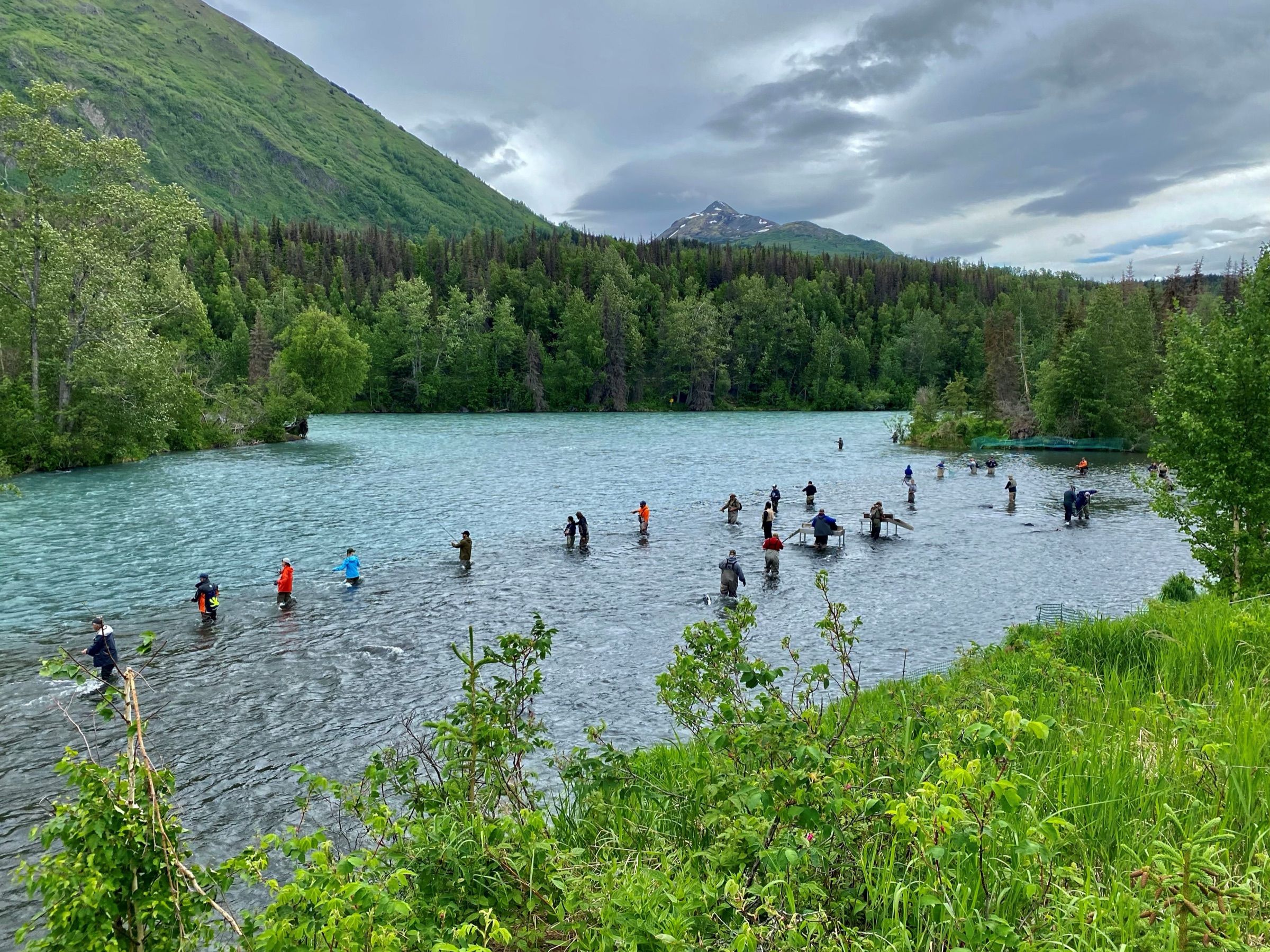
The flip side of the sockeye peak is company. In summer, the Russian River near the campground is known for combat fishing, with anglers close together. The Forest Service campground and the Sportsman’s Landing parking area fill quickly. If you go:
- Land fish quickly and keep your line from crossing others’.
- Cast in rhythm with the people around you.
- Once you have your limit, give up your spot or switch to trout elsewhere on the river.
- Clean fish away from the bank, or cut carcasses small and toss them into deep, fast water. Bears fish here too.
If crowds are a deal-breaker, look at September coho and trout, or spring and late fall trout on the Russian.
Booking windows
Book anything tied to peak sockeye dates early, especially campgrounds, riverside lodging and guides near Cooper Landing and Soldotna. The Russian River Campground and Forest Service cabins are reserved through Recreation.gov. In Seward, downtown lodging is popular and books early. Most lodges in Alaska run summer-only packages, so their calendars are short.
Build some flexibility in. If you can, choose a window that covers two species (late July sockeye with early coho, or late August coho with trout), so a slow run does not sink the trip.
Sample date plans
- Mid to late June: Russian River early-run sockeye, kings at the Homer Spit fishing lagoon, and halibut out of Homer or Seward.
- Last two weeks of July: Peak Kenai late-run sockeye, plus pinks in even years. Expect crowds.
- Mid-August: Coho building on the Kenai, the Seward Silver Salmon Derby, and pinks in even years.
- September: Coho, fall rainbow trout and halibut through the end of the Seward season, with fewer people.
For the full destination overview, see our Kenai Peninsula guide. For lodging, see Alaska fishing lodges, and for timing across other destinations, see fall salmon fishing and July.
Frequently asked questions
When do sockeye peak on the Kenai River?
The Kenai's late sockeye run typically enters the lower river in early July, peaks in late July and is mostly finished by late August, with most fish arriving in the last two weeks of July. Exact timing and run size vary every year, so watch ADF&G's sonar counts as your trip approaches.
What is the difference between the early and late Russian River sockeye runs?
The early run usually arrives by mid-June, with a historic midpoint in late June, and is mostly through by mid-July. The late run usually arrives in mid-July and is larger on average. Both are managed to escapement goals, so ADF&G may restrict or liberalize them in season.
Are pink salmon better in even years?
Yes. Pink salmon have a two-year life cycle, and on the Kenai their numbers are highest in even-numbered years. They are typically in the river from mid-July through August.
How much notice does ADF&G give before an emergency order?
ADF&G tries to release emergency orders 24 to 48 hours before they take effect, but they can still change your plans quickly. Subscribe to email notices and check the emergency order page for the area you plan to fish.
When are Kenai Peninsula crowds lightest?
Outside the sockeye peak. Spring and late fall rainbow trout fishing on the Russian River is far quieter than summer, and September coho and trout fishing draws fewer anglers than late July sockeye.
Sources and fact-checking (14)
Facts checked against these sources on October 23, 2026. Seasons, rules and businesses change; confirm with the official source before you travel. How we research.
- ADF&G: Kenai, Soldotna and Homer run timing (adfg.alaska.gov)
- ADF&G: Kenai, Soldotna and Homer run timing (earlier edition) (adfg.alaska.gov)
- ADF&G: Fishing the Kenai River (adfg.alaska.gov)
- ADF&G: Fishing the Russian River (adfg.alaska.gov)
- ADF&G: Seward and North Gulf Coast sport fishing (adfg.alaska.gov)
- ADF&G: Kachemak Bay sport fishing (adfg.alaska.gov)
- ADF&G: Emergency orders and press releases (adfg.alaska.gov)
- ADF&G: Fish counts (adfg.alaska.gov)
- ADF&G: Sport fishing regulations (adfg.alaska.gov)
- ADF&G Emergency Order 2-KS-1-8-26 (adfg.alaska.gov)
- ADF&G Emergency Order 2-KS-1-7-26 (adfg.alaska.gov)
- Travel Alaska: Cooper Landing (travelalaska.com)
- Travel Alaska: Seward (travelalaska.com)
- Travel Alaska: Fishing lodges (travelalaska.com)