The short answer: book a panga if you want a few hours of inshore fishing for roosterfish, jacks and snapper close to shore, on a budget. Book a cruiser if you want to run offshore for marlin, yellowfin tuna and dorado, want a cabin and an enclosed bathroom, or have more than a few people.
Cabo’s charter fleet runs both. The choice comes down to what you want to catch, how far you need to go to catch it, and how much comfort you want on the way. For the wider trip, see our Cabo San Lucas guide.
What a panga is
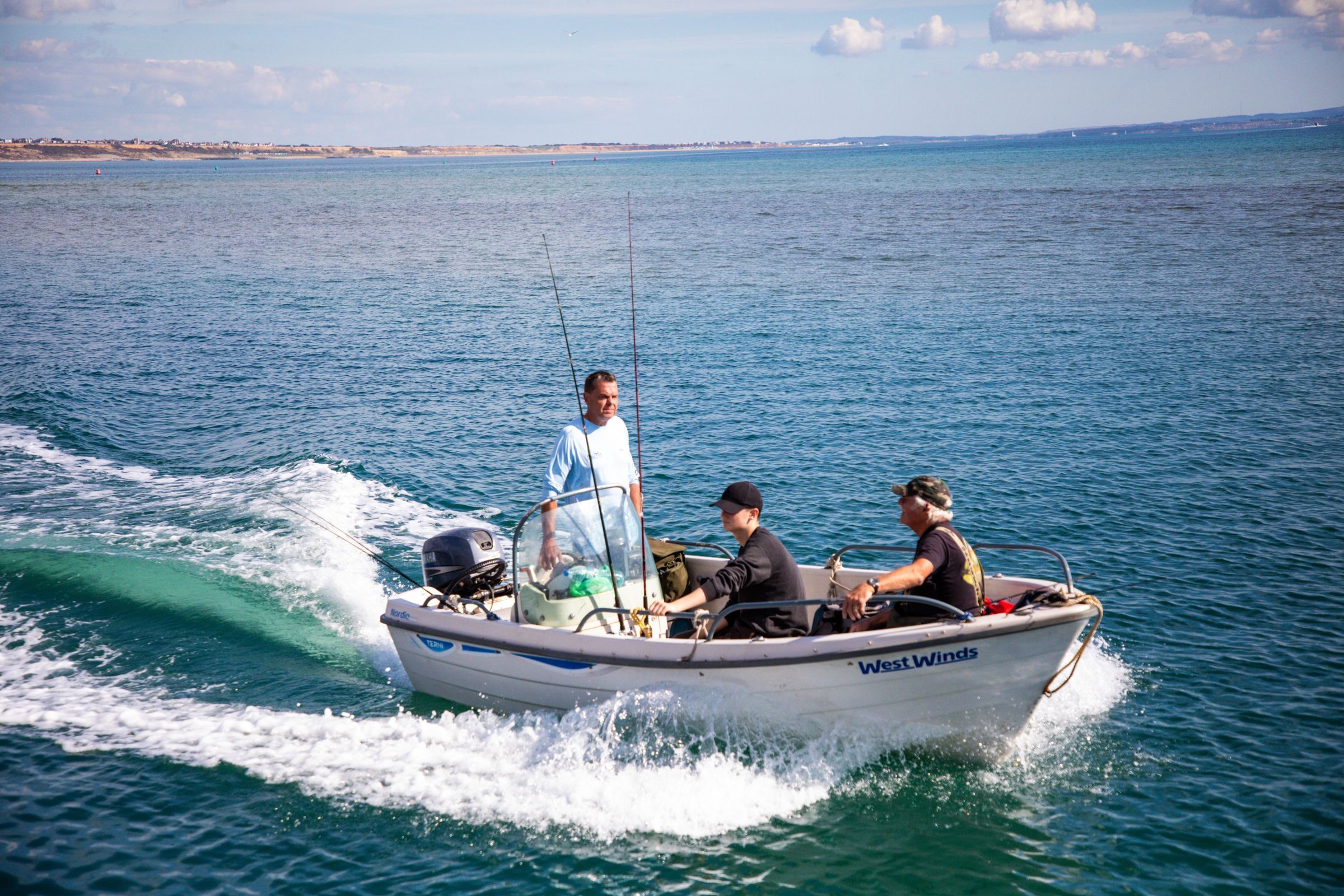
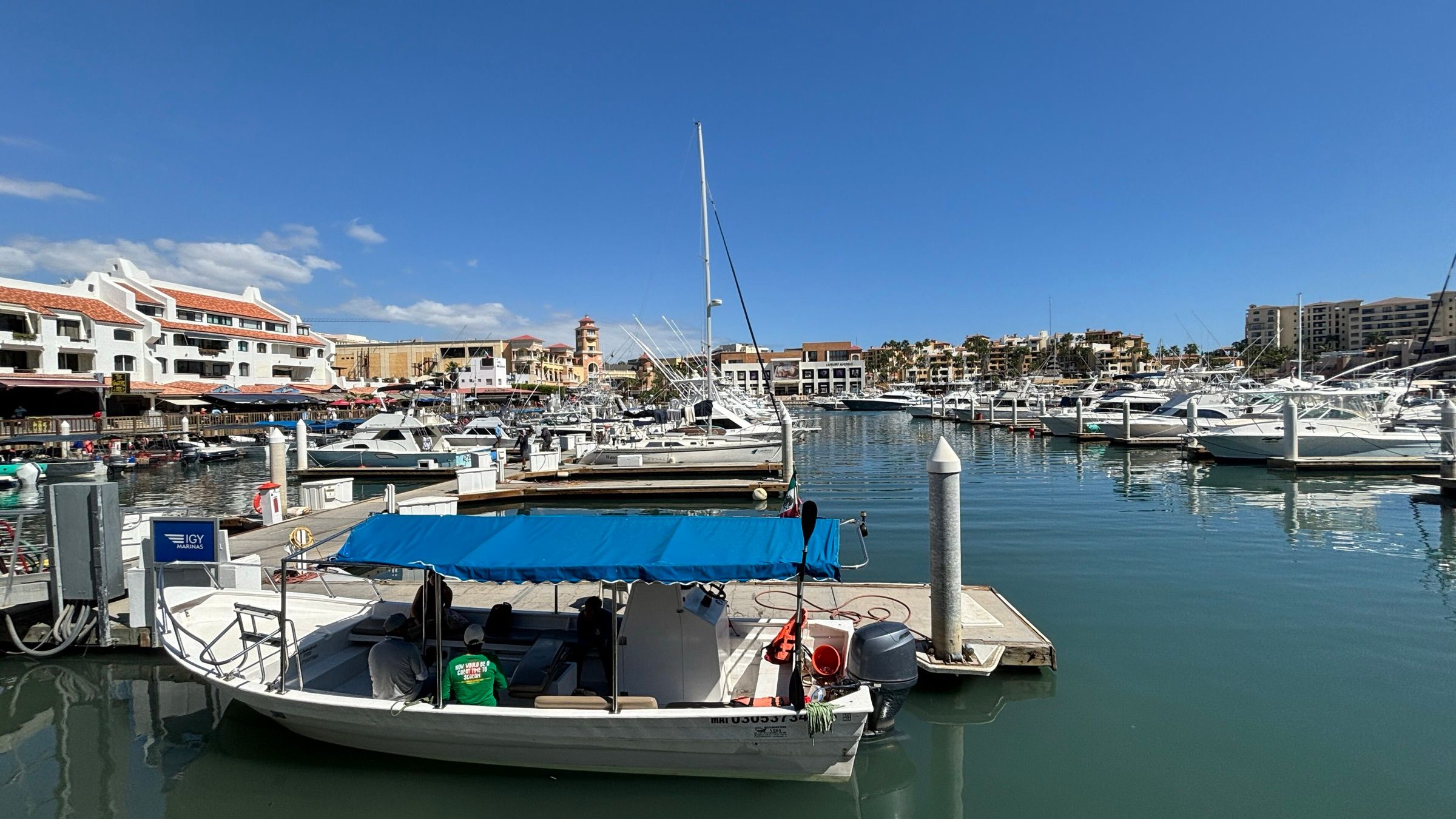
A panga is an open skiff powered by an outboard motor. In the fleet of Pisces Sportfishing, one of Cabo’s largest charter operations, pangas run from 22 to 27 feet. A typical panga has a simple fighting chair, seating for two to four anglers, some shade and a portable toilet instead of an enclosed head. There is one crew member: the captain, who runs the boat, rigs the baits and helps you land fish.
A standard panga trip lasts about five hours and stays fairly close to shore. Boats may travel anywhere from 1 to 10 miles along the coast, generally up the Pacific side, depending on the season. Some operators will stretch a panga day to eight hours with notice, at extra cost.
What a cruiser is
Cabo fleets such as Pisces call their larger sportfishing boats with inboard engines cruisers. They come in a wide range of sizes. Pisces sorts its fleet into standard cruisers of roughly 25 to 35 feet, midsize boats of 31 to 42 feet, and large boats of 48 to 72 feet, plus a luxury class. Even a standard cruiser usually carries two or more crew (a captain and a deckhand), one or two fighting chairs, shade or a cabin and an enclosed bathroom. Bigger boats take more anglers: up to about six on a standard boat and up to ten on the largest.
Cruiser trips are usually booked as half days of about four hours or full days of about eight, typically leaving around 6:30 or 7 a.m. On a full day, boats may range anywhere from 1 to 25 or 30 miles offshore, and farther for special trips.
What each suits
Inshore: roosterfish and the rocky shore
Roosterfish are part of Cabo’s year-round inshore fishery, along with jacks, grouper and snapper around the rock piles and reefs along the coast. Light-tackle trips work the rocky shoreline of the Sea of Cortez, casting to the structure. That is panga water. A small open boat lets you fish close to the rocks and the beach, and the shorter trip is an easy introduction for beginners and kids.
If roosterfish are the main goal, consider a day on the East Cape, where they are also caught from the beach along with jack crevalle.
Offshore: marlin, tuna and dorado
Offshore fishing follows the seasons. Striped marlin are the winter fish, targeted from November through March, and blue and black marlin run from July through October. Dorado are a summer and fall fish, and yellowfin tuna run from September through January. These fish often mean a long run, and that is where a cruiser earns its price. One large fleet notes that the ride out can take one to two hours, and that targeting a big yellowfin or a marlin usually means putting in a full day and heading farther out. Distant grounds such as the Finger Bank sit around 51 miles out, roughly a two-hour ride on a standard cruiser, at extra cost. See our Cabo marlin season guide for month-by-month timing.
Comfort and range
The trade is simple. A panga is open, low to the water and basic. You feel the sea more, there is less shade, and there is no proper bathroom. In return, it is quick, close to shore and fun on light tackle.
A cruiser gives you a cabin to get out of the sun, an enclosed head, more crew and the range to chase fish well offshore. That matters on a rough morning, on a long day, for older travelers and for anyone prone to seasickness who wants a bigger, steadier platform. It also matters for groups: a panga tops out at about four anglers, while larger cruisers take up to ten.
What drives the cost
We do not quote prices, because they change with the operator, season and boat. These are the factors that move the number:
- Boat class. Pangas are the lowest-cost class. Within cruisers, cost climbs from standard to midsize to large and luxury boats.
- Trip length. Half day, full day, or an extended panga day.
- Distance. Trips beyond the normal range, such as the Finger Bank, carry extra fees.
- What is included. Some packages include licenses, live bait, lunch and drinks; bare-boat rates leave them as extras. Fish filleting and freezing can also cost extra.
- Taxes. Ask whether Mexican sales tax is in the quote or added on top.
- Sharing. Some fleets arrange shared boats for solo anglers, which splits the cost but also the fish. A half day or a panga trip is another way for a solo angler to keep costs down.
Our guides to fishing charter cost, private vs shared charters and the trip budget calculator can help you compare.
What to ask before you book
- Is it a panga or a cruiser, and how long is the boat?
- How many crew are aboard, and is there an enclosed bathroom and shade?
- How many hours is the trip, and when does it leave the dock?
- Will you fish inshore or offshore, on the Pacific or the Sea of Cortez side, and how long is the run?
- Are fishing licenses for everyone aboard included, or bought at the dock?
- Is live bait included, and how many baits?
- What is the billfish policy (release, tagging, circle hooks), and which fish can you keep?
- Is filleting and freezing of your catch available, and at what cost?
- Is sales tax included in the price?
- Where exactly do you meet the boat?
Mexico’s sport fishing licenses and rules come from CONAPESCA. Charters commonly handle licenses for you, but rules and fees change, so confirm with your operator before you go. For tipping and dock manners, see charter etiquette and tipping, and for packing, the offshore charter day checklist.
Frequently asked questions
What is a panga in Cabo?
A panga is an open skiff with an outboard motor, usually 22 to 27 feet long in the Cabo fleet. It carries a captain and up to about four anglers, has a simple fighting chair and some shade, and uses a portable toilet rather than an enclosed head. Panga trips usually fish close to shore.
Can you catch a marlin from a panga?
It is not what pangas are built for. A standard panga trip is short and stays close to shore, usually moving 1 to 10 miles along the coast. If marlin or big tuna are the goal, book a cruiser for a full day so the crew has the time and range to run to where the fish are.
Is a panga cheaper than a cruiser?
Generally yes. A panga is the smallest boat class in the fleet, with one crew member and a shorter standard trip, so it is the budget way onto the water. Cruiser prices rise with boat size and trip length. Ask whether licenses, bait, lunch and sales tax are included before you compare quotes.
Should I book a half day or a full day on a cruiser?
For offshore species, a full day. One large Cabo fleet notes that the ride to the fishing grounds can take one to two hours, which leaves little fishing time on a half day. A half day works when fish are close or you only want a short outing.
Sources and fact-checking (7)
Facts checked against these sources on October 24, 2026. Seasons, rules and businesses change; confirm with the official source before you travel. How we research.
- Frequently Asked Questions, Pisces Sportfishing (piscessportfishing.com)
- Boat Type Comparison, Pisces Sportfishing (piscessportfishing.com)
- Pisces Sportfishing Fleet (piscessportfishing.com)
- Sport Fishing, Visit Los Cabos (visitloscabos.travel)
- Beginner's Guide to Fishing in Los Cabos, Visit Los Cabos (visitloscabos.travel)
- East Cape, Visit Los Cabos (visitloscabos.travel)
- CONAPESCA, Government of Mexico (gob.mx)